Affiliate disclosure - we earn from qualifying purchasesComparison guide6 min readUpdated May 2026
Cold Plunge vs Ice Bath:
Chiller vs ice, compared honestly.
Quick answer
At the same water temperature, a cold plunge (chiller system) and an ice bath produce the same physiological effects. The differences are practical: chillers maintain precise temperature without ongoing ice cost; ice baths are cheaper upfront but require 40-80 lbs of ice per session and warm up as ice melts. Most published research used ice water baths, so ice baths are well-supported by evidence.
Reviewed by
Dr. Renée Halvorsen, PhD
Exercise physiologist. 11 years researching cold-water immersion at NTNU. Author of The Cold Protocol (Penguin, 2024).
Verified Expert38 articles
Cold plunge vs ice bath: defining terms
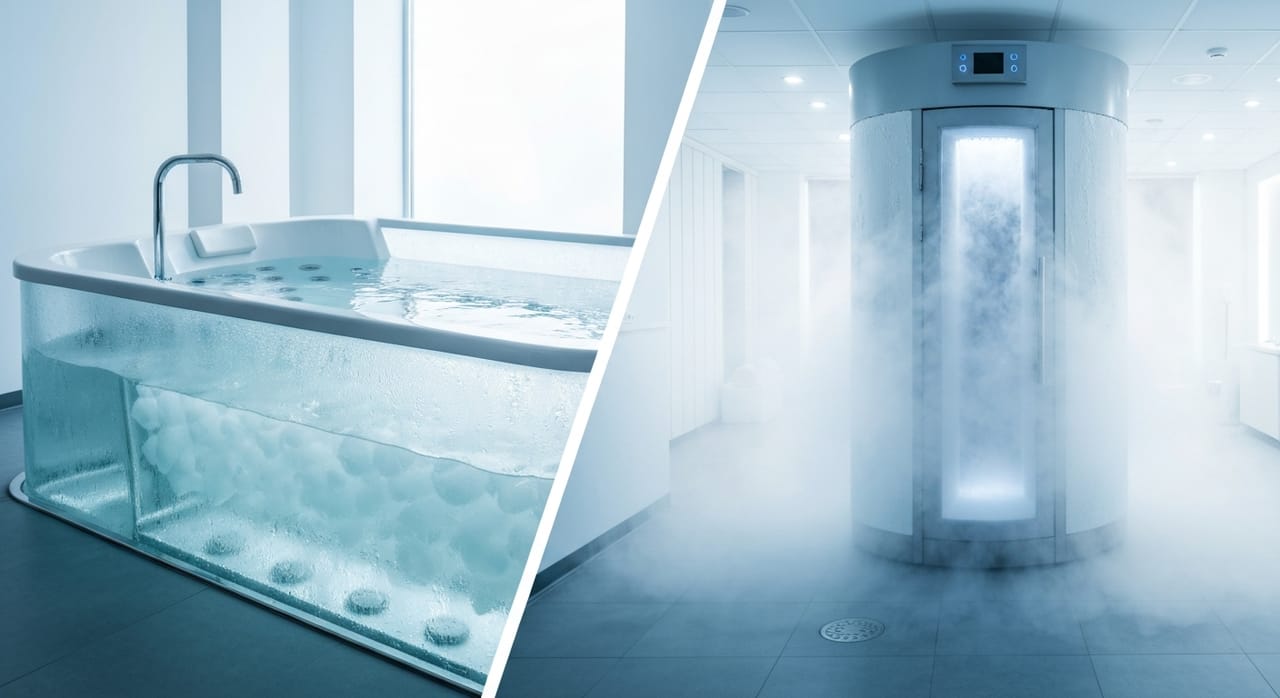
The terminology around cold water immersion is inconsistent. "Cold plunge" is sometimes used broadly to mean any deliberate cold water immersion, and sometimes specifically to mean a purpose-built vessel with a chiller. "Ice bath" sometimes refers exclusively to bathtubs filled with ice, and sometimes to any container using ice for cooling. For this comparison, we use the most common practical meanings:
Cold plunge (chiller)
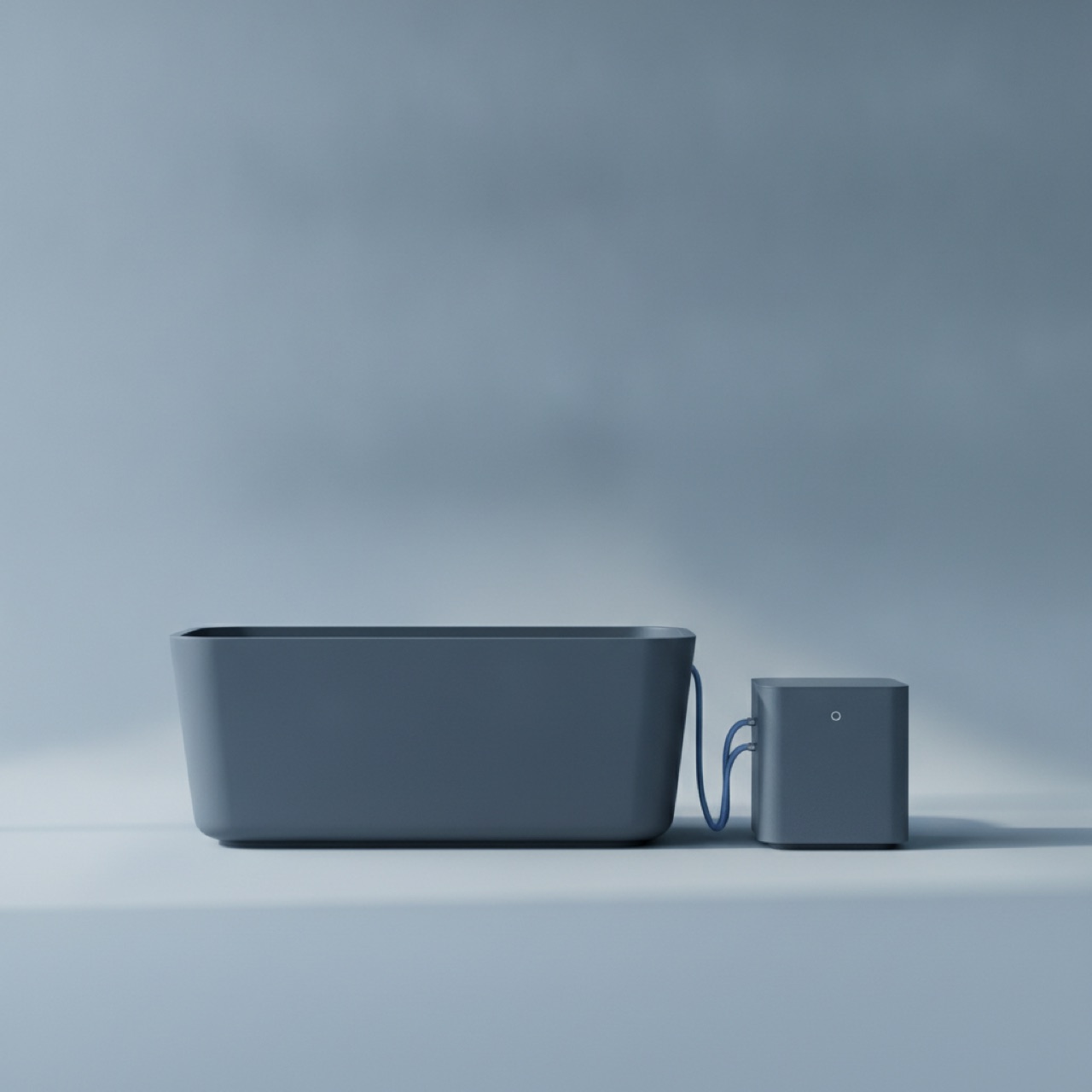
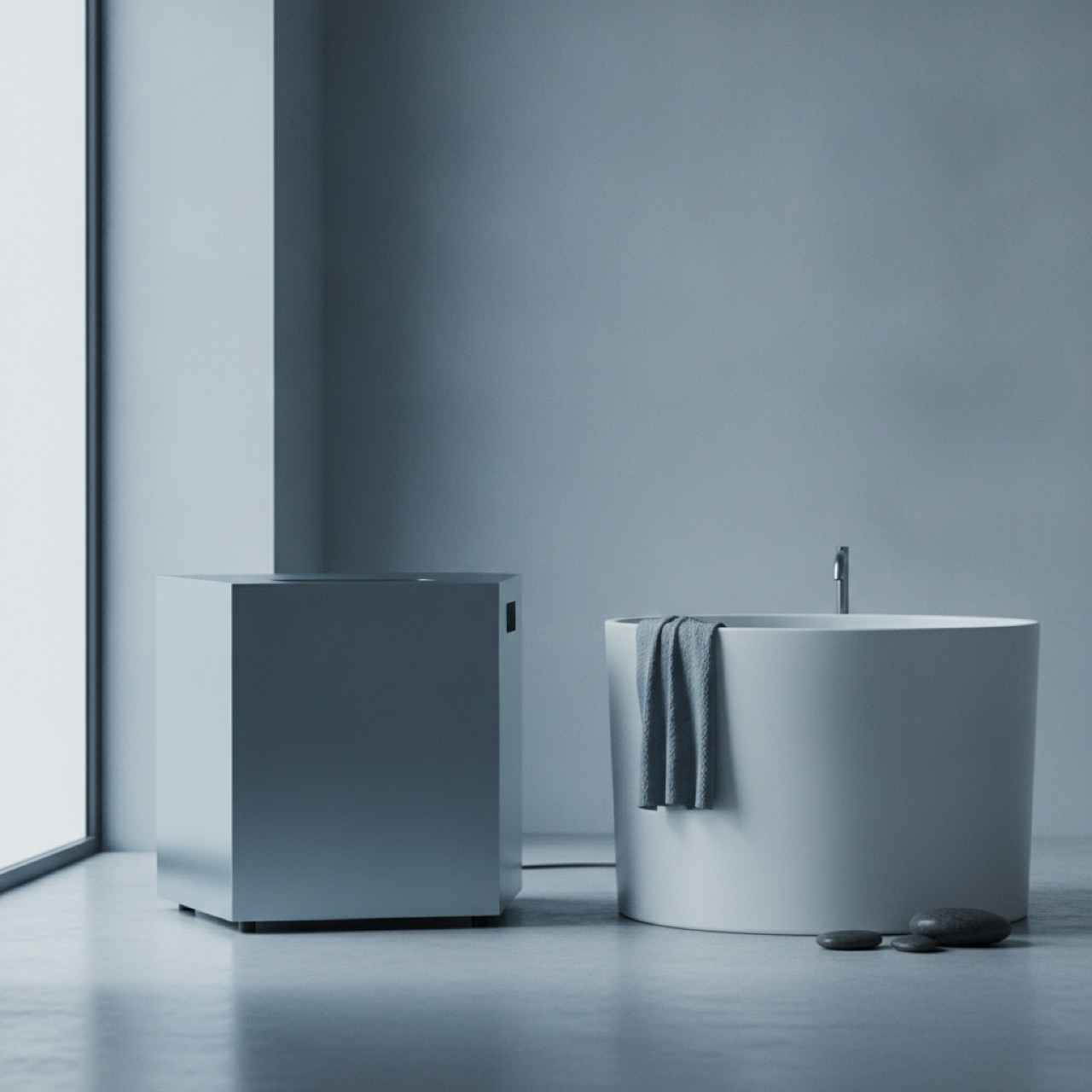
A dedicated vessel paired with a refrigeration/chiller unit that cools and maintains water at a set temperature. Examples: Plunge All-In, Ice Barrel with chiller, Edge Theory Hydro.
Ice bath
Any container (bathtub, stock tank, inflatable tub, bucket) filled with water and ice. Temperature is achieved by adding ice; no active refrigeration.
Temperature comparison
Both methods can achieve the same temperature range. The question is how easily and how consistently.
An ice bath using household ice can reach 40-50°F (4-10°C) depending on the water-to-ice ratio, starting water temperature, and ambient temperature. This covers the full range of productive cold therapy work. A chiller can hold any target temperature from approximately 38-75°F, depending on the unit, and maintains it precisely throughout the session.
In summer months or in warm climates, achieving very cold temperatures with ice requires larger ice quantities. A bathtub starting at 65-70°F tap water in summer may require 80+ lbs of ice to reach 50°F. A chiller works regardless of ambient temperature (within its rated range).
Temperature consistency: the critical difference
This is the most practically significant difference between the two methods.
An ice bath is a closed thermodynamic system with a fixed amount of cooling capacity. As ice melts, the water temperature rises. In a 50-gallon tub, starting at 50°F, the water may reach 55°F within 5-7 minutes without ice replenishment, and 60°F within 10-12 minutes. For short sessions (2-4 minutes), this rise is minimal. For longer sessions or precise dose-response work, it introduces meaningful uncertainty.
A chiller actively measures water temperature and cycles refrigerant to hold the set temperature within 0.5-1°F throughout the session. This means every session at 52°F is actually 52°F, regardless of ambient temperature, session length, or how many sessions you have done that week. For anyone following a precise protocol (including the Soberg 11-min/week approach), this consistency matters.
Cost comparison
| Setup | Upfront cost | Monthly ongoing | Ice per session | Year 1 total |
|---|
| Bathtub ice bath | $0 | $60-160 | 30-50 lb | $720-1,920 |
| Stock tank + ice | $150-300 | $60-160 | 50-80 lb | $870-2,220 |
| Inflatable tub + ice | $200-400 | $60-160 | 40-70 lb | $920-2,320 |
| Stock tank + chiller | $400-900 | $15-25 elec | None | $580-1,200 |
| Premium cold plunge | $2,000-5,000 | $20-40 elec | None | $2,240-5,480 |
Ice cost estimated at 3 sessions per week at $0.10/lb (bulk ice). Electricity estimated at 2-4 kWh/day. Individual costs vary significantly.
What the research actually used
The majority of sports medicine and exercise physiology research on cold water immersion used ice water baths, not purpose-built cold plunge units with chillers. The 2012 Cochrane review of cold water immersion (17 trials), the Soberg et al. (2021) metabolic research, and most of the sports recovery literature used ice water in various vessels.
This means ice baths are not a scientific compromise - they are exactly what was studied. If your concern is "will an ice bath give me the same benefits as a chiller-cooled plunge," the answer is: yes, at the same water temperature, because water temperature is what was manipulated in the studies, not the cooling method.
The chiller advantage is practical, not physiological: it ensures you are actually at the temperature you intend to be at, every session. An ice bath can achieve this too, if you use a thermometer and manage ice quantity carefully.
Recommendation by budget
Under $100
Bathtub ice bath
$50-200 in ice
Best for: Testing cold plunging before committing to equipment
$150-400
Inflatable tub or stock tank + ice
$50-200 in ice
Best for: Regular practice without chiller investment
$400-800
Stock tank + mini chiller
Electricity only (~$15-25)
Best for: Entry-level chiller performance at lower cost
$1,000-2,000
Dedicated inflatable or soft tub with chiller
Electricity only
Best for: Regular practitioners, post-workout recovery use
$2,000-5,000
Premium hard-shell cold plunge with chiller
Electricity only
Best for: Daily use, advanced protocols, longevity
★ Best premium cold plungeScore 9.4/10
Plunge All-In
See our full cold plunge tub reviews and chiller reviews.
FAQ
What is the difference between a cold plunge and an ice bath?+
The term "cold plunge" most often refers to a purpose-built vessel paired with a chiller unit that maintains water at a precise temperature. "Ice bath" typically refers to any container - bathtub, stock tank, inflatable tub - filled with water and ice. If the water temperature is the same, the physiological stimulus is essentially equivalent. The practical differences are in temperature consistency, ongoing cost, and convenience.
Is an ice bath as effective as a cold plunge?+
Yes, if the water temperature is the same. The body responds to the temperature of the water, not the source of the cooling. An ice bath maintained at 50°F and a dedicated cold plunge chiller maintaining 50°F produce the same cold shock response, norepinephrine release, and recovery effects. The advantage of a chiller is consistency: ice baths warm as ice melts and require ice replenishment, while chillers hold a precise set temperature throughout the session.
How much ice do you need for an ice bath?+
For a standard bathtub (approximately 40-60 gallons), achieving 50°F water requires roughly 30-50 lbs of ice if starting from cold tap water (55-60°F). In summer or with warm tap water, 50-80 lbs may be needed. For a stock tank (100-150 gallons), 80-150 lbs of ice is typical. Ice typically costs $1-2 per 10 lbs, making each session $4-16 in ice cost alone. At 3-4 sessions per week, this totals $50-250 per month.
Does an ice bath temperature stay consistent?+
No. Ice begins melting immediately when added to the water, and the water temperature rises continuously throughout the session. A tub starting at 50°F may be at 55-58°F after 10 minutes if ice is not replenished. For short sessions (2-4 minutes), this drift is minimal and manageable. For longer sessions or precise protocol work, a chiller is significantly better. Always check temperature with a thermometer at the start of each session.
What is the cheapest cold plunge setup?+
The cheapest effective setup is a standard bathtub with ice: $4-16 per session in ice, no equipment purchase required. The next step is an inflatable cold plunge tub ($150-400) with ice, which allows outdoor use and a dedicated vessel. A stock tank from a farm supply store ($100-300) is durable and large, also requiring ice. A dedicated cold plunge chiller paired with a tub or chest freezer runs $800-5,000 upfront but has minimal ongoing cost.
Can you use a chest freezer as a cold plunge?+
Yes - a chest freezer conversion is a popular DIY cold plunge approach. A commercial chest freezer (100-150 gallon) is sealed with waterproof sealant, filled with water, and set to maintain a specific temperature. This effectively creates a chilled plunge vessel for $300-600 in equipment. The limitation is that chest freezers are not designed for repeated water contact, and pump/filter additions are needed to maintain water quality. Guides to this approach are available in our DIY section.
What temperature should an ice bath be?+
The same temperature ranges apply to ice baths as to cold plunges: beginners target 55-61°F (13-16°C), intermediate practitioners work at 50-55°F (10-13°C), and advanced at 45-50°F (7-10°C). Most published research used ice water baths at 50-59°F (10-15°C). Use a thermometer to confirm temperature before each session.
Do you need to replace the water in a cold plunge or ice bath?+
Yes. In an ice bath where water is not filtered, water should be drained and replaced after each session for hygiene. In a dedicated cold plunge with filtration and sanitation (UV, ozone, or chemical), water can be maintained for 2-4 weeks between changes with proper chemistry management. Our water care guide covers this in detail.