Quick Answer
The best cold plunge chiller for most people is the Penguin Cold Therapy Chiller at $1,949. It reaches the high 30s°F, runs at a genuine 56 dB, and ships with everything you need for a clean install. For tighter budgets, the Active Aqua AACH25HP at $599 handles tubs up to 90 gallons and reaches 40°F reliably. If you have a large stock tank over 150 gallons, the EcoPlus 1 HP at $1,099 is the most cost-effective route to serious BTU output.
Why a chiller beats ice: the math that ends the debate
A 20-lb bag of ice costs about $4. To drop a 100-gallon tub from 70°F to 50°F, you need to remove roughly 16,700 BTUs of heat. One pound of ice provides about 144 BTUs of cooling, so you need approximately 116 lbs of ice - six 20-lb bags - for a single session. That is $24 per session.
A chiller costs $12-$30/month to run continuously, not per session. If you plunge four times per week, ice costs $96-$192 per month. A chiller pays for itself in ice savings within 6-18 months depending on the unit, and it maintains a consistent temperature that ice never can.
Beyond cost, ice introduces inconsistency. A tub that starts at 42°F and warms to 58°F over your session is not a controlled stimulus. A chiller holds setpoint within 1-2°F. For anyone following a structured protocol, that consistency is the point.
Picks at a glance
| # | Model | Best for | Temp range | Noise | Score | Price | |
|---|
| 01 | Penguin Cold Therapy Chiller Penguin | Best overall | 37°F | 56 dB | 9.2/10 | $1,949 | Check → |
| 02 | Active Aqua AACH50HP Active Aqua | Large DIY tubs | 39°F | 58-62 dB | 8.9/10 | $849 | Check → |
| 03 | Active Aqua AACH25HP Active Aqua | Value 40-90 gal | 40°F | 55-60 dB | 8.7/10 | $599 | Check → |
| 04 | EcoPlus 1 HP Commercial EcoPlus | Large / commercial | 37°F | 62-65 dB | 8.5/10 | $1,099 | Check → |
| 05 | EcoPlus 1/2 HP Commercial EcoPlus | Budget 1/2 HP | 39°F | 60-64 dB | 8.2/10 | $699 | Check → |
| 06 | Active Aqua AACH10HP Active Aqua | Under 40 gal tubs | 42°F | 50-55 dB | 7.8/10 | $499 | Check → |
The six best cold plunge chillers, reviewed
01Best overallBest overall
$1,949Penguin Chillers Cold Therapy Chiller
Penguin Chillers — Cold Therapy Chiller
Pros
- +Purpose-built for cold therapy - not repurposed aquarium hardware
- +Made in the USA with quick-connect fittings for clean installation
- +Quiet 56 dB operation - genuinely usable in a bedroom or garage
- +Reaches low-to-mid 40s°F in most setups; high 30s°F with ideal conditions
Cons
- −Higher upfront cost than comparable Active Aqua 1/2 HP units
- −No Wi-Fi or app control - analog thermostat only
- −At 49 lbs it is heavier than it looks; placement matters
Verdict
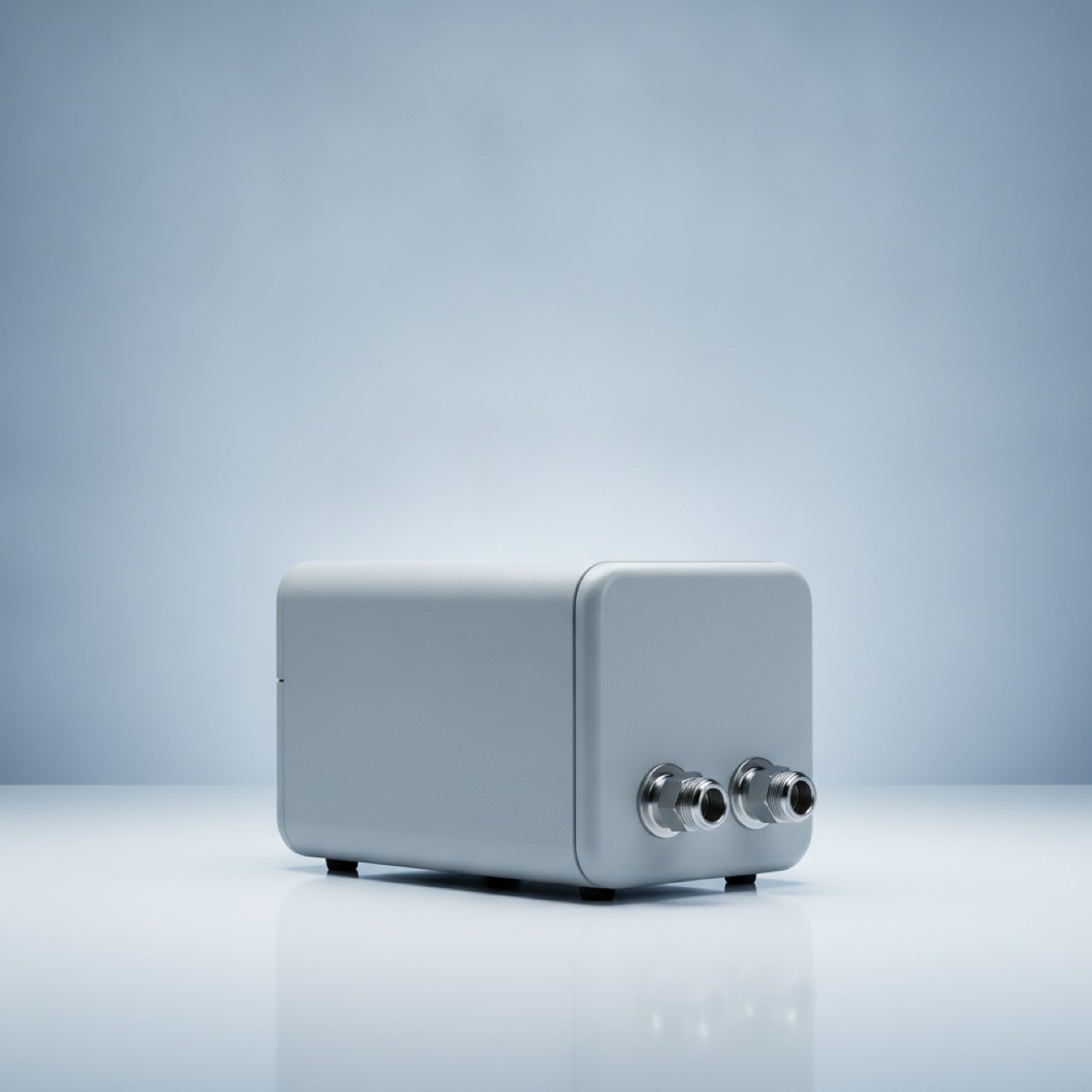
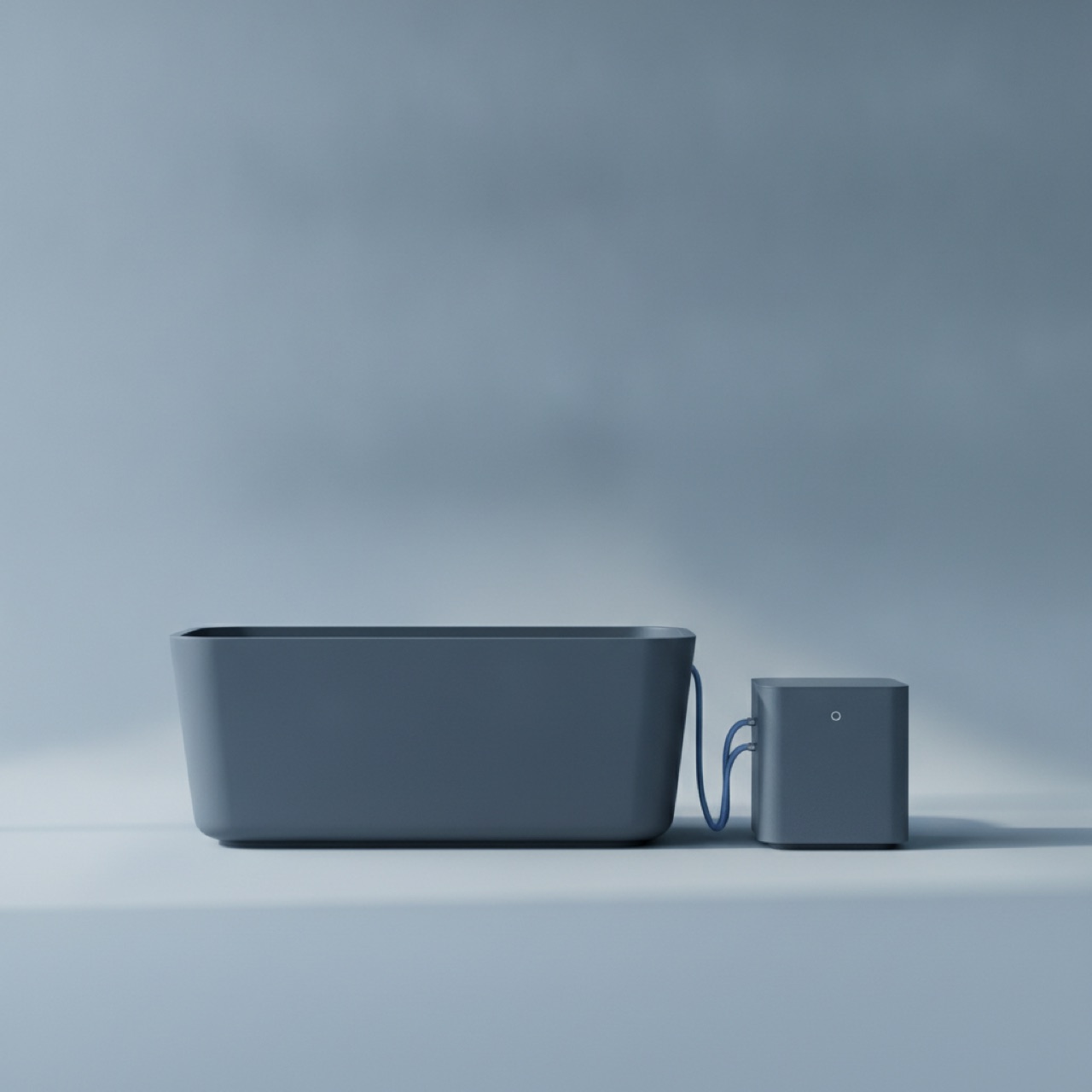
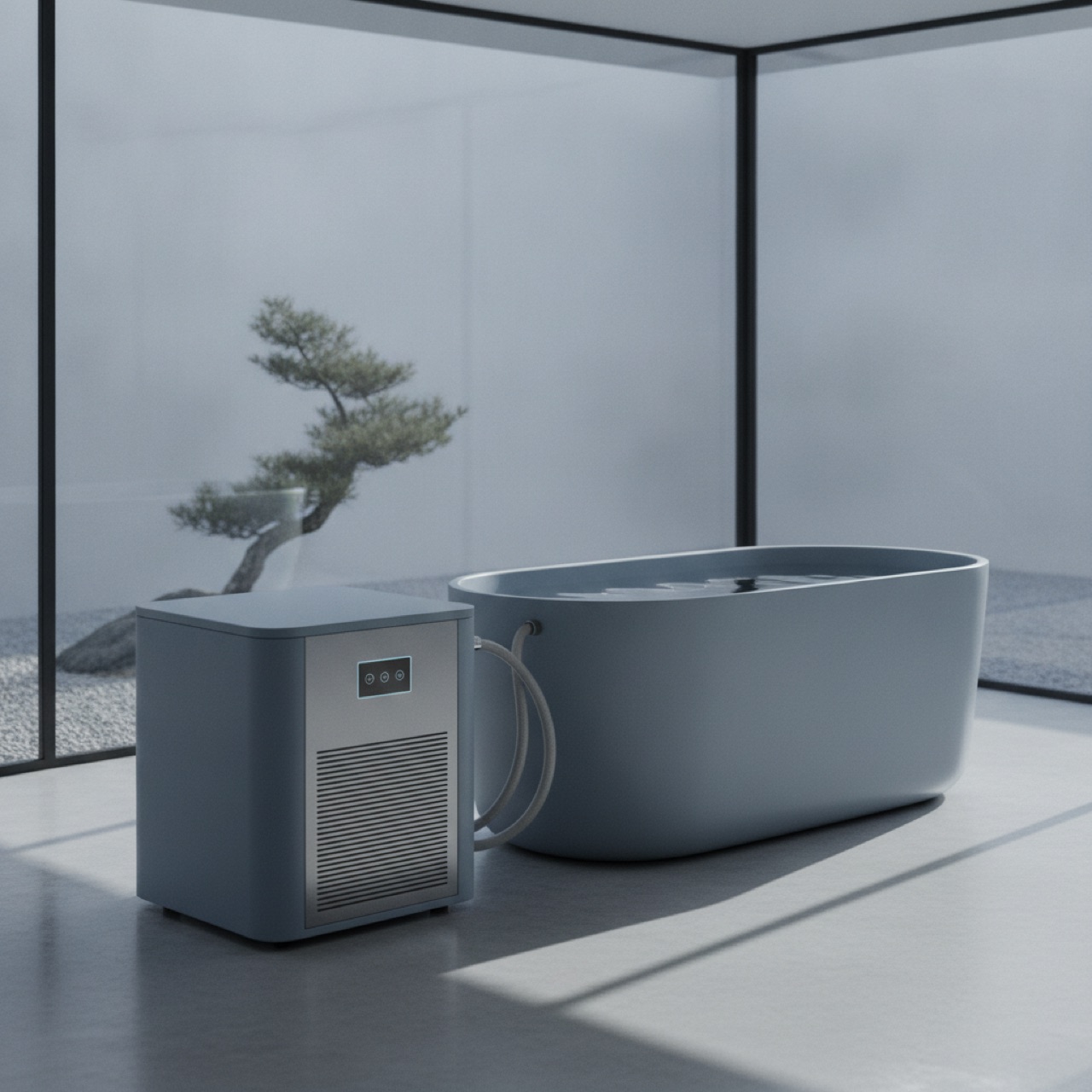
The Penguin Cold Therapy Chiller is the most purpose-built standalone chiller on this list. It ships with quick-connect fittings and an internal pump, so you are not sourcing adapters. The 56 dB noise rating is real - this is quiet enough for indoor use. The US manufacturing means support and parts are accessible. If you have a 60-100 gallon plunge and want to set it up once and forget it, this is the pick.
02Best for large DIY tubs
$849Active Aqua 1/2 HP Water Chiller with Boost
Active Aqua — AACH50HP
Pros
- +Handles tubs up to 172 gallons - ideal for stock tanks and larger barrels
- +Pure titanium evaporator resists corrosion from skin oils and salt
- +Boost function accelerates initial cool-down by 20-30%
- +Wide availability - Amazon Prime, Home Depot, hydroponic retailers
Cons
- −Requires separate pump; pump not included
- −Bulkier unit - 510W draw, louder compressor than Penguin at peak
- −Digital thermostat is basic; no app or remote monitoring
Verdict
The AACH50HP is the workhorse pick for stock tank and large barrel builds. It handles more gallons than most purpose-built cold plunge chillers at this price point. The titanium evaporator is the key spec - do not buy a chiller without it for cold plunge use. The Boost function is useful on initial fill; in maintenance mode it cycles quietly. You will need a separate 600-1,000 GPH pump and compatible fittings.
03Best value for 40-90 gal tubs
$599Active Aqua 1/4 HP Water Chiller with Boost
Active Aqua — AACH25HP
Pros
- +Handles the most common cold plunge tub sizes (60-90 gallons) comfortably
- +Lower wattage than the 1/2 HP (460W) keeps electricity costs reasonable
- +Same titanium evaporator as larger Active Aqua models
- +Consistently available on Amazon with good return policy
Cons
- −Struggles to maintain 40°F in ambient temperatures above 85°F
- −No included pump - source a compatible 400-600 GPH pump separately
- −Initial cool-down from room temp takes 6-8 hours in a 90-gallon tub
Verdict
The AACH25HP is the entry point most DIY cold plunge builders should reach for first. It covers 40-90 gallon setups, which is the range for a Grizzly 450 or NorCal Polaris tank build. If your plunge is in a climate-controlled space and stays under 80 gallons, this handles the job cleanly. Budget an extra $60-100 for a compatible mag-drive pump.
04Best for large or commercial setups
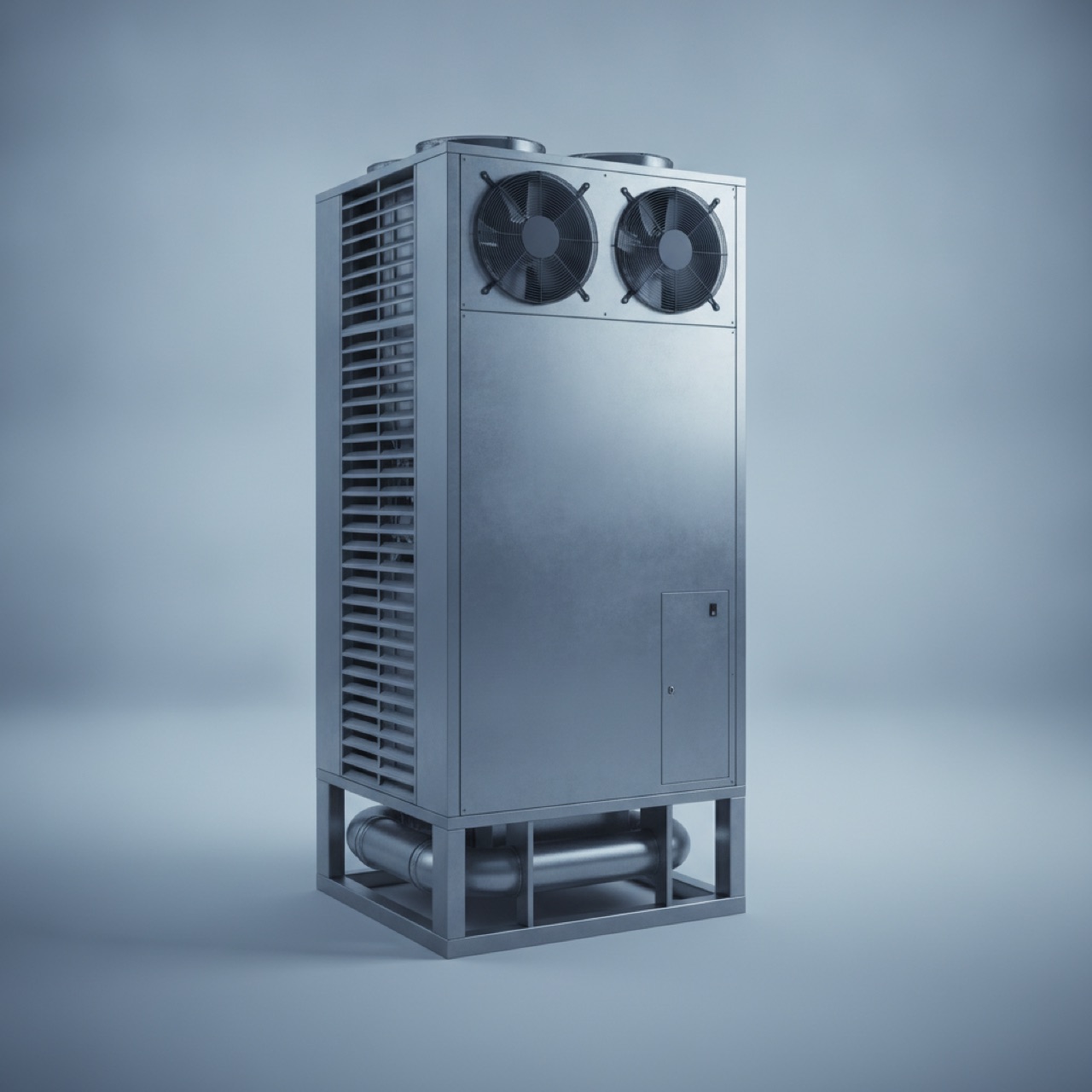
$1,099EcoPlus Commercial Grade Chiller 1 HP
EcoPlus — Commercial Grade 1 HP
Pros
- +10,050 BTU/hr handles large stock tanks, XL tubs, and commercial setups
- +Japanese compressor with proven reliability across hydroponic industry
- +Remote temperature controller with 30 ft cord - useful for outdoor setups
- +Powder-coated galvanized steel housing - genuinely outdoor-durable
Cons
- −Noticeably louder than the Penguin or Active Aqua units at 62-65 dB
- −Oversized for most home cold plunges under 150 gallons - 1/2 HP covers most builds
- −Heavy unit; not easy to move once positioned
Verdict
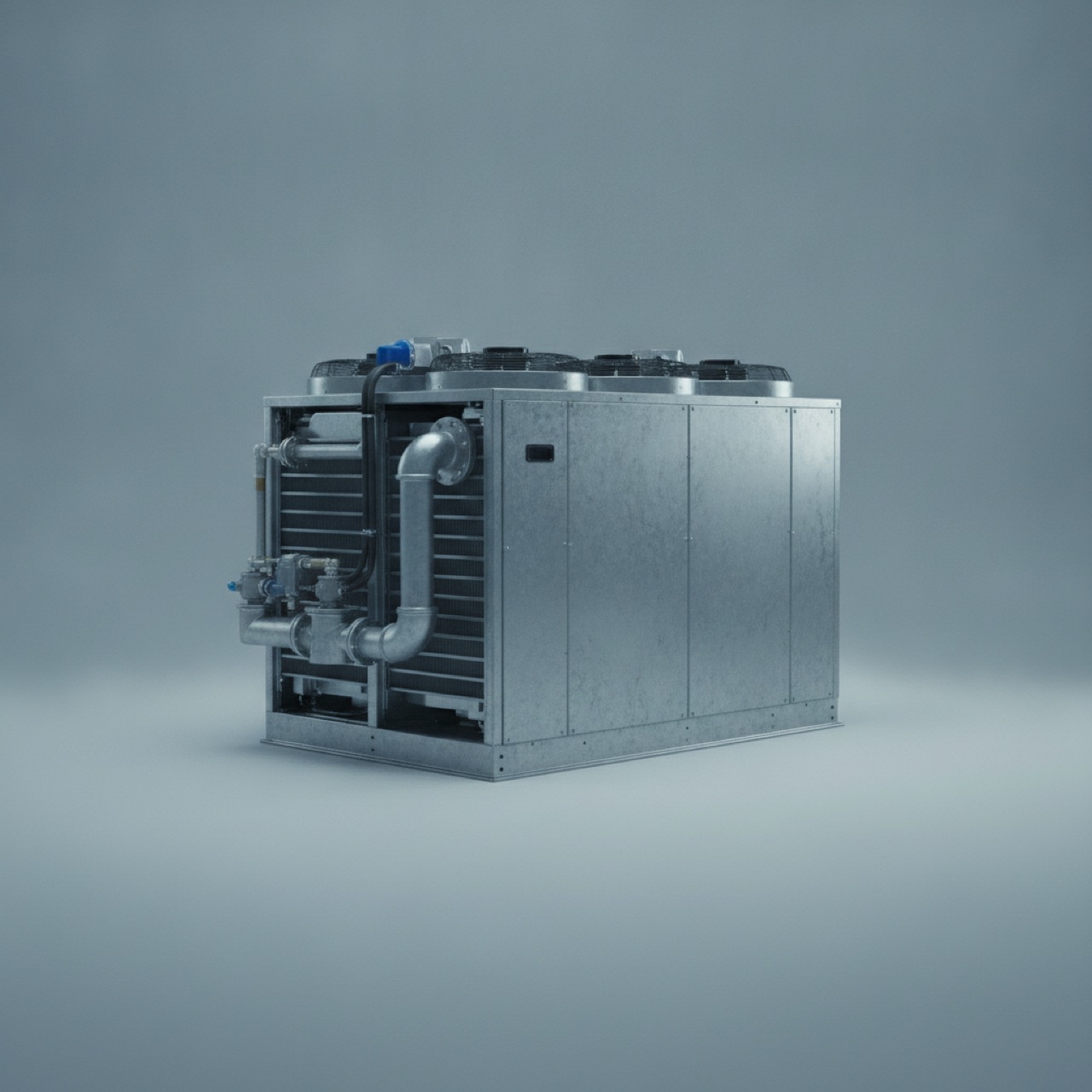
If you have a large setup - a stock tank over 150 gallons, a two-person tub, or a commercial wellness space - the EcoPlus 1 HP is the most affordable route to serious BTU output. The 30 ft remote controller is a practical differentiator for outdoor installs. It is louder than the competition, so position it away from living spaces. For a typical home setup, the 1/2 HP Active Aqua is a better fit.
05Best budget 1/2 HP option
$699EcoPlus Commercial Grade Chiller 1/2 HP
EcoPlus — Commercial Grade 1/2 HP
Pros
- +More BTU output per dollar than the Active Aqua at similar HP rating
- +Same Japanese compressor reliability as the 1 HP model
- +Remote controller included - useful for outdoor tubs
- +Handles 80-140 gallons adequately in moderate climates
Cons
- −Louder than the Active Aqua AACH50HP at equivalent cooling capacity
- −Galvanized housing is durable but adds weight compared to the AACH50HP
- −Fewer cold-plunge-specific features (no titanium evaporator marketing)
Verdict
The EcoPlus 1/2 HP competes directly with the Active Aqua AACH50HP at a slightly lower price. Its titanium heat exchanger is present but less prominently advertised. The remote controller is a genuine advantage for outdoor builds. Where it loses ground is noise - the galvanized steel housing is not as acoustically damped as the Active Aqua units. A solid option if you find it on sale below the Active Aqua price.
06Best for small tubs under 40 gal
$499Active Aqua 1/10 HP Water Chiller with Boost
Active Aqua — AACH10HP
Pros
- +Quietest option on this list at 50-55 dB
- +Compact footprint - works in tight spaces
- +Adequate for personal tubs, chest freezer conversions, and small plunges
- +Lowest electricity draw of any compressor chiller on this list
Cons
- −Only 1,020 BTU/hr - underpowered for anything over 40 gallons
- −Cannot maintain 40°F in tubs over 50 gallons on warm days
- −Price-to-BTU ratio is poor compared to the 1/4 HP model
Verdict
The AACH10HP is a niche pick. It works well for personal-size tubs under 40 gallons - a dedicated small plunge or a chest freezer build where you only fill partway. The noise level is genuinely low. But at 1,020 BTU/hr, it will not satisfy most people. The AACH25HP at $599 covers twice the volume for $100 more - most buyers should step up.
How to choose a cold plunge chiller
HP sizing: match the chiller to the tub
Horsepower is the primary sizing variable. A chiller that is undersized for your volume will run continuously, never reach setpoint, wear out prematurely, and void its warranty. Here is the practical sizing guide:
| HP | BTU/hr | Tub size | Best for |
|---|
| 1/10 HP | ~1,000 | Under 40 gal | Small personal tubs, chest freezer partial fill |
| 1/4 HP | ~3,000 | 40-80 gal | Barrels, smaller barrel tubs, Grizzly 400 |
| 1/2 HP | ~4,000-5,200 | 80-130 gal | Grizzly 450, stock tanks, most barrel builds |
| 3/4 HP | ~7,500 | 80-150 gal | Most home setups, hot climates, faster cool-down |
| 1 HP | ~10,000 | 150-250 gal | Large stock tanks, commercial, XL tubs |
Hot climate adjustment: If your setup is outdoors in a climate where summer ambient temperatures exceed 85°F, size up one category. A 1/4 HP that works fine in a 70°F garage will struggle in a 95°F backyard.
Compressor vs thermoelectric: it is not a real debate for cold plunge
Thermoelectric (Peltier) chillers run silently and have no moving parts. They also can only cool approximately 15-20°F below ambient temperature. In a 72°F room, that means 52-57°F at best - barely below the upper limit of what most people consider a cold plunge. In summer outdoors, thermoelectric units cannot reach cold plunge temperatures at all. All six picks on this list use compressor technology. Avoid thermoelectric options for cold plunge use.
Noise: what the dB numbers mean in practice
A 55 dB chiller is similar to a quiet office conversation. At 65 dB you are at normal conversation volume. Important context: compressor-based chillers cycle on and off - they are not running continuously. A chiller that runs at 62 dB for 8 minutes per hour is dramatically less intrusive than that number suggests.
For indoor setups (garage, gym, bathroom), the Penguin at 56 dB is the benchmark. The Active Aqua units are in the 55-62 dB range and are acceptable indoors. EcoPlus commercial units at 62-65 dB are better positioned outdoors or in a separate mechanical space.
Installation requirements
All six picks require a standard 120V NEMA 5-15 outlet. The Penguin includes an internal pump - no additional pump purchase required. The Active Aqua and EcoPlus units need a separate water pump (plan for $60-100 for a quality mag-drive pump in the 400-1,000 GPH range, matched to your tub volume and the chiller's flow requirements).
Allow 6-12 inches of clearance around the condenser (the heat-output side of the chiller) for airflow. Position chillers so they exhaust heat away from the tub - a chiller that recirculates its own hot exhaust loses significant efficiency. For outdoor setups, shade the condenser from direct sun.
★ Best overall cold plunge chillerScore 9.2/10
Penguin Chillers Cold Therapy Chiller
How to size a chiller to your tub
The HP chart above is the quick answer. If you want to size precisely, the math is straightforward. Cooling capacity is measured in BTUs, and the volume of water plus the temperature drop you want determines how many BTUs the chiller has to move. The working formula is:
Gallons × 8.33 × temperature drop (°F) = BTUs needed
The 8.33 is the weight of a gallon of water in pounds, and one BTU is the heat needed to change one pound of water by 1°F. Add a 20% safety margin, then divide by roughly 9,500 (the average BTU output per HP) to land on a horsepower rating. Worked example: a 100-gallon tub cooling from 70°F tap water to a 45°F setpoint needs 100 × 8.33 × 25 = 20,825 BTUs, plus 20% is about 25,000 BTUs. A 1/2 HP unit rated at 4,000-5,200 BTU/hr will reach and hold that in a few hours. This math matches the sizing chart published by AMChiller and the BTU formula used across the DIY community.
Three variables move the answer, and most undersizing mistakes come from ignoring them: your target temperature (a 45°F setpoint is a much bigger load than 55°F), your ambient temperature (chillers lose 15-25% of capacity as the air around them rises from 70°F to 95°F, so a "1 HP" chiller behaves like 0.75 HP on a hot day), and your insulation. The table below shows how the three interact.
| Tub volume | Target temp | Mild climate (65-75°F) | Hot climate (85-95°F) |
|---|
| Under 40 gal | 45-50°F | 1/10 HP | 1/4 HP |
| 40-80 gal | 45-50°F | 1/4 HP | 1/2 HP |
| 80-130 gal | 40-45°F | 1/2 HP | 3/4 HP |
| 130-200 gal | 38-45°F | 3/4 HP | 1 HP |
| 200+ gal | 38-45°F | 1 HP | 1.5 HP |
The one rule that matters: when in doubt, size up. An oversized chiller cycles off sooner and lasts longer. An undersized one runs continuously, never reaches setpoint, and wears out early. If you are building a larger tank, our
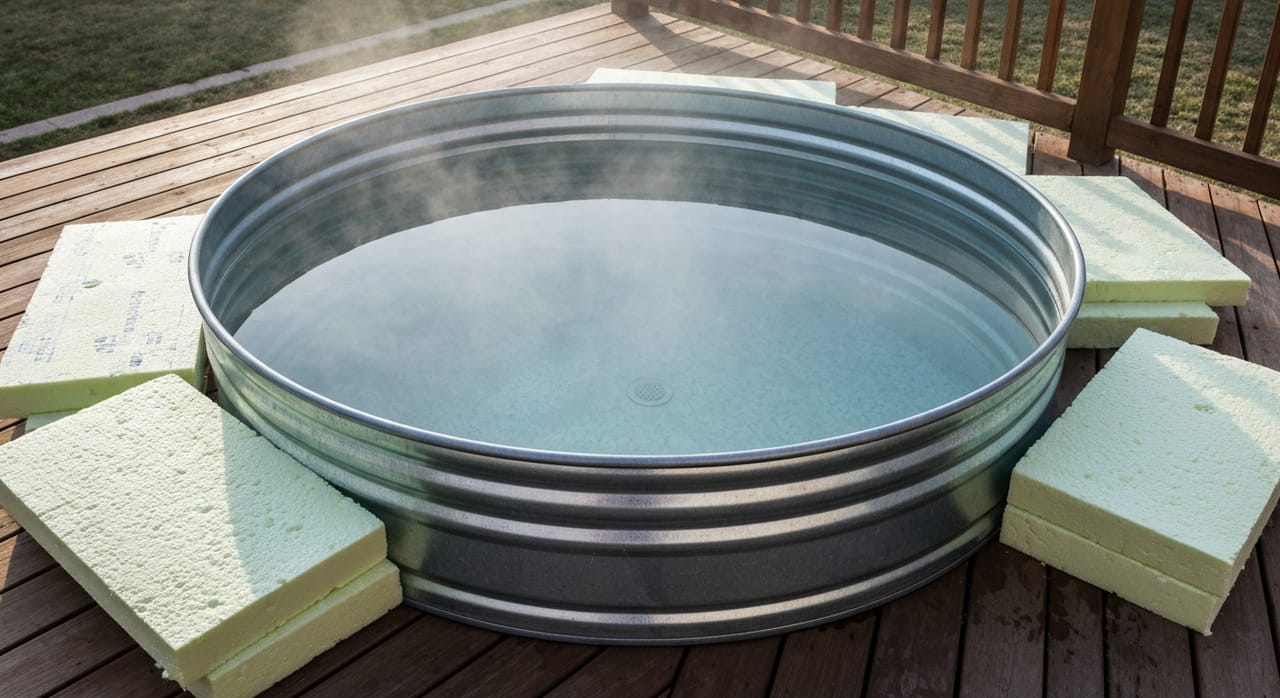
stock tank cold plunge guide covers matching a chiller to a 100-plus gallon galvanized tank.
Running cost and electricity use
The number that surprises people is how cheap a chiller is to run, because it does not run continuously. A compressor draws real power only while it is actively cooling. Once the water hits setpoint, the unit cycles on briefly to fight heat gain and otherwise sits at a trickle to run the circulation pump. A typical home chiller draws 200-1,000 watts when the compressor is active, and a mid-size 280-500 watt unit uses about 1.5-4 kWh per day once you account for that on-off cycling.
At the 2026 US average of roughly $0.16/kWh, that works out to about $0.25-$0.65 per day, or $7-$20 per month for a mid-size chiller in maintenance mode. Larger or premium units in hot summer months land higher, in the $40-$80 range. Here is what to budget by size:
| Chiller | Compressor draw | Maintenance cost/mo |
|---|
| 1/10 HP | ~150-250 W | $5-$12 |
| 1/4 HP | ~300-460 W | $12-$22 |
| 1/2 HP | ~500-600 W | $18-$30 |
| 3/4 HP | ~700-900 W | $18-$28 |
| 1 HP+ | ~1,000-1,400 W | $30-$60 |
Figures assume a US average around $0.16/kWh and a well-insulated tub. Your rate and climate move these numbers. Costs above are maintenance mode, not the initial cool-down from tap water, which is a one-time push.
The single biggest lever on running cost is not the chiller, it is insulation. Insulation and a tight-fitting cover slow how fast the water warms back up between sessions, which cuts how often the compressor cycles on. A well-insulated tub with a good lid can roughly halve the chiller's run time. A foam-insulated build with a floating cover can cut monthly cost 30-50% versus an uninsulated stock tank sitting in direct sun.
For real-world running numbers on a factory-integrated unit, our Plunge Evolve Series review logs the insulated-cabinet draw over a full month, and the Plunge Pro Chiller review covers what a higher-output unit costs to hold in the high 30s°F.
The DIY chiller option and when it makes sense
Here is the honest version. Many of the chillers marketed for cold plunge are the same hardware sold as aquarium and hydroponics chillers, with a markup. A unit sold as a "cold plunge chiller" for $1,500 can be internally identical to a $400 aquarium chiller. That gap is the entire case for going DIY: buy the reputable aquarium or hydroponics chiller directly, add a pump and fittings, and assemble it yourself. Builders who do this typically save 60-75% versus a branded all-in-one plunge. A complete DIY stock-tank setup runs about $900-2,200, versus $4,000-5,000 for a comparable prebuilt.
The parts list is short. You need the chiller (the biggest line item, $400-1,000 for a quality unit), a circulation pump (a mag-drive in the 700-1,200 GPH range, $100-300), plumbing fittings and hose ($30-100), a GFCI-protected outlet, an insulated tank or tub, and ideally an inline temperature controller for set-and-forget operation. The Active Aqua and EcoPlus units in this guide are exactly the chillers most DIY builders reach for, which is why they rank here alongside the purpose-built Penguin.
When DIY makes sense: you are comfortable with basic plumbing, you want the lowest cost per gallon of cooling, and you are building a larger tank where a branded plunge would be expensive. When it does not: you want a single warranty and phone number when something fails, you do not want to source and match parts, or you value a finished cabinet over a chiller sitting next to a stock tank. There is no shame in either path, but the price difference is real and worth naming.
If you want to go this route, our DIY cold plunge chiller guide walks through the full parts list and wiring, and the stock tank cold plunge build pairs a galvanized tank with the Active Aqua chillers ranked above. One spec to hold firm on: insist on a titanium evaporator. Copper heat exchangers corrode from skin oils and can leach copper into water you sit in daily, so titanium is the non-negotiable upgrade for a plunge you use regularly.
Frequently asked
What size chiller do I need for a cold plunge?+
For most home cold plunges (80-120 gallons), a 1/4 HP chiller is the minimum and a 1/2 HP is the sweet spot. Match HP to your tub volume: 1/10 HP for under 40 gallons, 1/4 HP for 40-80 gallons, 1/2 HP for 80-120 gallons, 3/4 HP for 100-150 gallons, and 1 HP or larger for 150+ gallons or setups in hot climates.
Inverter vs thermoelectric: which is better for cold plunge?+
For cold plunge use, compressor-based (inverter) chillers win every time. Thermoelectric (Peltier) chillers can only cool 15-20°F below ambient temperature - in a 72°F room, that gets you to 52-57°F at best. Cold plunge protocols call for 50-59°F minimum, with serious users targeting 38-50°F. Thermoelectric units are better suited to wine coolers and beverage chillers. Every chiller on this list uses a compressor.
How long does a cold plunge chiller take to cool a tub?+
Starting from 70°F tap water, a 1/4 HP chiller needs 6-10 hours to reach 50°F in a 100-gallon tub. A 1/2 HP cuts that to 3-5 hours. A 3/4 HP reaches 45°F in a 100-gallon tub in about 2-3 hours. Initial cool-down takes far longer than maintenance mode - once at setpoint, most chillers cycle briefly every 20-40 minutes.
Can I use an aquarium chiller for a cold plunge?+
Yes - the Active Aqua and EcoPlus models here are marketed for both aquariums and cold plunge use. The critical spec is a titanium evaporator. Copper evaporators corrode rapidly from skin oils and any salt or mineral content in your water. Titanium is inert in these conditions. Never use a copper-evaporator aquarium chiller on a cold plunge you will use regularly.
How noisy are cold plunge chillers?+
Most compressor-based chillers run at 50-65 dB when the compressor cycles on - similar to a conversation or a quiet dishwasher. Penguin rates their unit at 56 dB, which is genuinely quiet for indoor use. Active Aqua units run 55-62 dB. EcoPlus commercial units are louder at 62-65 dB. Crucially, compressors cycle on and off - they are not running continuously - so average noise is lower than peak.
How much does a cold plunge chiller cost to run monthly?+
At US average electricity rates ($0.13-$0.16/kWh), a 1/4 HP chiller in maintenance mode costs roughly $12-$22/month. A 1/2 HP runs $18-$30/month. The 3/4 HP Penguin estimates $18-$28/month at $0.12/kWh. Duty cycle (how often the compressor cycles on) depends on your insulation quality - a well-insulated tub can cut running costs by 30-40%.
What maintenance does a cold plunge chiller need?+
Clean the condenser coil with compressed air every 3-6 months. Verify pump flow rate monthly - low flow causes evaporator icing and can damage the compressor. If you have hard water, flush the evaporator with a diluted citric acid solution annually to remove scale. Keep water clean with ozone or a minimal sanitizer to prevent biofilm on the evaporator, which reduces heat transfer efficiency.
Can I use a cold plunge chiller outdoors?+
Most units can be used outdoors but need protection from direct rain and ambient temperatures below 32°F (which can freeze the refrigerant lines) or above 105°F (which overloads the condenser). Shade the chiller from direct sun. In hot climates, size up - a 1/4 HP unit that performs fine at 75°F ambient may struggle at 95°F. Active Aqua and EcoPlus units use standard NEMA 5-15 plugs and work with covered outdoor outlets.
How do I calculate what size chiller I need for my cold plunge?+
Use the formula: gallons x 8.33 x temperature drop (°F) = BTUs needed, then add a 20% safety margin. To convert to HP, divide by about 9,500 (average BTU per HP). A 100-gallon tub dropping from 70°F to 45°F needs 100 x 8.33 x 25 = 20,825 BTUs, plus 20% is roughly 25,000 BTUs. A 1/2 HP unit (4,000-5,200 BTU/hr) reaches and holds that in a few hours. Size up one HP category if you run outdoors above 85°F ambient, since chillers lose 15-25% of capacity as ambient rises from 70°F to 95°F.
Is it cheaper to build a DIY cold plunge chiller setup?+
Building your own with an aquarium or hydroponics chiller saves 60-75% versus a branded all-in-one plunge - the internal components are often identical. A chiller sold as a "cold plunge" unit for $1,500 can be the same hardware as a $400 aquarium chiller. A complete DIY stock-tank build with a quality chiller, mag-drive pump, fittings, and tank runs about $900-2,200, versus $4,000-5,000 for a comparable prebuilt plunge. The tradeoffs are assembly work, sourcing compatible parts, and no single-vendor warranty.
Does insulating my tub lower chiller running cost?+
Yes, significantly. Insulation and a tight-fitting cover are the cheapest way to cut the electricity bill - a well-insulated tub with a good lid can roughly halve the chiller's run time by slowing how fast the water warms back up. Since the compressor only draws real power when it cycles on to fight heat gain, fewer cycles means lower cost. A foam-insulated tub with a floating cover can cut monthly running cost 30-50% versus an uninsulated stock tank in the sun.
Reviewed by
Dr. Renée Halvorsen, PhD
Exercise physiologist. 11 years researching cold-water immersion at NTNU. Author of The Cold Protocol (Penguin, 2024).
Verified Expert38 articles