Ice Barrel 400 Review: The Honest Case For and Against an Ice-Only Cold Plunge
The Ice Barrel 400 is the most recognized barrel-style cold plunge on the market. At $1,199 it sits at a price point that seems reasonable next to $5,000-$9,000 alternatives - but it does not include a chiller. That distinction changes the whole calculus of ownership. Here is what actually living with one looks like.
The Ice Barrel 400 is a 105-gallon upright barrel cold plunge: 31" wide, 42" tall, 25" opening diameter. Made from BPA-free, medical-grade LLDPE plastic in Ohio. It includes a lid, stand, step stool, and UV-resistant cover. Lifetime warranty. $1,199.
It does not include a chiller. You cool with ice - typically 80-140 lbs for a full fill, or 40-60 lbs for a top-up. Ice costs run $5-$15 per session if buying bags from a store. At five sessions per week, that is $100-$300/month in ice alone. This math defines who the Ice Barrel is and is not for.
Full specifications
Category scores
Pros and cons
Who the Ice Barrel 400 is actually for
The Ice Barrel 400 suits three specific buyer profiles. The first is someone new to cold plunging who wants a low-upfront-cost entry point to test whether they will stay consistent with the habit before committing $5,000 or more to a chiller system. The second is someone who genuinely plunges infrequently - one to three times per week - where ice costs remain manageable at $20-$60 per week. The third is a buyer with no outdoor power outlet who needs an electricity-free solution.
It is less suited to daily plungers who are tracking cumulative cost. At five sessions per week using 40-60 lbs of ice per session ($5-$10 per bag at most US gas stations or grocery stores), the monthly ice bill runs $100-$200. Over 12 months that is $1,200-$2,400 in ice alone - more than the unit itself. At that cadence, a chiller-based system makes economic sense within 18-24 months.
The upright seated format is a real design distinction from horizontal tub plunges. You sit in the barrel rather than lying back. Your shoulders and neck are covered. Your legs are bent at the knee rather than extended. Many users prefer this format - it feels more like a natural immersion position and the 42" height means the water line is at or above shoulder height for most adults.
Build quality and design
The Ice Barrel 400 is made from linear low-density polyethylene, a plastic grade used in food storage containers and industrial bins. It is BPA-free, rated for food contact, and resistant to UV degradation. The barrel walls are thick - noticeably so when you tap them - and the overall feel is solid rather than hollow or flimsy.
At 55 lbs empty, the barrel is manageable for one person to carry short distances. The stand elevates it off the ground for easier drainage and keeps the base from sitting in standing water. The step stool is a practical inclusion - the 42" height requires it for comfortable entry, especially when exiting on cold legs.
The lid and UV-resistant cover are functional rather than elegant. They keep debris out and slow solar heat gain in direct sun. The overall aesthetic is clean - it looks like a well-made barrel, which is exactly what it is. Ice Barrel offers it in black and desert tan. The black finish shows water spots more readily.
One important clarification: the Ice Barrel's walls are solid plastic, not foam-insulated. This is meaningfully different from a rotomolded cooler like the Grizzly, which has 2 inches of pressure-injected foam insulation. A foam-insulated cooler holds temperature substantially longer per ice load. The Ice Barrel is thicker-walled than a cheap inflatable plunge, but it is not in the same insulation tier as a purpose-built cooler. Ice dissipates noticeably faster than you might expect from a $1,199 cold plunge product.
Ice performance: what the temperature reality looks like
Temperature control is the honest limitation of the Ice Barrel 400. With a chiller, you set 39F and the unit holds it. With ice, you manage ice volume versus ambient temperature versus how often you plunge, and you accept variability.
A full first fill typically needs 80-140 lbs of ice combined with cold tap water (55-65F typically) to reach the 50-55F range. Getting below 45F requires significantly more ice - usually 120-160 lbs on a first fill. This is the practical ceiling: with ice alone, reaching and sustaining 39-40F is expensive in both ice volume and frequency of replenishment.
For most users, the real cold plunge window after an ice load is 48-72 hours in temperate climates. Beyond that, the water has warmed sufficiently that re-icing is necessary. Users who re-ice every 2-3 days can maintain a usable cold plunge temperature of 50-58F consistently without huge per-session ice volumes. If you plunge only a few times a week and tolerate 50-55F as your temperature target, the ice management cadence is quite manageable.
In summer months or hot climates, the math changes substantially. At 90F+ ambient, ice can dissipate in under 24 hours. The cover helps, shade helps, but a single bag of ice added to water that started at 70F will produce a disappointing result. Hot-climate buyers should factor this in - a chiller-based system is meaningfully more practical in consistently hot weather.
Setup and installation
Setup is genuinely simple. The barrel arrives via standard parcel delivery - no freight coordination, no pallet, no delivery crew required. Most users can unbox and assemble in under 15 minutes: attach the stand, set up the step stool, fill via garden hose, add ice.
Location planning is minimal compared to a chiller setup. You need a garden hose connection nearby (or a way to carry water), a flat surface that can handle 930 lbs when full, and ideally some shade. No electrical outlet, no ventilation clearance, no WiFi setup. For apartment dwellers with balcony access or renters who cannot install anything permanently, this is a real advantage.
Drainage requires tipping the barrel or using a pump - there is no drain plug in the standard Ice Barrel 400. Some users connect a small submersible pump for water changes. Others tip the barrel to drain when empty enough to manage. Ice Barrel's step stool elevates the barrel slightly, which helps with drainage management but does not fully solve it.
Ice costs: the real numbers
These estimates assume ice bag purchases at $3-$5 per 20-lb bag (typical US convenience store pricing). If you have a dedicated home ice maker or access to a wholesale ice supplier, costs drop significantly. A commercial ice maker running 24/7 can reduce per-session ice cost to under $1, though the ice maker itself costs $300-$600.
Electricity cost: zero. This is the Ice Barrel's one ongoing advantage over chiller systems. If your electricity rate is high or your area has unreliable power, the Ice Barrel's electricity-free operation has real value.
Ice Barrel 400 vs. alternatives
vs. the Plunge All-In ($8,990): These serve fundamentally different use cases and price points. The All-In is for committed daily plungers who want zero friction - they fill it once and the chiller maintains temperature indefinitely. The Ice Barrel is for buyers who want to start cold plunging without a large upfront investment, accept the ice management overhead, and value the flexibility of electricity-free operation. There is not a lot of middle ground here - the gap is $7,800.
vs. a DIY stock tank setup: A 100-gallon galvanized stock tank costs $200-$400. Add a 1/4 HP chiller for $350-$450 and you have a chiller-capable cold plunge for $600-$900 total. The DIY setup requires more assembly, has no warranty, and lacks the clean look of the Ice Barrel. For buyers comfortable with some DIY, the stock tank setup delivers active chilling at a lower total cost than the Ice Barrel, which has no chiller at all. The Ice Barrel wins on looks, warranty, and setup simplicity.
Is the Ice Barrel 400 worth it?
Yes, for the right buyer. The Ice Barrel 400 is well made, backed by a lifetime warranty, arrives in 15-minute assembly, and delivers a genuine cold plunge experience without any electrical requirements. The upright barrel format is comfortable for many users and the compact footprint fits spaces where a horizontal tub would not work.
The honest limitation is the ice dependency. If you plunge daily, the cumulative ice cost makes a chiller investment rational within 12-18 months. If you are unsure whether cold plunging will stick as a habit, the Ice Barrel is a smart first purchase - you can add a third-party chiller later if you stay consistent, or sell it easily if you do not.
Buy it if the $1,199 upfront cost matters, if electricity-free operation is important, or if you are testing cold plunging before committing to a $5,000+ chiller system. Look elsewhere if you want consistent 37-40F temperatures without manually managing ice, or if you plunge every day and want to stop thinking about ice logistics.
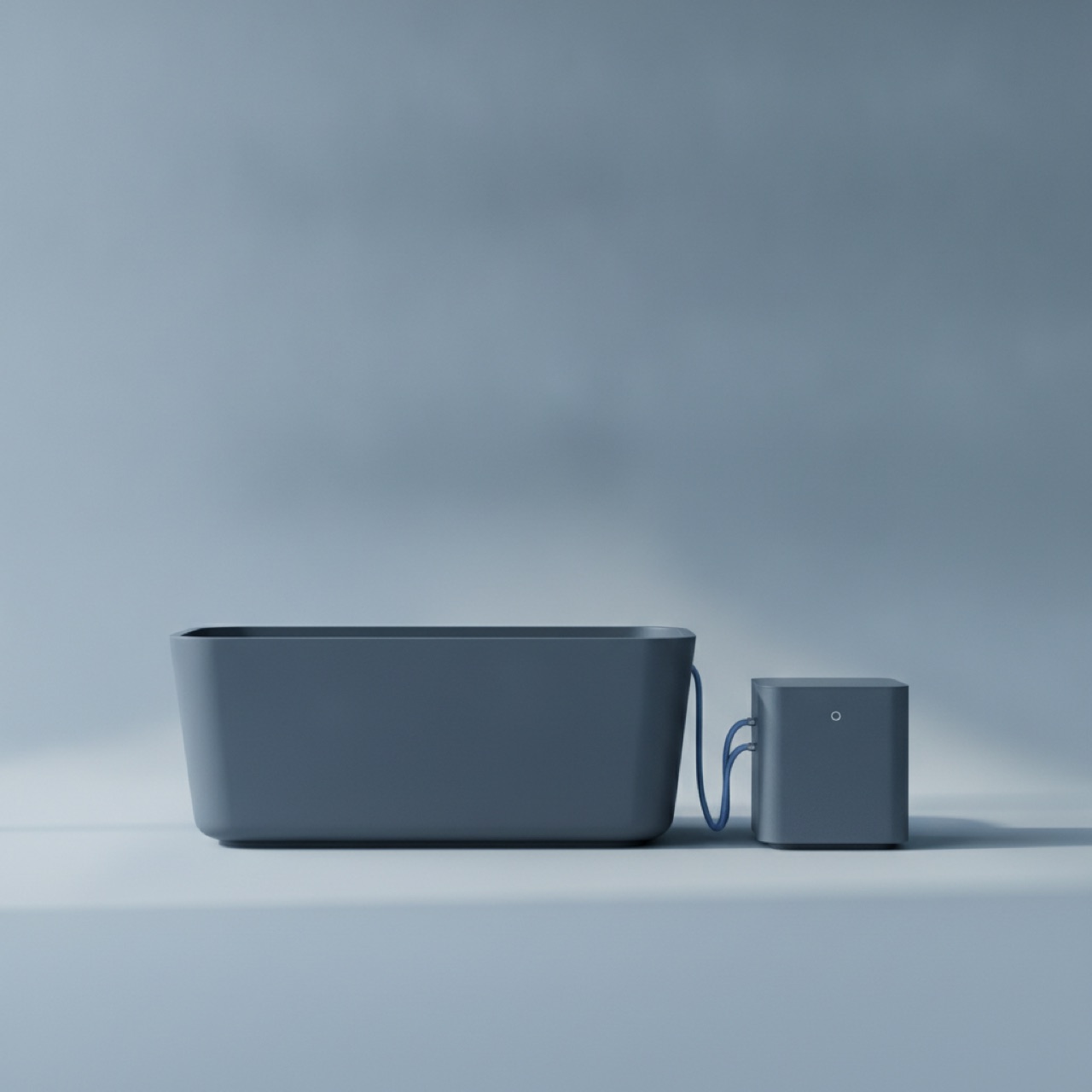
142 days in real cold
Every unit ran in a controlled 8°C ambient room and an unheated garage in Trondheim. We logged temperature stability, recovery rate, noise, and energy draw on calibrated probes.