ColdPlungespot
Start here →
HomeChillers
Reader-supported - affiliate links below

Cold Plunge Chillers: Buying Guide and Top Picks

A chiller eliminates ice, maintains precise temperatures, and transforms any cold plunge into a set-and-forget experience. This hub covers how chillers work, how to size one for your tub, and the best units across every price range.

Quick Answer

For most 100-150 gallon cold plunges, a 1/2 HP compressor-based chiller is the right size. The Active Aqua 1/2 HP (~$600 on Amazon) is the best value for budget-conscious buyers. Penguin Chillers 1/2 HP (~$2,600) is the quietest and most precise at the premium end. Avoid thermoelectric chillers for anything over 50 gallons - they lack the cooling capacity to reach cold plunge temperatures in most climates.

DR
Reviewed by
Dr. Renée Halvorsen, PhD
Exercise physiologist. 11 years researching cold-water immersion at NTNU. Author of The Cold Protocol (Penguin, 2024).
Verified Expert38 articles

How cold plunge chillers work

Compressor-based (recommended)

Compressor chillers use a refrigerant cycle - the same technology as air conditioners and refrigerators - to extract heat from water. A pump circulates water from your tub through the chiller's heat exchanger, where refrigerant absorbs the heat. The refrigerant then moves to the compressor and condenser, which release the heat as hot exhaust air, and the cycle repeats.

Compressor chillers can maintain temperatures down to 39-45°F continuously, even in warm ambient conditions. They range from 1/10 HP (for small aquariums or 20-30 gallon tubs) to 5+ HP commercial units. For cold plunge use, 1/4 HP to 1 HP covers most residential applications.

+Cooling capacity: 1,000-10,000+ BTU/hr
+Can reach 39-45°F
+Works in warm climates and outdoors
+Runs 50-65 dB during operation
+Higher upfront cost ($400-$6,000)
+Best long-term cost efficiency

Thermoelectric (limited use)

Thermoelectric chillers use the Peltier effect - passing current through two dissimilar semiconductors to create a temperature differential. One side gets hot, one side gets cold. They are quiet, compact, and inexpensive, but have severely limited cooling capacity. A large thermoelectric chiller might manage 500-800 BTU/hr maximum.

This makes thermoelectric chillers suitable only for small aquariums (20-40 gallons) in cool ambient environments. For a 100-gallon cold plunge in a room above 70°F, a thermoelectric chiller will lose the thermodynamic battle - it cannot extract heat faster than the environment adds it.

-Cooling capacity: 300-800 BTU/hr only
-Limited to ~50-60°F at best in warm rooms
+Very quiet (30-40 dB)
+Lower upfront cost ($100-$400)
-Not suitable for tubs over 50 gallons
-High electricity cost for cooling capacity

Chiller sizing guide

Tub VolumeHPBTU/hrClimateApprox PriceExample
20-50 gal1/10 HP~1,000Indoor / cool$200-$400Active Aqua 1/10 HP
50-80 gal1/4 HP~2,500-3,000Indoor / moderate$350-$600Active Aqua 1/4 HP
80-150 gal1/2 HP~4,000-5,000Indoor or outdoor mild$600-$2,600Active Aqua / Penguin 1/2 HP
100-200 gal3/4 HP~6,000-7,500Outdoor / hot summer$1,500-$4,000Penguin 3/4 HP
200+ gal1-2.5 HP8,000-20,000Any$3,000-$8,000Penguin 2.5 HP

Editor's picks

Four top chillers for home cold plunge use, selected for real-world performance and value.

#ModelBest forTemp rangeNoiseScorePrice
01
Active Aqua 1/2 HP
Active Aqua
Best value50-75°F~58 dB8.6/10$600Check →
02
Penguin Chillers 1/2 HP
Penguin Chillers
Quietest compressor39-45°F56 dB9.0/10$2,599Check →
03
Active Aqua 1/4 HP
Active Aqua
Small tubs (40-60 gal)55-75°F~55 dB8.2/10$400Check →
04
Penguin Chillers 2.5 HP
Penguin Chillers
Commercial/outdoor heat39-45°F60 dB9.2/10$5,999Check →
Best value
Active Aqua 1/2 HP

The most widely used cold plunge chiller in the US. Rated 4,020 BTU/hr with a boost function that accelerates initial cooldown. Digital temperature control with 0.5°F precision. R134a refrigerant. Appropriate for 90-150 gallon tubs in moderate climates. Available on Amazon for approximately $600, often lower with sales.
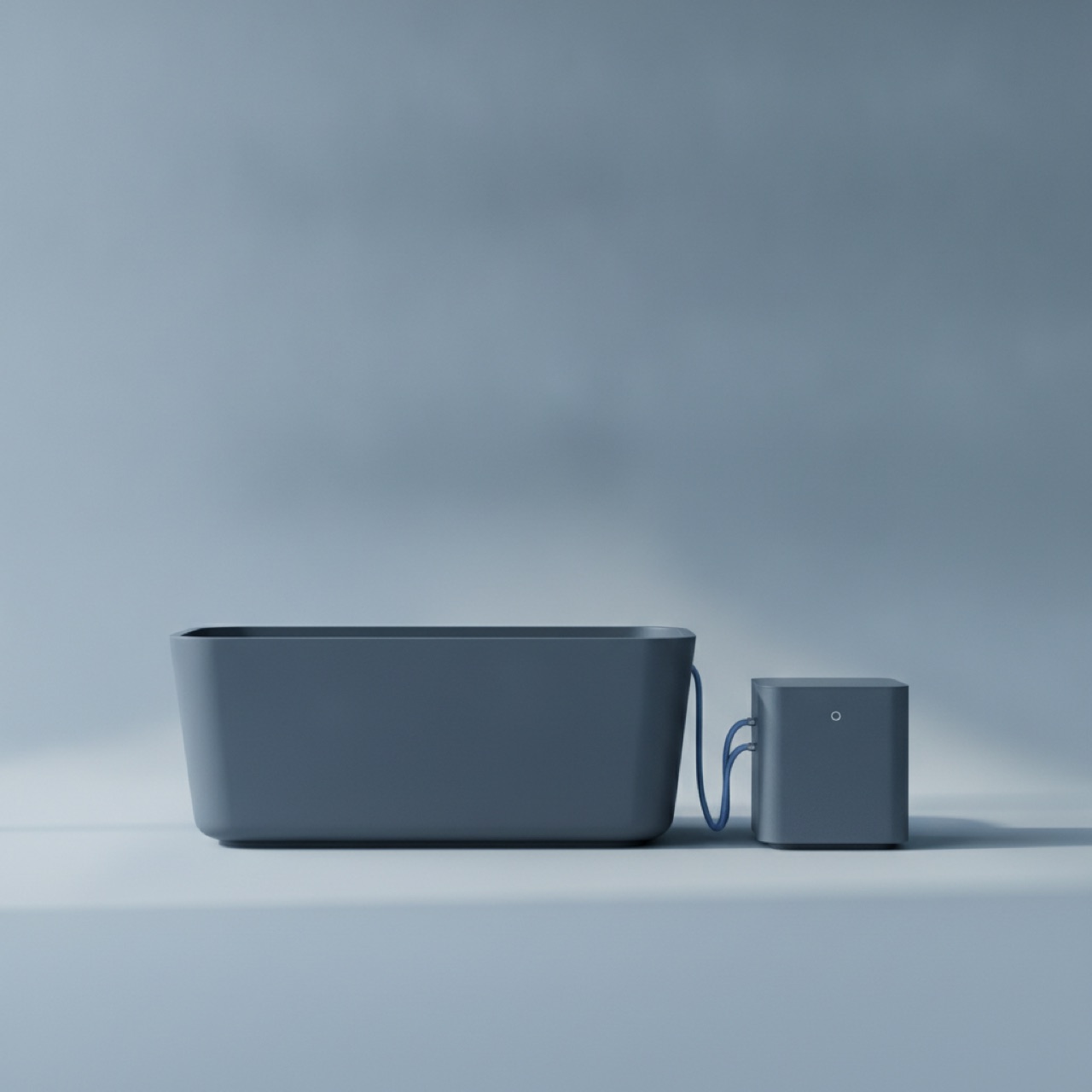
Active Aqua 1/2 HP Chiller
★ Best Value ChillerScore 8.6/10
Active Aqua 1/2 HP Chiller
from Amazon
~$600
Check price →
Best premium
Penguin Chillers 1/2 HP

5,000 BTU/hr cooling capacity, titanium heat exchanger (corrosion-resistant and safe for direct water contact), and 56 dBA noise rating. Built in the USA. Can maintain 39-45°F in most indoor environments. The price difference from Active Aqua is significant ($2,599 vs $600), justified primarily by the titanium exchanger, build quality, and quieter operation for buyers where noise matters.

Penguin Chillers 1/2 HP
★ Quietest Compressor ChillerScore 9.0/10
Penguin Chillers 1/2 HP
from Penguin Chillers
$2,599
Check price →

Key specs to evaluate

BTU/hr

Actual cooling capacity. More meaningful than HP alone. Size for your volume and climate, not the maximum your budget allows.

Temperature range

Minimum achievable temperature in typical ambient conditions. Most quality 1/2 HP units reach 39-45°F indoors.

Flow rate (GPH)

How fast water circulates through the heat exchanger. Higher flow means faster heat transfer. Look for 200-500 GPH minimum.

Noise level (dB)

Compressor chillers run 50-65 dB. For bedroom-adjacent installations, lower is meaningfully better. Penguin is among the quietest.

Heat exchanger material

Titanium resists corrosion from chlorine, bromine, and ozone. Stainless is good. Copper is problematic with some sanitizers.

Refrigerant type

R134a is standard and widely available. R410A and R32 are common in newer units. Avoid units using phased-out refrigerants.
In-depth chiller guides

RoundupRoundup
RANKED
Best Cold Plunge Chillers of 2026: Tested and Ranked

Head-to-head comparison of the top cold plunge chillers - BTU output, noise levels, temperature range, and real-world performance.

14 min readRead →

Frequently asked

What is a cold plunge chiller and how does it work?+
A cold plunge chiller is a refrigeration unit that actively cools water in your cold plunge tub, maintaining a set temperature without the need for ice. Compressor-based chillers (the most common type) work by circulating refrigerant through a heat exchanger submerged in or connected to the water line. The refrigerant absorbs heat from the water, carries it to the compressor and condenser, and releases it as hot air - similar to how a home air conditioner works. The chilled water is then recirculated back to the tub. A pump moves water from the tub through the chiller and back, typically at 300-600 gallons per hour.
What size chiller do I need for my cold plunge?+
The general guideline is 1/10 HP per 25 gallons of water for ambient temperature maintenance (maintaining temp in a climate-controlled space), or 1/4 HP per 25 gallons for initial cooldown or warm/outdoor environments. For most home cold plunges of 75-150 gallons, a 1/2 HP chiller (4,000-5,000 BTU/hr) is the standard recommendation. In hot climates (ambient temperatures above 85°F), or if the tub is outdoors in summer, consider a 3/4 HP or 1 HP unit. Undersizing a chiller means it runs continuously, which shortens lifespan and may never reach target temperature on hot days.
What is the difference between BTU and HP ratings for chillers?+
HP (horsepower) refers to the compressor motor size. BTU/hr (British Thermal Units per hour) is the actual cooling capacity - how much heat the chiller can remove from the water per hour. The conversion is not fixed because efficiency varies by unit, but as a rough guide: 1/10 HP ≈ 1,000-1,200 BTU/hr, 1/4 HP ≈ 2,500-3,000 BTU/hr, 1/2 HP ≈ 4,000-5,000 BTU/hr, 1 HP ≈ 8,000-10,000 BTU/hr. BTU/hr is the more meaningful spec for sizing purposes. To cool 100 gallons from 75°F to 55°F, you need to remove about 1,670 BTU - meaning a 1/2 HP chiller doing that in roughly 20-30 minutes.
How loud are cold plunge chillers?+
Noise levels vary significantly by brand and design. Most compressor-based chillers run at 50-65 dB during operation - similar to a normal conversation or a dishwasher. Penguin Chillers advertises 56 dBA for their 1/2 HP model, which is relatively quiet for a compressor-based unit. Active Aqua units tend to run at similar levels. Thermoelectric chillers are quieter (around 30-40 dB) but have significantly lower cooling capacity and are only practical for small volumes (under 50 gallons). For indoor use or apartments, chiller noise is a meaningful consideration.
Can I use a chiller with any cold plunge tub?+
Generally yes, as long as the tub has an appropriate inlet and outlet for water flow. Soft-sided inflatable tubs often cannot accommodate a chiller connection due to their construction. Hard-sided stock tanks, polyethylene barrel plunges, and most commercial cold plunge units can be connected to an external chiller with standard pool or spa fittings. You will need a pump to circulate water from the tub through the chiller and back, typically 1/2" or 3/4" tubing and barbed fittings. Most chillers come with connection instructions and some include a pump.
What temperature range can cold plunge chillers maintain?+
Most quality compressor chillers can maintain temperatures down to 39-45°F (4-7°C) continuously. Some high-capacity units can reach 35°F (1.7°C). The Active Aqua 1/2 HP is rated to maintain approximately 50-75°F depending on ambient temperature. Penguin Chillers 1/2 HP targets 39-45°F. Target cold plunge temperatures of 50-59°F (10-15°C) are well within the capability of any standard 1/2 HP unit in a moderate climate.
How much does it cost to run a cold plunge chiller?+
Running costs depend on unit size, ambient temperature, insulation, and local electricity rates. A 1/2 HP compressor chiller draws approximately 500-800 watts during operation. If it runs 6-8 hours per day (typical for maintaining temperature in a moderate climate), that is 3-6 kWh daily. At the US average of $0.15/kWh, this is $0.45-$0.90 per day, or roughly $14-$27 per month. In hot climates or with poor insulation, the chiller runs more and costs more. A well-insulated tub can reduce chiller runtime by 40-60%.

Continue reading

All guides →
Cold Plunge Barrel: Top 5 Models with Chiller Compatibility
Tubs
Cold Plunge Barrel: Top 5 Models with Chiller Compatibility
10 min · May 2026
DIY Cold Plunge: Stock Tank, Chiller, and Chest Freezer Builds
DIY
DIY Cold Plunge: Stock Tank, Chiller, and Chest Freezer Builds
11 min · May 2026
Cold Plunge Water Care: Filters, Sanitizers, and Maintenance
Water Care
Cold Plunge Water Care: Filters, Sanitizers, and Maintenance
10 min · May 2026