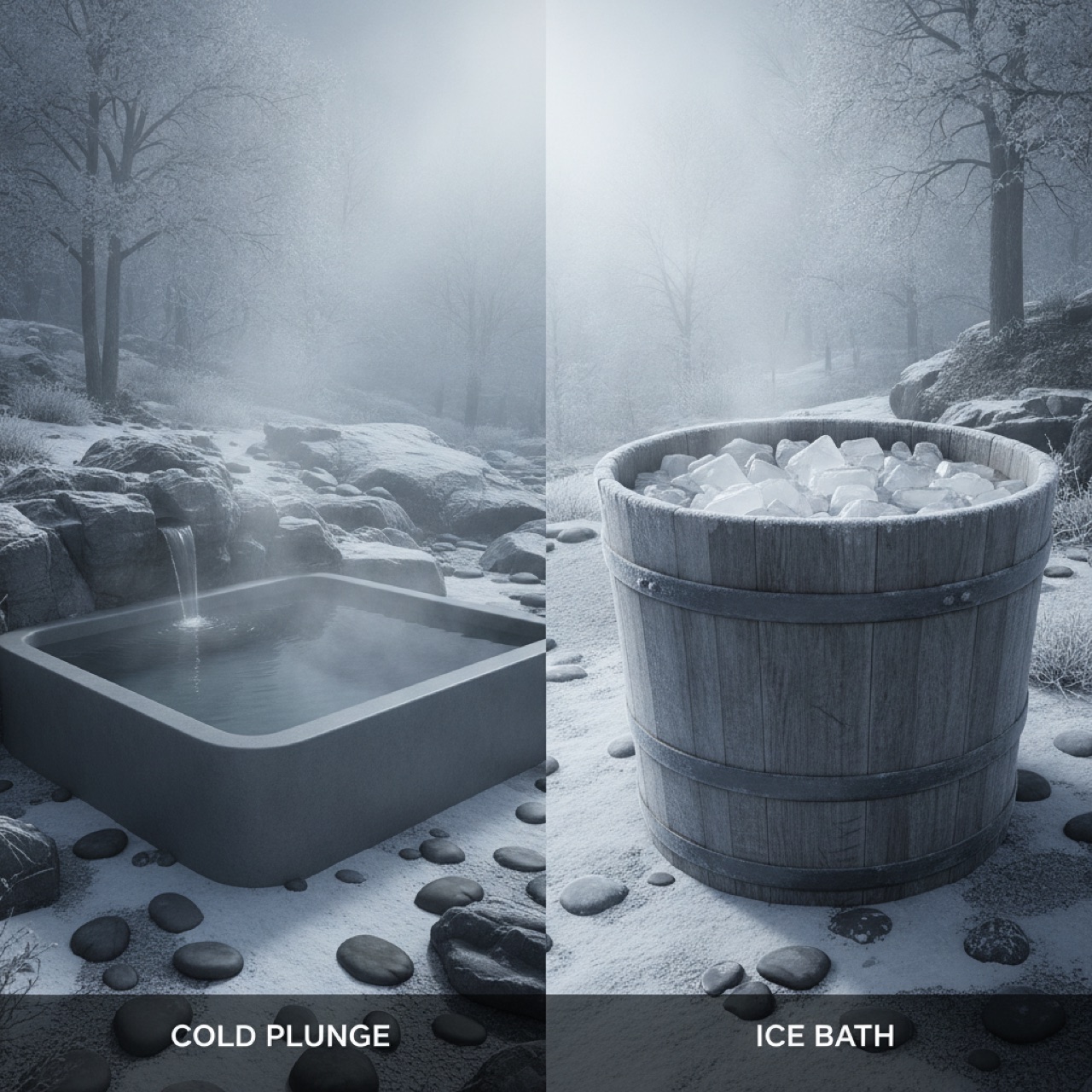
Cold Plunge vs Cold Shower:
A systematic comparison.
Cold plunges are meaningfully more effective than cold showers. Full-body immersion exposes 100% of skin simultaneously to stable cold water, triggering a stronger cold shock response and more robust norepinephrine release. Most published research used immersion, not showers. Cold showers provide real but reduced benefit, are free, and are a reasonable starting point for beginners.
The core differences
Cold plunging and cold showers both involve deliberate cold water exposure, but they are not equivalent interventions. Three structural differences explain why cold plunges consistently outperform cold showers in research and practice: surface area, temperature achievable, and temperature consistency.
Surface area: why immersion matters
The physiological response to cold water begins at the skin. The more skin exposed simultaneously to cold water, the more TRPM8 (cold thermoreceptors) fire, and the stronger the sympathetic nervous system activation. Full-body immersion in a cold plunge exposes approximately 100% of skin surface area simultaneously - roughly 1.7-2.0 m² for an average adult.
A cold shower, by contrast, hits 30-50% of skin at any given moment, depending on shower head type and body position. The water runs over the skin and drains immediately rather than surrounding it, and the portion of skin not under direct water flow warms through radiation from the body core. The effective cold stimulus is a fraction of what immersion produces.
This surface area difference drives the gap in cold shock response intensity, which in turn drives the gap in norepinephrine release - the primary studied mechanism behind the mood and metabolic effects.
Temperature comparison
Shower temperature is determined by your local groundwater temperature and your water heater's minimum setting. In most US regions, cold tap water ranges from 50-65°F (10-18°C) depending on season and geography. In warmer climates and summer months, "cold" tap water may not drop below 60°F even on the cold setting. You have limited ability to make a shower colder than the groundwater allows.
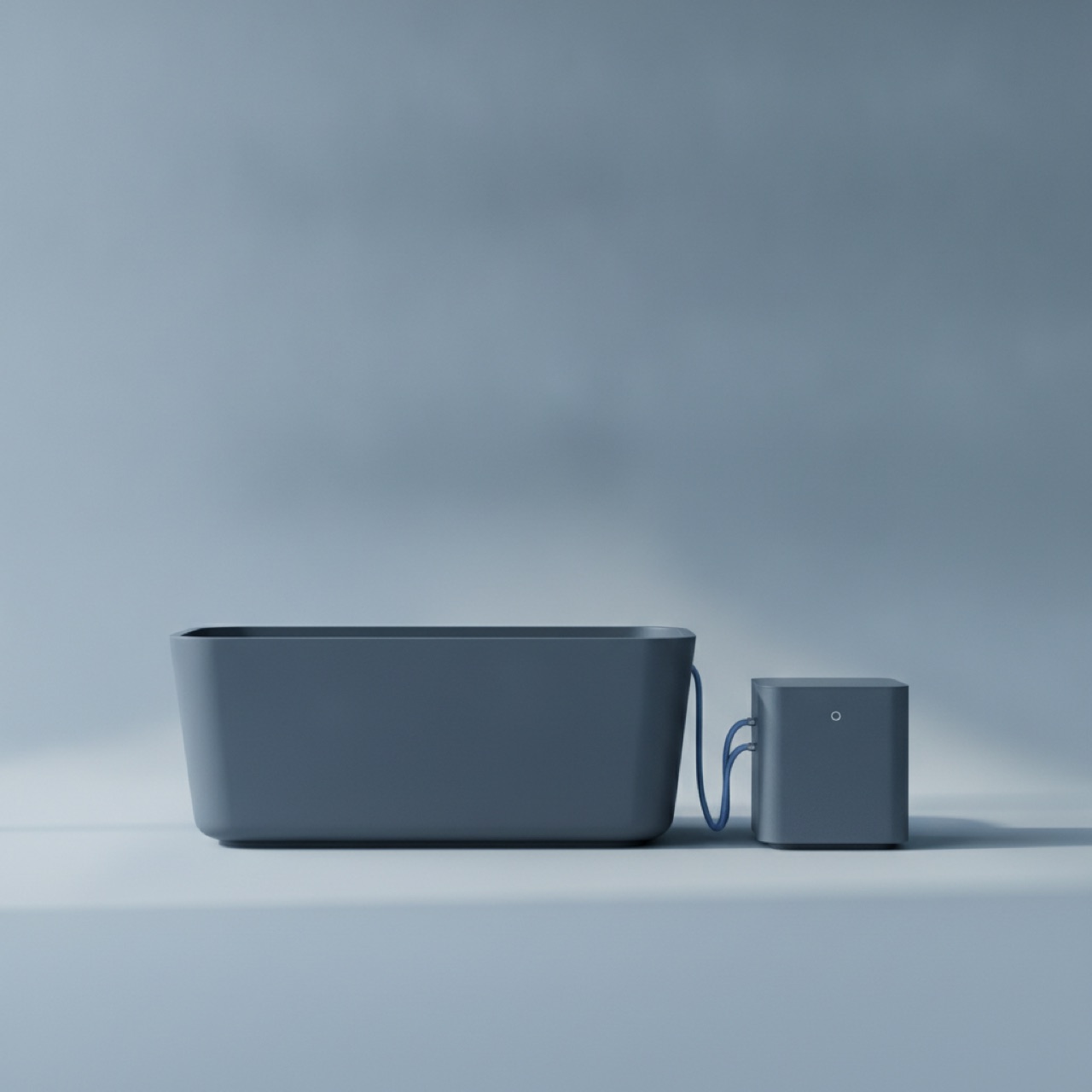
A cold plunge with a dedicated chiller can maintain any target temperature precisely - commonly 45-55°F (7-13°C). Even without a chiller, adding ice to a tub can achieve 45-50°F. This flexibility allows systematic progression through temperature ranges as you adapt, which is not possible with a shower.
Head-to-head comparison
| Factor | Cold plunge | Cold shower | Verdict |
|---|---|---|---|
| Surface area | Full body (100% skin exposure) | Partial (30-50% at any moment) | Plunge wins significantly |
| Temperature achievable | 40-50°F possible with chiller | 50-58°F typical cold tap limit | Plunge wins |
| Temperature consistency | Stable throughout session | Fluctuates; warms near body | Plunge wins |
| Cold shock response intensity | Strong, reliable, full-body | Mild to moderate, partial | Plunge wins |
| Norepinephrine release | Well-documented, 250-300% rise | Some evidence, less robust | Plunge wins |
| Research backing | Extensive (100+ trials) | Limited (most use immersion) | Plunge wins |
| Cost | Free (bathtub) to $5,000+ | Free | Shower wins |
| Convenience | Setup required | Always available | Shower wins |
| Time required | 5-10 min total | 2-3 min | Shower wins |
| Beginner accessibility | Moderate | High | Shower wins |
What the research actually used
This is the most important point for anyone trying to apply research findings to their own practice.
The landmark Soberg et al. (2021) study on norepinephrine elevation and brown adipose tissue activation used full-body cold water immersion. The 2012 Cochrane review on cold water immersion for muscle recovery (17 trials, 366 subjects) used immersion. The sports medicine literature on post-exercise cold therapy almost universally used immersion - typically in ice baths, cold tanks, or similar.
When people ask "do cold showers have the same benefits as cold plunges?", the honest answer is: we largely do not know, because most benefits were not studied in showers. The research that exists on cold showers specifically is more limited in scope, and shows smaller effect sizes where measured.
A 2016 randomized controlled trial in PLOS One by Buijze et al. found that adding a cold shower (ending 30-90 seconds cold, at whatever temperature the tap ran) to a regular shower reduced sick days by 29% compared to a control group. This is real benefit. But it does not speak to the deeper metabolic and neurochemical claims that require immersion.
Cold shower benefits: what is real
Cold showers are not useless. The Buijze 2016 study is legitimate, and the subjective experience of increased alertness and mood improvement after cold showers is widely reported and physiologically plausible. What showers cannot reliably replicate:
- The intense cold shock response (and its neurochemical cascade) that occurs with full-body immersion
- Consistent dosing at a known temperature for a specific duration - essential for protocol-based training
- The post-exercise recovery effects documented in immersion research (especially for DOMS)
- The brown fat activation and metabolic changes associated with sustained cold immersion protocols
Cost comparison
Who should use which
See our cold plunge tub reviews and chiller reviews for equipment recommendations.