How Much Ice for a Cold Plunge?
The real math, not a guess.
For a 100 gallon tub of 70°F tap water: about 54 lb of ice (5 to 6 bags) to reach 59°F, about 103 lb (10 bags) to reach 50°F, and about 133 lb (13 bags) to reach 45°F. The shortcut: 1 lb of ice per gallon for every 2°F of drop. Pre-chilling the fill water overnight cuts those numbers roughly in half, and a lid cuts the ice you burn holding temperature by more than half again.
Why ice works: the physics
Ice does not cool water because it is cold. It cools water because it melts. That distinction is the whole reason a few bags of ice can move a hundred gallons.
Two constants run the calculation. The first is the specific heat of water: 1 BTU removes 1°F from 1 pound of water. A US gallon of water weighs 8.34 lb, so cooling one gallon by one degree takes 8.34 BTU. The second is the latent heat of fusion of water: 144 BTU per pound. That is the energy a pound of ice at 32°F absorbs to become a pound of liquid water at 32°F, with zero change in temperature. It is a phase change, not a temperature change, and it is where nearly all the cooling comes from.
Put the two side by side and the leverage is obvious. Warming a pound of water by 1°F takes 1 BTU. Melting a pound of ice takes 144 BTU. Per pound, the melt does about 144 times the work. That is also why a well-iced tub parks at a stable temperature until the last visible ice disappears, then starts climbing quickly. The ice was buffering the whole time.
The meltwater then does a little extra work. Once a pound of ice becomes a pound of 32°F water, it still has to warm up to your target temperature, absorbing 1 BTU per degree along the way. At a 50°F target that is another 18 BTU per pound, so each pound of ice is worth 162 BTU rather than 144. This is a real term and it is why the ice requirement does not scale in a straight line as you chase colder targets.
The formula, worked out
Set the heat gained by the ice equal to the heat lost by the water and solve for ice mass:
Every symbol is measurable. Gallons is your fill volume, 8.34 is the weight of a gallon of water in pounds, 144 is the latent heat of fusion in BTU per pound, and 32 is the melting point in Fahrenheit. Here it is worked out for a 100 gallon tub going from 70°F tap water to a 50°F intermediate target:
Heat to remove = 834 lb x 1 BTU/lb·°F x (70 - 50)°F = 16,680 BTU
Cooling per lb of ice = 144 + (50 - 32) = 162 BTU/lb
Ice needed = 16,680 / 162 = 103 lb ≈ ten 10 lb bags
Run the same three lines for a 45°F target and the answer moves to 133 lb, because you are removing 25 percent more heat while each pound of ice is worth slightly less (157 BTU instead of 162). Run it for 59°F, a sensible beginner target from our cold plunge temperature guide, and it drops to 54 lb. The last five degrees always cost the most.
Two small effects work in your favor and are left out of the table deliberately. Freezer or freshly delivered bagged ice is often 10°F to 20°F rather than 32°F, and ice has a specific heat of roughly 0.5 BTU per pound per degree, so sub-freezing ice contributes another 6 to 11 BTU per pound before it even starts melting. That is a 4 to 8 percent bonus. Working from the plain 144 figure leaves you a margin rather than a shortfall.
Ice quantity chart
All figures below assume a 70°F starting temperature, which is a fair summer tap-water estimate for most of the United States. Bag counts use the common 10 lb bag; halve them for 20 lb bags.
| Tub volume | → 59°F (lb) | 10 lb bags | → 50°F (lb) | 10 lb bags | → 45°F (lb) | 10 lb bags |
|---|---|---|---|---|---|---|
| 60 gal | 32 | 3.2 | 62 | 6.2 | 80 | 8.0 |
| 70 gal | 38 | 3.8 | 72 | 7.2 | 93 | 9.3 |
| 80 gal | 43 | 4.3 | 82 | 8.2 | 106 | 10.6 |
| 90 gal | 48 | 4.8 | 93 | 9.3 | 120 | 12.0 |
| 100 gal | 54 | 5.4 | 103 | 10.3 | 133 | 13.3 |
Note: this is ice needed to reach the target, not to hold it. Add 3 to 6 lb for a typical 20 minute session in an uninsulated tub, more in hot weather. Also remember that ice displaces water: 100 lb of ice occupies about 13 gallons of space, so fill the tub about 15 percent short or you will flood the deck.
The 1-per-gallon-per-2-degrees rule
If you do not want to run arithmetic at the tub, the chart collapses into one line: roughly 1 lb of ice per gallon of water for every 2°F you want to drop. A 100 gallon tub dropping 20°F needs about 100 lb. The exact answer was 103 lb, so the rule is accurate to within a few percent across the whole beginner-to-advanced range.
The rule drifts at the extremes. For very small drops it slightly overestimates, and below about 40°F it underestimates, because the meltwater term shrinks toward zero while the heat load keeps growing. For anything between 45°F and 60°F, which covers essentially all useful plunging, it is close enough to shop by.
Pre-chilling cuts ice use in half
The single largest variable in the formula is not the target temperature. It is the starting temperature. Ice requirement scales directly with the temperature gap you are closing, so shaving the gap is the cheapest possible intervention.
100 gal, 55°F → 45°F: 834 x 10 = 8,340 BTU / 157 = 53 lb of ice
Saving from a 15°F pre-chill: 80 lb, about 8 bags, roughly $24 per session
Practical ways to start colder, in rough order of return:
- Fill the night before and leave it covered outdoors. In most climates, overnight air is 10°F to 20°F cooler than daytime. A covered tub left out overnight commonly drops 8°F to 15°F for free. This alone can halve your ice bill.
- Fill from the coldest tap in the house. Outdoor spigots run off buried supply lines and are often 5°F to 10°F cooler than an indoor kitchen tap that has been sitting in a warm wall cavity. Let the line run 60 seconds before filling.
- Plunge in the morning. Water temperature tracks ambient temperature. A 6 a.m. session needs meaningfully less ice than a 4 p.m. session in the same tub.
- Reuse yesterday’s water. If your water chemistry is under control, you are starting from whatever the tub drifted to overnight rather than from fresh 70°F tap water. This is why filtration and sanitation pay for themselves in an ice-only setup.
- Shade and site the tub properly. Direct sun on a dark tub is a real heat load. Moving the tub to full shade can be worth several degrees of starting temperature on a hot day.
Insulation, lids, and melt rate
Once the tub is at temperature, every BTU that leaks in has to be paid for with more ice. There are three leak paths, and they are not equal.
The numbers matter here. An uncovered, uninsulated 100 gallon tub sitting in 85°F air gains somewhere around 1,500 to 2,500 BTU per hour. Divide by 144 and that is 10 to 17 lb of ice per hour burned just standing still. Insulate the shell and put a lid on it and that heat gain typically falls to 300 to 600 BTU per hour, or 2 to 4 lb of ice per hour. Over a week of daily plunging, that difference is well over 500 lb of ice. Insulation on a stock tank costs about $60 and pays for itself in under two weeks.
If you are building from scratch, insulate at the start rather than retrofitting. Both our DIY cold plunge tub build and the stock tank cold plunge guide cover the wrap-and-lid approach in detail.
Melt and top-up during a session
Water temperature rises during a plunge for two reasons. Ambient heat leaks in, and your body dumps heat into the water. A person at rest gives off roughly 350 BTU per hour, and a cold-shocked body running peripheral vasoconstriction is shedding heat faster than that at the skin. Across a 3 to 5 minute immersion the body contribution is small, on the order of 20 to 40 BTU, which is a fraction of a pound of ice. Ambient gain over the 20 to 30 minutes the tub sits uncovered before and after is the bigger term.
Practically this means: add all your ice at once, stir it in, wait 10 minutes for equilibrium, then measure before you get in. Ice added and immediately entered gives a false reading, because the surface layer near the ice is much colder than the bulk. Uneven ice also produces localized cold spots that make the plunge feel colder than it measures, which is a safety issue if you are calibrating your tolerance from a thermometer number that does not reflect the water you are actually in.
For multi-person or back-to-back sessions, hold back 20 to 30 percent of your ice and add it between plungers rather than dumping everything at the start. Ice that has already melted is doing nothing for the second person.
Ice cost vs a chiller
Bagged ice runs about $0.20 to $0.40 per pound in 2026, with 10 lb bags commonly $2.50 to $3.50 at grocery and convenience stores. Using $0.20 to $0.30 per pound and the 103 lb figure for a 100 gallon plunge at 50°F, a single session costs roughly $21 to $31 in ice.
| Frequency | Ice / week | Ice / year | Chiller upfront | Chiller power | Payback |
|---|---|---|---|---|---|
| 1 session / week | $21 - $31 | $1,090 - $1,610 | $800 - $3,000 once | $120 - $240 / yr | 2 to 3 years |
| 2 sessions / week | $41 - $62 | $2,150 - $3,220 | $800 - $3,000 once | $120 - $240 / yr | 5 to 15 months |
| 4 sessions / week | $82 - $124 | $4,300 - $6,450 | $800 - $3,000 once | $120 - $240 / yr | 3 to 8 months |
| 6 sessions / week | $124 - $186 | $6,450 - $9,670 | $800 - $3,000 once | $120 - $240 / yr | 2 to 5 months |
Ice cost assumes 103 lb per session at $0.20 to $0.30 per pound. Chiller power assumes a 1/4 to 1/2 HP unit drawing 300 to 800 watts while cycling, roughly 1.5 to 4 kWh per day at $0.16 per kWh. Payback compares annual ice spend against chiller purchase plus power.
The arithmetic is not subtle. At two sessions a week, an ice-only routine costs more in the first year than a mid-range chiller costs outright. At four or more sessions a week, ice becomes the most expensive part of the entire hobby, ahead of the tub itself. And that is before counting the logistics: hauling 100 lb of ice from a store two or three times a week is a chore that quietly ends more cold plunge routines than the cold does.
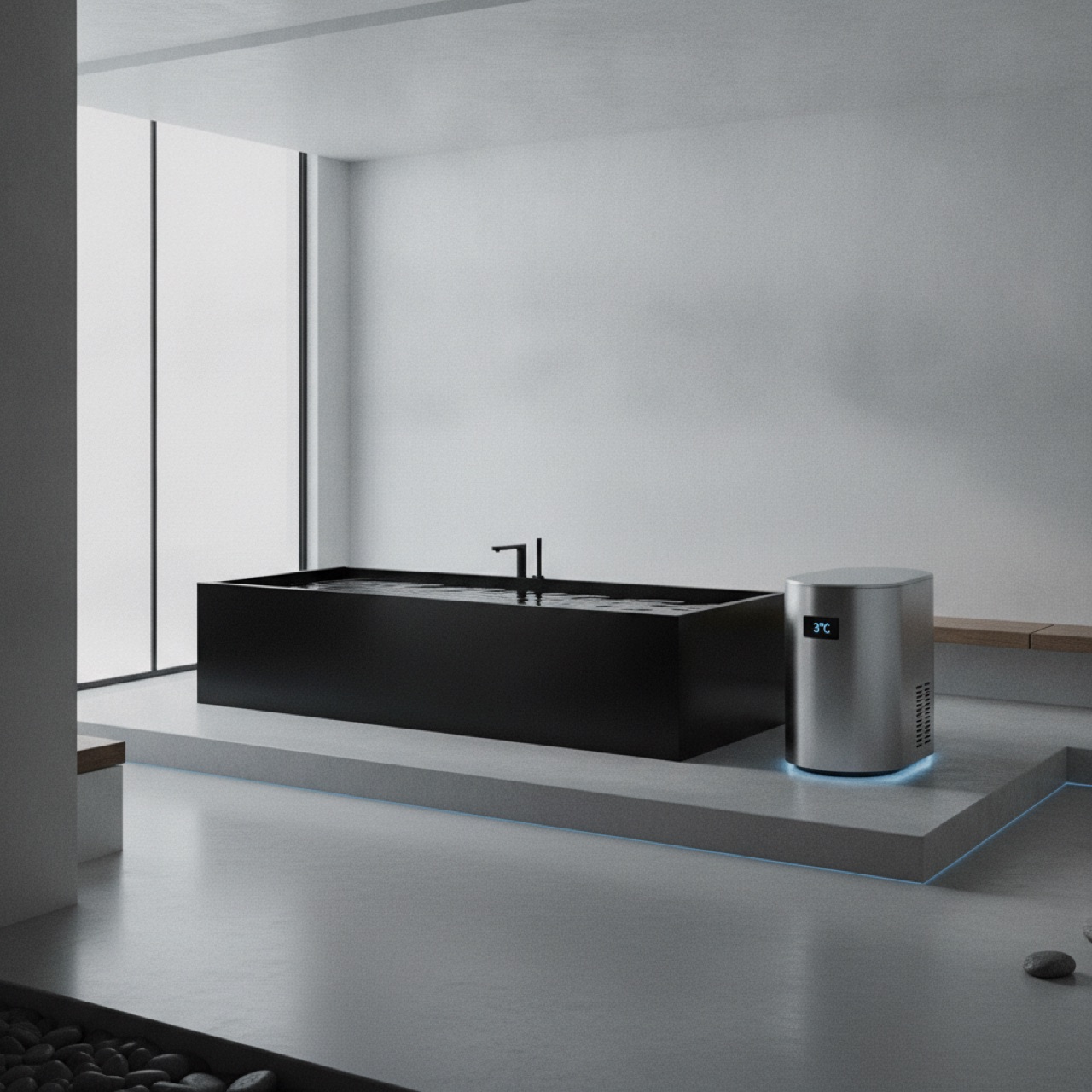
A chiller also buys something ice cannot: a stable set temperature. Ice gives you a temperature that starts too cold, passes through your target, and ends too warm. If you care about training at a consistent dose, that variability is a genuine problem. Our chiller buyer guide compares units by tub size and ambient temperature, and the full ownership picture is in the cold plunge cost breakdown.

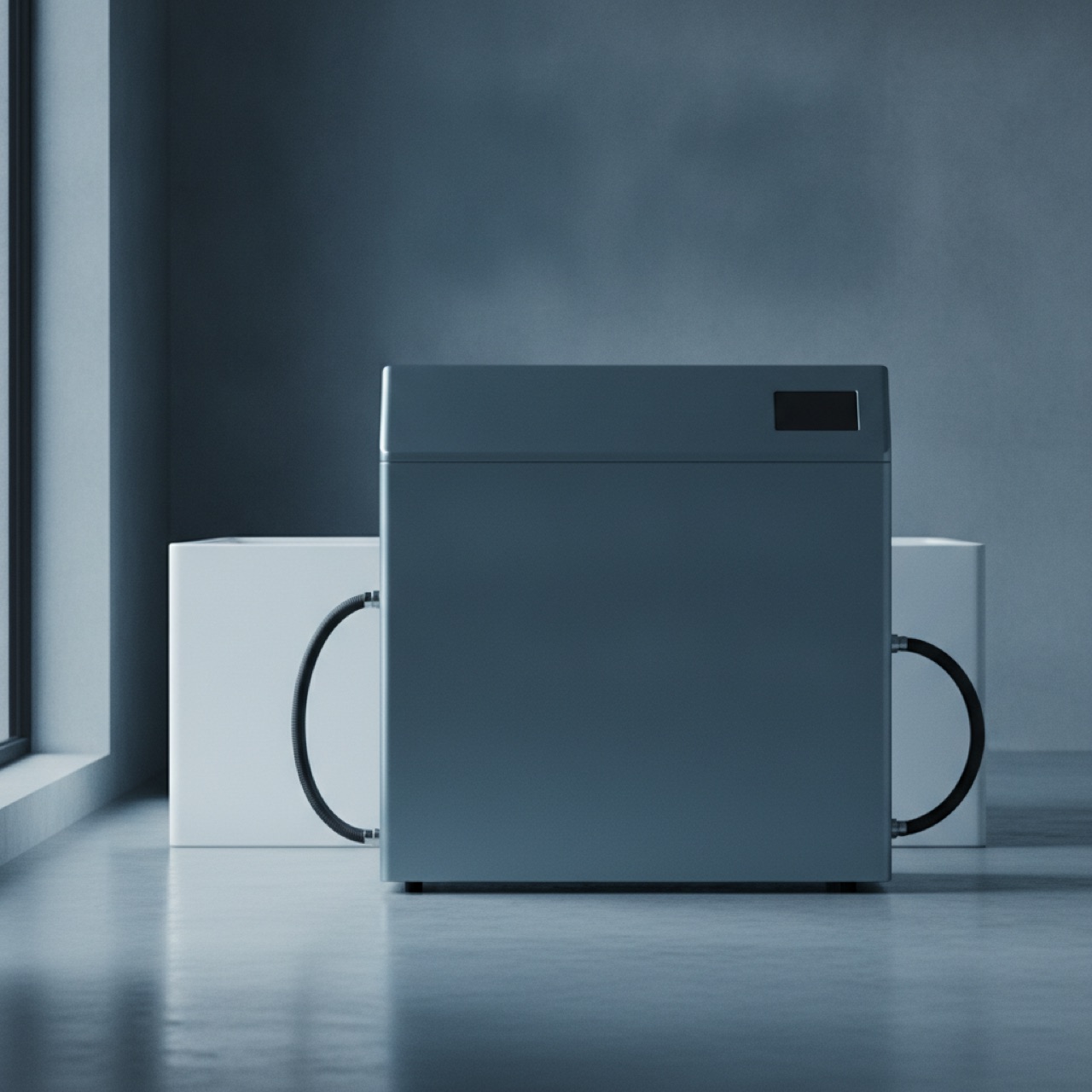
A 1/4 HP hydroponic chiller holds a 60-100 gallon insulated tub in the 45-55°F range without a single bag of ice. Pays for itself in roughly 20 to 30 sessions at typical ice prices.
Practical notes and mistakes
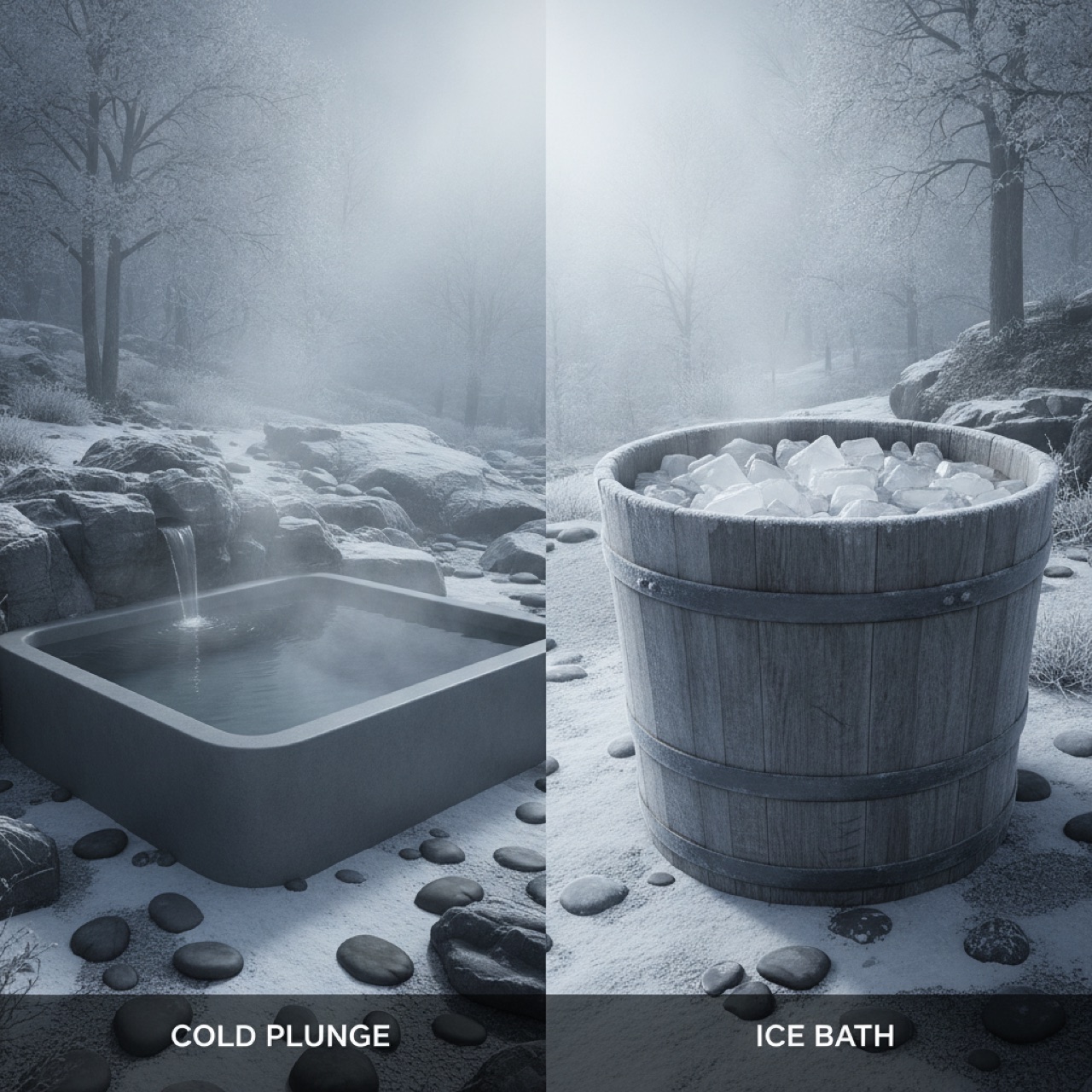
Related reading: cold plunge vs ice bath covers why the two setups diverge once you plunge more than once a week, and a waterproof digital thermometer under $20 is the one purchase that makes every number on this page verifiable in your own tub.