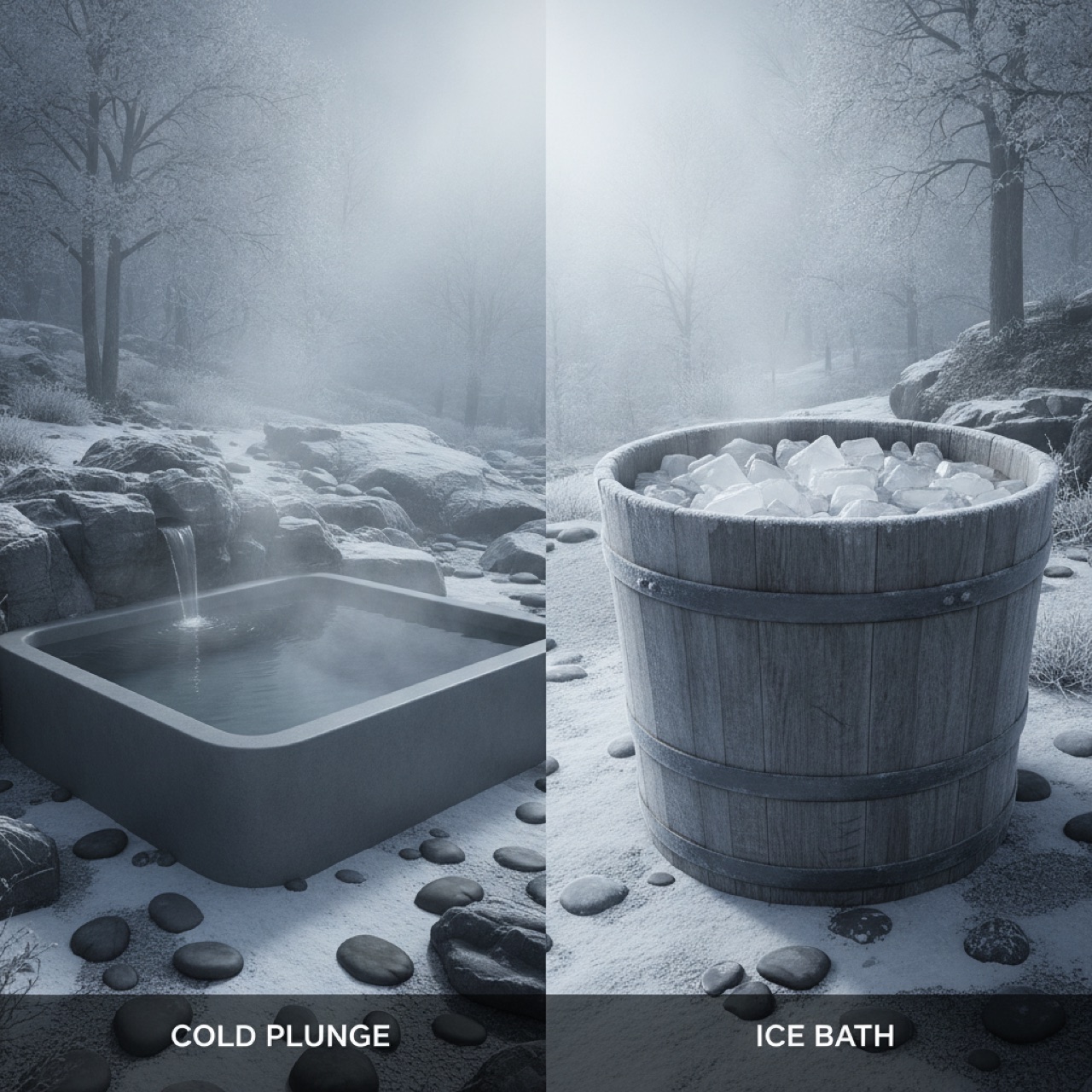
Cold Plunge vs Cryotherapy:
colder air is not deeper cold.
For recovery and muscle soreness, cold plunge wins on evidence and value. Water conducts heat about 25 times faster than air, so a plunge at 10-15C cools deeper tissue than a cryotherapy chamber at -110C to -140C, which chills only the skin for 2-3 minutes. Cold water immersion has a far larger trial base (a 2012 Cochrane review of 17 trials), head-to-head studies show cryotherapy adds no recovery benefit over immersion, and a plunge is a one-time cost against $40-100 per cryotherapy session. Cryotherapy earns a place only as an occasional, convenient novelty.
How each method actually cools you
The two methods sound similar because both are "cold," but they work through physically different mechanisms, and the difference decides most of the comparison.
Cold water immersion, the general category that includes a cold plunge and an ice bath, surrounds your body with water usually held between 10 and 15C (50-59F). Water is a strong thermal conductor. It pulls heat off your skin roughly 25 times faster than air at the same temperature, and because it wraps every submerged surface, it lowers not just skin temperature but deeper muscle and, over a few minutes, core temperature. That deeper cooling is the reason immersion produces the vasoconstriction, reduced tissue metabolism, and post-cold rebound circulation that the recovery research is built on.
Whole-body cryotherapy (WBC) is different. You stand in a chamber or cabin for 2-3 minutes while cold air, often generated with liquid nitrogen, drops the surrounding temperature to somewhere around -110C to -140C. That number is far more extreme than any plunge, and it is what the marketing leans on. But air is a poor conductor. Despite the ultra-cold reading, the chill stays largely at the skin. Your core temperature barely moves in a session that short. Cryotherapy delivers a sharp, brief surface shock, not the deep cooling that immersion delivers.
This is the single fact most comparisons get wrong. A colder air temperature does not mean more cooling. If you want your muscles genuinely cooled, water at 12C does more work than air at -130C. For a deeper look at how immersion temperature drives the response, see our guide on cold plunge temperature.
Side-by-side comparison
| Factor | Cold plunge | Whole-body cryotherapy |
|---|---|---|
| Cooling medium | Water, 10-15C (50-59F) | Air/nitrogen vapor, -110C to -140C |
| Heat transfer | High: water conducts ~25x faster than air | Low: air is a poor conductor despite the number |
| Depth of cooling | Cools skin and deeper tissue, lowers core temp | Sharp skin-level chill only, core largely unchanged |
| Session length | 2-10 min, fully self-paced | 2-3 min, timer-limited |
| Evidence base | Larger: Cochrane review of 17 RCTs plus many trials | Thinner, often industry-funded, no recovery edge shown |
| Cost model | One-time equipment, then ice or electricity | $40-100 every session, ongoing |
| Accessibility | At home, any time, unlimited use | Requires a clinic or spa with a chamber |
| Regulatory status | Not a medical device; low added hazard | No FDA-cleared WBC device; frostbite and asphyxiation risk |
What the evidence shows
Here the two methods separate clearly, and it is worth being honest about the limits on both sides.
Cold water immersion has been studied far more. The 2012 Cochrane review by Bleakley and colleagues pooled 17 randomized trials (366 participants) and found some evidence that immersion reduces delayed onset muscle soreness at 24, 48, 72 and 96 hours compared with passive rest. The reviewers were careful to flag that the included trials were small and of low quality, and that few tracked adverse events, so this is "some evidence," not settled proof. But it is a real, independent, systematic body of work.
Whole-body cryotherapy has a thinner base, and much of it comes from research connected to the industry that sells the chambers. Direct head-to-head studies matter most here. A 2017 comparison of exercise-induced muscle damage recovery (published in the International Journal of Sports Physiology and Performance) found cryotherapy did not outperform cold water immersion. More recent meta-analyses report the same pattern: immersion tends to reduce soreness more in the early recovery window (1-24 hours), while cryotherapy shows no additional recovery benefit and, in some analyses, a more consistent reduction in the inflammatory marker C-reactive protein at later time points. That last finding is the strongest honest point in cryotherapy's favor, and it is narrow.
A caveat that applies to both: routine post-exercise cooling can blunt some of the muscle and strength adaptations you train for. Cold is a recovery tool to deploy strategically, not something to layer onto every session. Our guides on cold plunge for recovery and cold plunge and inflammation cover how to time it.
Bottom line on evidence: immersion is better supported, cryotherapy is not clearly worthless, and neither is a proven treatment for the broad wellness claims often attached to the chamber.
Cost and accessibility
The economics are the most one-sided part of this comparison. A whole-body cryotherapy session typically costs $40 to $100 for about three minutes, and you pay that again every visit. There is no version of cryotherapy you own at home; it requires a clinic or spa with a chamber, so access depends on location and hours.
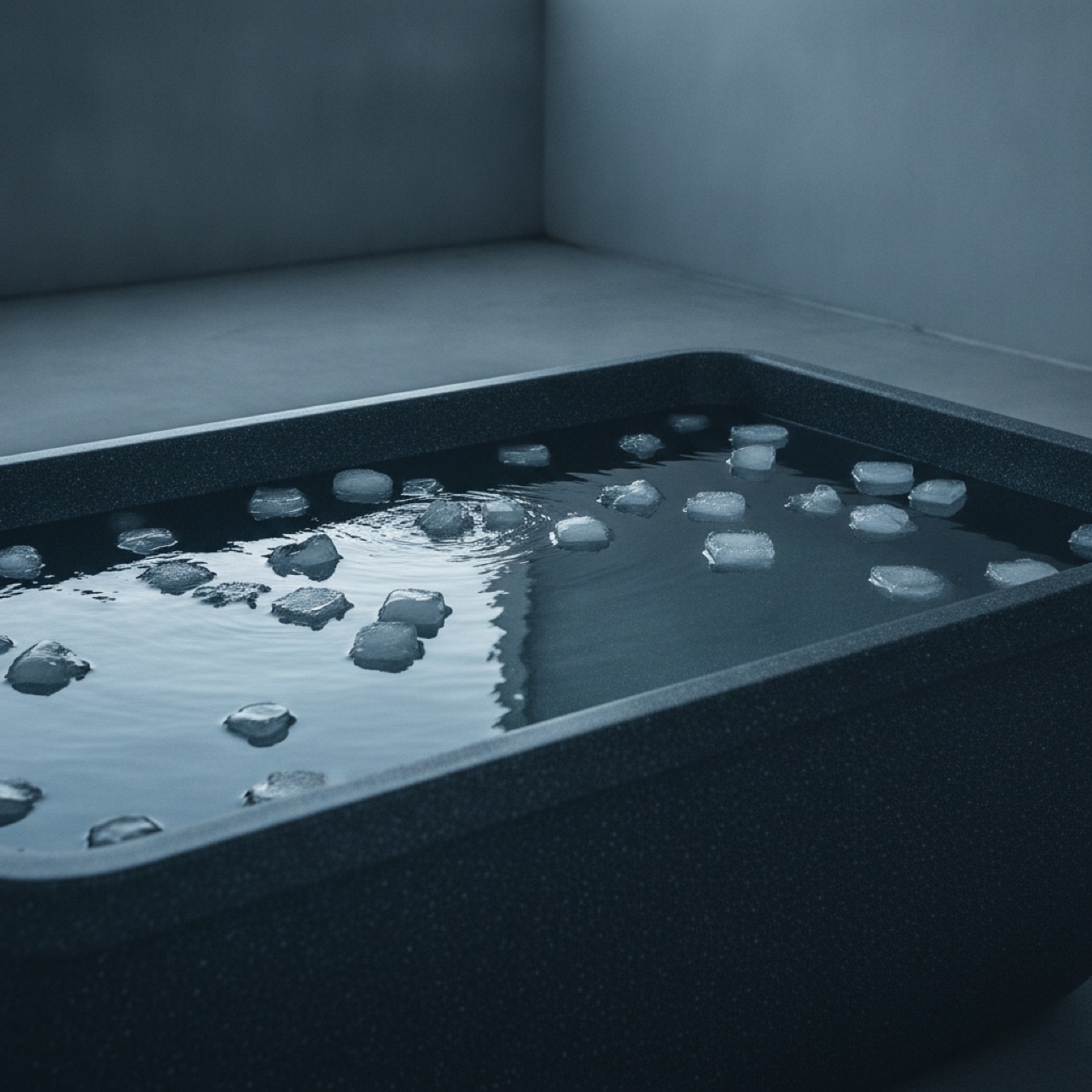
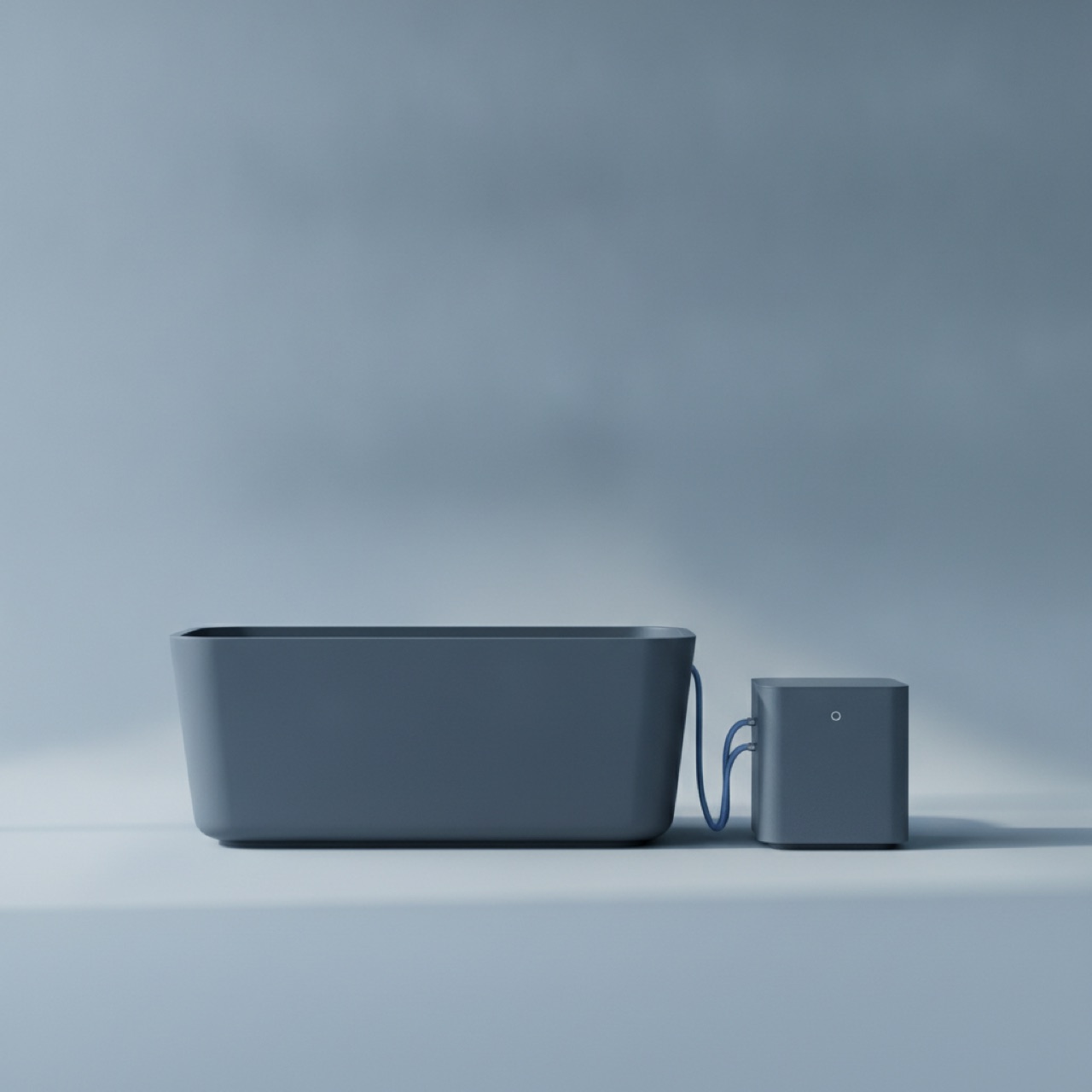
A cold plunge is a one-time equipment decision. At the low end you spend almost nothing, using a bathtub filled with cold water and ice. A stock tank paired with a mini chiller runs roughly $400-900 and then costs only electricity. A premium hard-shell plunge with built-in chiller and filtration runs $2,000-5,000 upfront but is effectively unlimited afterward.
| Approach | Upfront | Per use | Cost over 1 year (3x/week) |
|---|---|---|---|
| Cryotherapy at a clinic | $0 | $40-100 | $6,240-15,600 |
| Bathtub + ice | $0 | $4-16 ice | $620-2,500 |
| Stock tank + mini chiller | $400-900 | Electricity only | $400-1,200 |
| Premium cold plunge | $2,000-5,000 | Electricity only | $2,200-5,500 |
Cryotherapy year-1 range assumes 3 sessions per week at $40-100. Cold plunge chiller electricity estimated at 2-4 kWh/day. Individual costs vary.
Even the cheapest cryotherapy habit costs several thousand dollars a year. A chiller-based plunge pays for itself within months of regular use. If you plan to use cold consistently, the ownership math strongly favors a plunge. To compare vessels, see our best cold plunge chiller guide.
Safety and the FDA position
Neither method is risk-free, and the honest reader deserves both sides.
Cold water immersion carries the cold shock response (a gasp reflex and spike in heart rate on entry), a drowning risk if you plunge alone or too deep, and cardiovascular strain that can be dangerous for people with heart conditions. These risks are managed by easing in, keeping sessions short, never plunging alone in deep vessels, and clearing it with a doctor if you have a heart or blood-pressure condition.
Whole-body cryotherapy adds hazards specific to its equipment. Direct contact with the ultra-cold chamber surfaces or nitrogen vapor can cause frostbite and burns, and eye injury is possible. The most serious risk is asphyxiation: in nitrogen-cooled chambers, nitrogen vapor can displace oxygen in the enclosed space and cause hypoxia, loss of consciousness, and death. A cryotherapy operator death from nitrogen asphyxiation has been documented in the United States.
On the regulatory side, the US FDA has stated plainly that it has not cleared or approved any whole-body cryotherapy device to treat any medical condition, and that it lacks evidence WBC treats conditions such as arthritis, fibromyalgia, migraines, multiple sclerosis, stress, anxiety or chronic pain. An FDA reviewer summed up the physiology as "We simply don't know." Cold water immersion is likewise not an FDA-approved medical treatment, but it does not carry the machine-specific frostbite and asphyxiation hazards, and you control every variable yourself.
Which one fits your goal
For most people, most of the time, a cold plunge is the better core tool: stronger evidence, deeper cooling, far lower cost per use, and total control over your routine. Cryotherapy is a reasonable occasional choice if you value a fast three-minute session and do not want to own or maintain equipment. If you are still deciding on your at-home setup, our comparison of cold plunge vs ice bath and the overview of cold plunge benefits are the natural next reads.