Affiliate disclosure - we earn from qualifying purchasesRecovery science11 min readUpdated June 2026
Cold Plunge for Muscle Recovery:
real, but smaller than the hype.
Quick answer
Cold water immersion reduces delayed onset muscle soreness compared to doing nothing, per a 2012 Cochrane review, mostly by limiting swelling and making you feel fresher. The effect is modest. The important catch: regular cold plunging after lifting can blunt long-term strength and muscle gains (Roberts et al. 2015), so use it tactically in-season at 50 to 59F (10 to 15C) for 10 to 15 minutes, and skip it on muscle-building days.
Reviewed by
Dr. Renée Halvorsen, PhD
Exercise physiologist. 11 years researching cold-water immersion at NTNU. Author of The Cold Protocol (Penguin, 2024).
Verified Expert38 articles
Does cold plunging help muscle recovery?
Short answer: yes, for short-term soreness, but the benefit is smaller and more conditional than cold plunge marketing suggests. The honest version is that cold water immersion helps you feel recovered and modestly reduces measured soreness over the following days, while doing little to speed the actual repair of muscle tissue. For an athlete trying to back up a hard session with another good session tomorrow, that distinction barely matters. For a lifter trying to grow muscle over months, it matters a great deal.
Recovery is not one thing. It includes soreness, perceived fatigue, restored force output, replenished glycogen, and the slow structural adaptation that makes you stronger. Cold plunging touches some of these and works against others. That is why a blanket "ice baths are good for recovery" claim is incomplete. The useful question is which kind of recovery you want, and when.
The DOMS evidence: the Cochrane review
The most cited evidence on cold water immersion for muscle soreness is a 2012 Cochrane systematic review by Chris Bleakley and colleagues. Cochrane reviews are the gold standard of evidence synthesis because they pool data across many trials and grade study quality. This one analyzed 17 randomized trials of cold water immersion for delayed onset muscle soreness, commonly called DOMS, the stiffness and tenderness that peaks 24 to 72 hours after unfamiliar or intense exercise.
The headline finding: cold water immersion significantly reduced DOMS compared to passive recovery, meaning sitting and resting. The effect showed up at the 24, 48, 72, and 96 hour marks. So against doing nothing, cold immersion wins on soreness.
The limitations the authors themselves stressed are just as important. Most of the included studies were small. Many were at risk of bias, particularly because you cannot blind someone to whether they sat in cold water. There was little evidence comparing cold immersion against other active recovery methods like light exercise or stretching, and where comparisons existed, cold immersion did not clearly come out ahead. The reviewers also noted the possibility of a placebo contribution, since people expect cold to help. In short: cold beats nothing for soreness, but the data does not show it beating other sensible recovery methods, and the quality of evidence is moderate at best.
How it works: the mechanisms
Several mechanisms plausibly explain the soreness reduction, and they reinforce why the effect is partly real and partly perceptual.
Reduced blood flow and vasoconstriction
Cold causes blood vessels to constrict, which limits the inflammatory fluid that accumulates in damaged muscle. Less accumulation means less swelling-driven pressure on pain receptors.
Reduced swelling and edema
By cooling tissue and lowering metabolic rate locally, cold immersion appears to limit the secondary edema that follows muscle damage. Less edema is one of the more mechanistically solid explanations for reduced soreness.
Reduced nerve conduction and pain signaling
Cold slows the speed of nerve signals and raises the pain threshold temporarily, which can make sore muscles simply feel less sore for a period after the plunge.
Perceived recovery and placebo
A large part of the benefit is how recovered you feel. Athletes who expect cold to help report feeling fresher, and that perception itself influences willingness to train hard the next day. This is genuine value, but it is not the same as faster tissue repair.
These same vasoconstriction and anti-swelling mechanisms overlap with the broader topic of how cold affects inflammation. We cover that physiology in depth in our guide on cold plunge and inflammation.
The recovery vs adaptation tradeoff
This is the single most important nuance, and the one most cold plunge content ignores. The same anti-inflammatory action that reduces soreness can also interfere with the muscle building process, because the inflammatory response after training is not just damage. It is the signal that tells muscle to adapt and grow.
The landmark study here is Roberts and colleagues, published in 2015 in the Journal of Physiology. Over 12 weeks of resistance training, one group did 10 minutes of cold water immersion after each session and a comparison group did 10 minutes of active recovery on a bike. The cold immersion group gained less muscle mass and less strength. Muscle biopsies showed the cold group had blunted activity of satellite cells, the stem cells that fuse to muscle fibers and drive growth, and reduced anabolic signaling. The conclusion was direct: regular cold water immersion after strength training attenuates long-term gains in muscle mass and strength.
So you face a genuine tradeoff. Cold immersion is a recovery tool that can also be an adaptation blocker. The resolution is to periodize it, meaning use it deliberately based on what phase you are in:
- Use it in-season, during competition blocks, and when you have congested fixtures where feeling fresh tomorrow outweighs squeezing out a slightly bigger long-term adaptation.
- Avoid it after lifting during hypertrophy or strength building phases, when the entire point is to maximize the adaptive signal. Either skip it on lifting days or delay it by at least six hours.
The timing of the plunge relative to your session is central to managing this tradeoff. Our companion guide on cold plunging before or after a workout works through the scheduling case by case.
Best protocol for recovery
A recovery plunge is not the same as a short hormetic dip done for alertness or mood. The dose is different because the goal is different. For recovery you want enough cooling of the muscle to reduce swelling, which means longer and not necessarily colder.
Temperature
50 to 59F (10 to 15C). This is the range used across most cold water immersion recovery research. Going colder adds discomfort and hypothermia risk without clear added recovery benefit. See our full temperature breakdown for context.
Duration
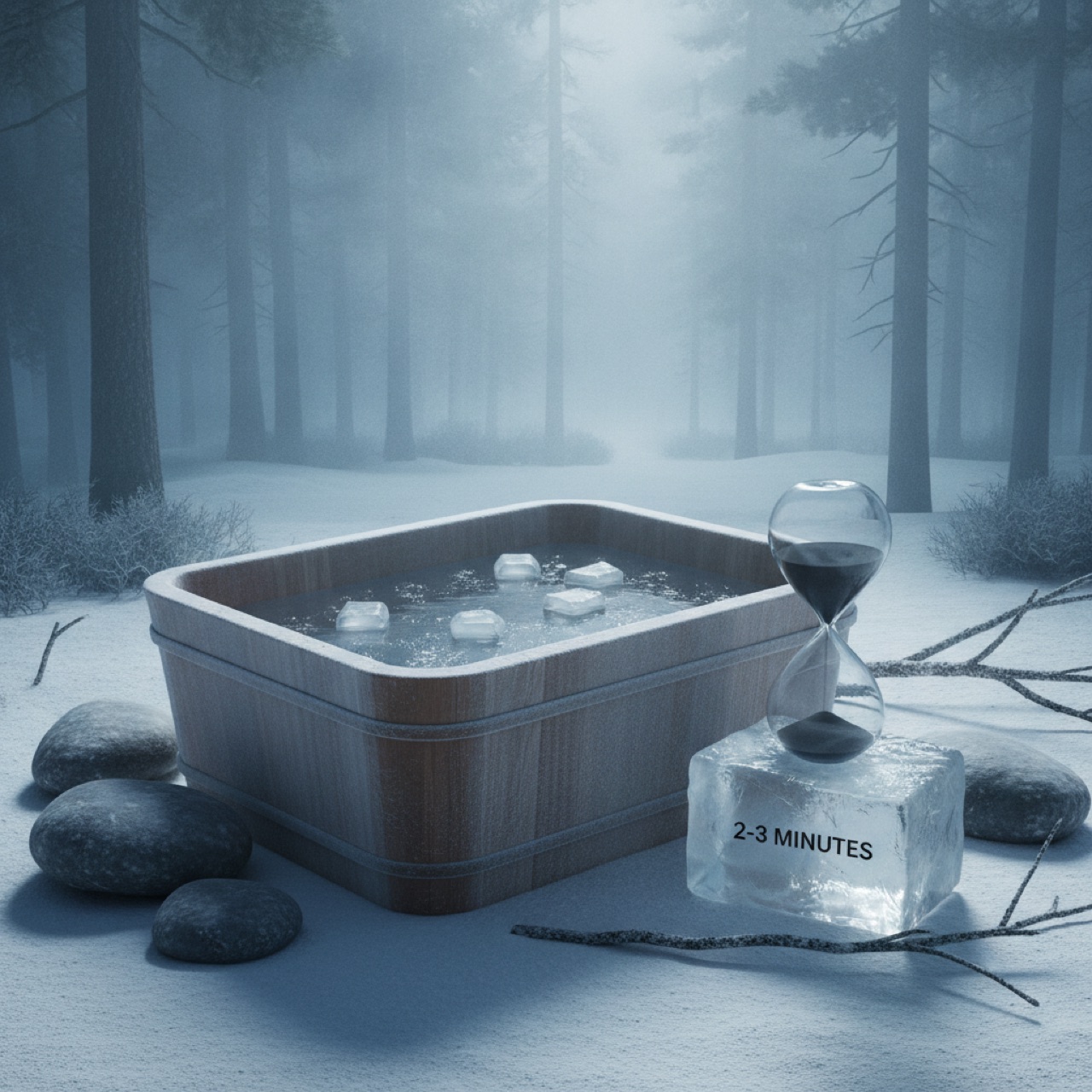
10 to 15 minutes total. This is meaningfully longer than the 2 to 3 minutes typical of an alertness plunge. Some protocols split it, such as two intervals of 5 to 7 minutes. The longer exposure is what cools the muscle enough to limit swelling.
Timing
Within about an hour of finishing, when used for soreness in-season. For hypertrophy training, delay by 6 or more hours, or skip the session entirely.
Frequency
Tactical, not daily. Reserve it for the days that matter, hard sessions you must recover from quickly, rather than reflexively plunging after every workout.
For more on dialing in the cold itself, see our guides on cold plunge temperature and how long to cold plunge.
Cold plunge vs active recovery vs sleep
It helps to put cold immersion in its place among recovery tools. Ranked honestly by evidence strength and impact, cold plunging is a useful adjunct, not the centerpiece. Here is a defensible ranking for most athletes.
1
Sleep
The foundation. 7 to 9 hours drives the hormonal and tissue repair processes that every other tool only nudges. No cold protocol compensates for chronic short sleep. This is not close.
2
Nutrition and protein
Adequate calories and roughly 1.6 to 2.2 g of protein per kg of bodyweight per day support muscle protein synthesis. Recovery without raw materials does not happen.
3
Active recovery
Light movement, walking, easy cycling, or mobility work increases blood flow to fatigued tissue and reliably reduces soreness in most studies, often matching cold immersion.
4
Cold water immersion
A modest, real reduction in soreness and a strong perceived freshness effect. Best used tactically, in-season or before back-to-back competition days, not every session.
5
Compression garments
Small reductions in perceived soreness and swelling. Low risk, low cost, low ceiling. Useful as an adjunct, not a centerpiece.
The practical takeaway: if your sleep and nutrition are not handled, no amount of cold immersion will fix your recovery. Cold plunging earns its place once the fundamentals are in order, and even then it is roughly comparable to active recovery for soreness, with the added downside of potentially blunting adaptation.
Sport-specific guidance
Endurance athletes (running, cycling, triathlon)
Cold immersion is reasonable after hard or long sessions, especially during heavy training blocks or stage races where next-day output matters. Aerobic adaptations are less obviously blunted by cold than strength adaptations, though some evidence suggests caution with mitochondrial signaling. Use it on key recovery days, not every easy run.
Team sports (soccer, rugby, basketball)
This is where cold immersion shines. Congested fixtures with matches every few days favor anything that restores perceived freshness and reduces soreness quickly. Many professional clubs use it for exactly this reason. The long-term adaptation tradeoff matters less in-season when the priority is performing match to match.
Strength and power athletes
Be cautious. Given the Roberts 2015 findings, regular post-lift cold immersion can undercut the strength and size gains you are training for. Reserve it for deload weeks, peaking phases where adaptation is not the goal, or competition recovery, and keep it away from your key building sessions.
Recovery protocol table
A quick reference for matching cold immersion to your goal. These are general guidelines drawn from the research ranges; individual response varies.
| Goal | Temperature | Duration | Timing | Best for | Notes |
|---|
| Soreness / DOMS reduction | 50-59°F / 10-15°C | 10-15 min total | Within 1 hr post | In-season, congested fixtures | Strongest evidence base |
| Next-day performance | 50-55°F / 10-13°C | 10-12 min | Post-session | Tournaments, stage races | Aids perceived readiness |
| General fatigue / freshness | 54-59°F / 12-15°C | 8-12 min | Evening or post | Heavy training blocks | Largely perceptual |
| Hypertrophy phase | Avoid post-lift | n/a | Delay 6+ hrs or skip | Muscle-building blocks | Blunts adaptation (Roberts 2015) |
| Strength / power day | Avoid pre-lift | n/a | Not before training | Max effort sessions | Reduces acute force output |
Note: the two "avoid" rows are the most important. Cold immersion before strength or power work reduces acute output, and routine cold immersion after muscle-building sessions blunts long-term gains.
★ Best for consistent recovery tempsScore 9.4/10
Plunge All-In
New to the practice and just getting started? Our beginner cold plunge hub covers setup, safety, and building a routine from scratch.
Frequently asked questions
Does a cold plunge actually help muscle recovery?+
Yes, for short-term recovery. A 2012 Cochrane review by Bleakley and colleagues pooled 17 trials and found cold water immersion reduced delayed onset muscle soreness compared to passive recovery, with the clearest effects 24 to 96 hours after exercise. The effect size is real but modest, and the authors flagged that many included studies were small and at risk of bias. Much of the benefit appears to come from reduced swelling and the perception of feeling fresher rather than measurably faster tissue repair.
Can cold plunging hurt my gains?+
Yes, if your goal is building strength and muscle size. A 2015 study by Roberts and colleagues in the Journal of Physiology found that regular cold water immersion after resistance training blunted long-term strength and hypertrophy gains compared to active recovery over 12 weeks. The cold appears to dampen the inflammatory and satellite cell signaling that drives muscle adaptation. If hypertrophy is the priority, avoid cold immersion within several hours of lifting, or skip it on those days.
How long should I cold plunge for recovery?+
Recovery protocols use longer immersions than hormetic alertness dips. Most cold water immersion recovery research used 10 to 15 minutes of total exposure at 50 to 59F (10 to 15C), sometimes split into intervals. This contrasts with a 2 to 3 minute morning plunge done for alertness. The longer exposure cools muscle tissue more, which is the mechanism behind reduced soreness. See our full guide on how long to cold plunge for the dose details.
What temperature is best for recovery?+
Most cold water immersion recovery studies used 50 to 59F (10 to 15C). This range cools muscle tissue enough to reduce swelling and soreness without the extreme cold shock and hypothermia risk of colder water. Colder is not better here. You do not need ice-cold water to get the recovery effect, and pushing below 50F mainly adds discomfort and risk.
Should I cold plunge before or after a workout?+
For recovery, after. Cold immersion before strength or power work can temporarily reduce force and jump output and is generally not recommended pre-training. After endurance or team sport sessions, post-workout immersion supports next-day readiness. After hypertrophy-focused lifting, delay it by several hours or skip it to preserve adaptation. We cover the full timing logic in our dedicated before-or-after workout guide.
Is a cold plunge better than active recovery for soreness?+
The evidence is mixed and the differences are small. Cold water immersion consistently beats passive rest for soreness. Against active recovery, light movement, or compression, the advantage is modest and inconsistent across studies. Both work. Sleep remains the single most important recovery tool, and no cold protocol substitutes for it.
How soon after exercise should I cold plunge?+
If you are using cold immersion for soreness reduction in-season, sooner is generally better, within roughly an hour of finishing. The cooling effect on swelling is most useful while inflammation is building. The exception is hypertrophy training, where the entire benefit of the inflammatory response is what you want to preserve, so you should delay or skip the plunge on lifting days.