Cold Plunge Side Effects & Dangers:
the real risks, and how to avoid them.
For most healthy adults, brief plunges at 50-60°F (10-15°C) are generally safe. The biggest acute danger is the cold shock response in the first 30-90 seconds: an involuntary gasp, hyperventilation, and a blood pressure spike. The most underrated danger is afterdrop, where core temperature keeps falling after you get out. People with heart disease, uncontrolled hypertension, arrhythmia, Raynaud\'s, cold urticaria, epilepsy, or who are pregnant should get medical clearance first. Never plunge alone, never breath-hold underwater, and rewarm gradually.
Is cold plunging dangerous?
For a healthy adult doing short, controlled immersions in moderate cold water, the answer is mostly no, the risk is low. But that honest answer hides a sharper truth: the danger is not evenly distributed. It is concentrated in specific moments (the first gasp, the moment you climb out) and in specific people (those with heart disease, certain skin and nerve conditions, or on medications that change how the body handles cold).
This is a topic where the wellness internet tends to overstate the benefits and understate the risks. Cold plunging is a genuine physiological stressor. The same sympathetic nervous system surge that releases norepinephrine and feels invigorating is also a spike in cardiac workload. For most people that spike is harmless and passes in under two minutes. For a smaller group it is the exact mechanism that can cause harm. The job of this page is to tell you which group you are in, and how to plunge so the odds stay in your favor.
One framing worth keeping: most serious cold water incidents are not about the cold itself slowly chilling you. They are about the body\'s violent reaction in the first seconds, or about misjudging temperature and duration. Get those two things right and you remove the large majority of the risk. Our temperature guide and duration guide exist mostly to keep you out of trouble.
Cold shock response: the #1 acute risk
The cold shock response is the involuntary reaction that hits in the first 30 to 90 seconds of sudden cold water immersion. The physiologist Mike Tipton and colleagues have studied this extensively in the context of cold water survival, and their work is the clearest reason to respect it: the cold shock response, not gradual hypothermia, is implicated in a large share of cold water drowning deaths. People do not slowly freeze. They inhale water during the initial gasp, or they cannot control their breathing well enough to keep their airway clear.
Three things happen almost at once when cold water hits the skin:
- The gasp reflex. An immediate, involuntary inhalation. If your face is underwater at that moment, you can aspirate water. This is the single most important reason never to dunk your head first and never to breath-hold underwater during the first minute.
- Uncontrolled hyperventilation. Breathing rate can jump to 60-80 breaths per minute. This blows off carbon dioxide, can cause tingling, lightheadedness, and a panic-like feeling, and makes breath control difficult. It usually settles within 60-90 seconds if you stay calm and exhale slowly.
- Tachycardia and a blood pressure spike. Heart rate climbs sharply while blood vessels clamp down, so blood pressure rises fast. In a healthy person this is transient. In a vulnerable heart it can trigger an arrhythmia.
There is a specific danger pattern worth naming: face submersion combined with a breath-hold. Some people try to "tough out" the cold by going fully under and holding their breath. That stacks two risks. The diving response and the cold shock response can interact, and at the same time you have voluntarily put your airway underwater during the exact window when your gasp reflex is strongest. If you faint or lose breath control, there is no margin. Keep your head up, keep breathing, and let the shock pass before you do anything else. The same gasp-and-hyperventilate pattern can feel like a panic attack, which we cover in detail in our guide to cold plunging and anxiety.
Cardiovascular risks and who must avoid
Cold immersion creates an unusual cardiac demand. Normally, when blood pressure rises, the heart rate slows to compensate. In cold water both rise together: the cold shock response drives heart rate up while massive peripheral vasoconstriction drives blood pressure up. The result is a sudden increase in the heart\'s workload and oxygen demand, exactly the kind of stress that can unmask a problem in a heart that already has one.
For a healthy cardiovascular system this is well tolerated, the same way a sprint is. The concern is specific populations. The following should treat cold plunging as something to clear with a doctor first, or to avoid:
- Coronary artery disease or any diagnosed heart disease
- Uncontrolled or poorly controlled high blood pressure
- A history of arrhythmia, including atrial fibrillation
- A recent cardiac event, surgery, or stent
- A known long QT syndrome or other channelopathy
Medications matter too. Beta-blockers blunt the heart rate response and can mask warning signs. Some blood pressure medications, diuretics, and sedatives change how your body manages blood pressure and temperature. If you take a daily cardiovascular or psychiatric medication, raise cold plunging with your prescriber rather than assuming it is fine.
Hypothermia and afterdrop
Hypothermia is the slower danger. It begins when core temperature falls below 95°F (35°C). For a short, deliberate plunge it is unlikely, but it becomes a real risk when sessions run long, the water is very cold, or both. Early signs are intense shivering, slurred speech, fumbling hands, and confusion. By the time judgment is affected, the person often does not recognize they are in trouble, which is why a buddy or supervision matters.
The part most beginners do not know about is afterdrop, and it is the reason the moment you get out can be more dangerous than the time you spent in. Here is the mechanism: while you are immersed, blood vessels in your arms and legs constrict and effectively wall off a reservoir of cold blood in the periphery. When you climb out and start to rewarm, those vessels relax and dilate. The trapped cold blood then flows back to the core, and your core temperature keeps dropping, often by 1 to 2°F over the following several minutes, even though you are no longer in the water.
Practical takeaway: rewarm actively and gradually. Dry off, add layers, drink something warm, and move gently. Counterintuitively, a scalding hot shower immediately after is not ideal, because it dilates skin vessels fast and can worsen the blood pressure drop and afterdrop. Let your body climb back up at a measured pace. If shivering is violent or does not ease within 10 to 15 minutes, treat it as a warning.
Cold-induced skin and nerve conditions
Some side effects only show up in people with a particular susceptibility, and they are easy to dismiss until they happen to you.
Who should not cold plunge (or should clear it first)
Cold plunging is not for everyone, and there is no shame in being in the "ask a doctor first" group. The following should get medical clearance before starting, or avoid cold plunging:
- !Involuntary gasp can aspirate water if face is submerged
- !Hyperventilation up to 60-80 breaths/min
- !Heart rate and blood pressure spike within seconds
- !Underlies most cold water drowning deaths (Tipton et al.)
- !Simultaneous heart rate rise and vasoconstriction
- !Sharp, transient blood pressure increase
- !Can provoke arrhythmia in susceptible hearts
- !Higher risk with existing heart disease
- !Core temperature can keep falling after you exit
- !Shivering, slurred speech, clumsiness, confusion
- !Getting out can be the dangerous moment
- !Worse in colder water and longer sessions
- !Raynaud's phenomenon flare-ups
- !Cold urticaria (cold-triggered hives)
- !Transient nerve numbness and tingling
- !Non-freezing cold injury with repeated long exposure
- Anyone with heart disease, arrhythmia, or uncontrolled hypertension (see above)
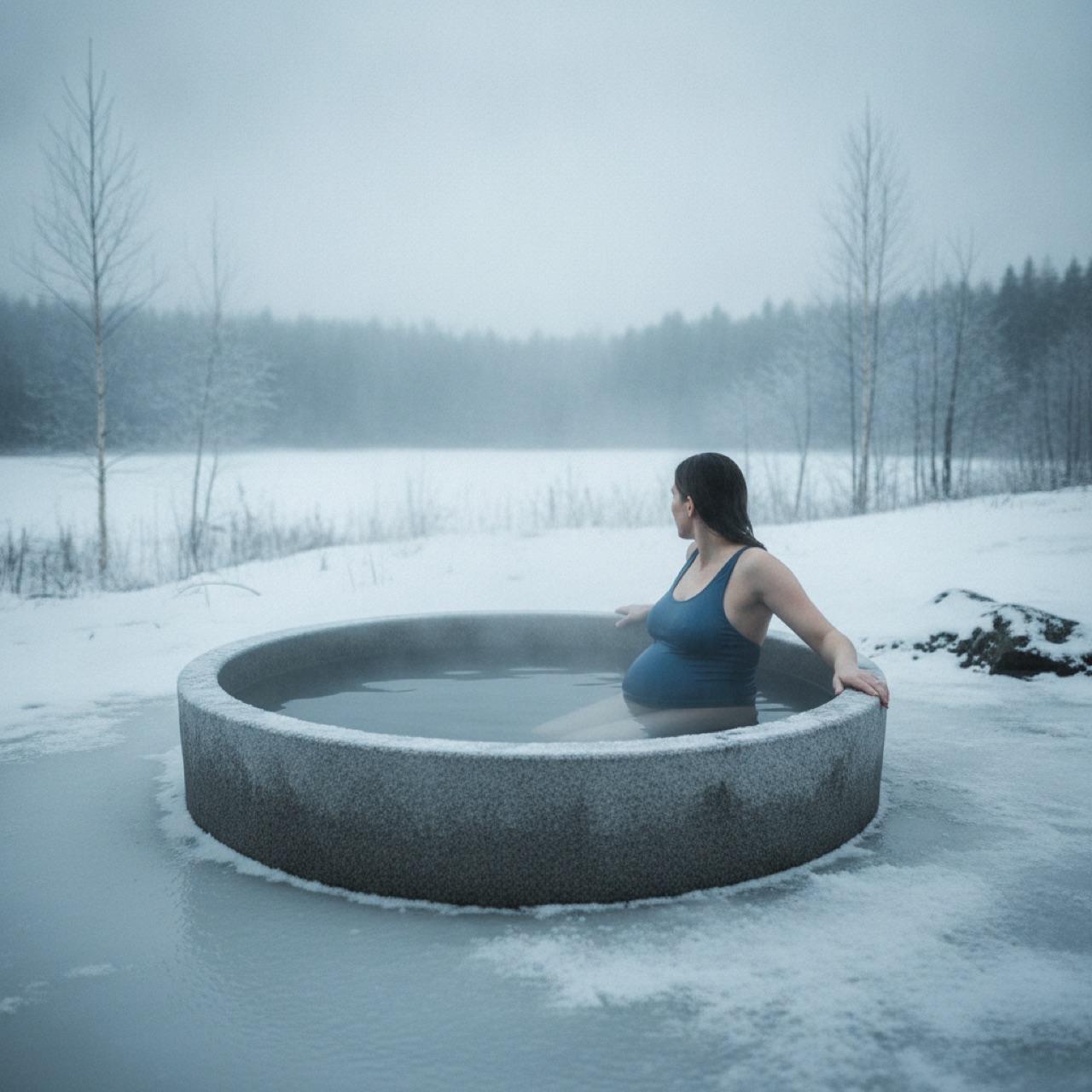
- Pregnant people: the cardiovascular and core-temperature effects deserve caution, see our dedicated guide on cold plunging while pregnant
- People with epilepsy or a seizure disorder, where the shock and breath-hold add risk in water
- People with Raynaud\'s phenomenon, cold urticaria, or peripheral vascular disease
- Anyone on beta-blockers, blood pressure medication, diuretics, or sedatives, who should ask their prescriber
- Anyone who is unwell, sleep-deprived, intoxicated, or has been drinking, in which case skip the session entirely
Overuse: too cold, too long, too often
Even for healthy people, more is not better. The brand position we keep returning to is that colder and longer is not automatically more effective, and past a point it works against you. The research base for cold plunging is real but mostly small and preliminary, and most studies used moderate temperatures (around 50-59°F / 10-15°C) for short durations, not extreme cold for many minutes.
Two overuse patterns are worth flagging honestly. First, immune effects: there is a popular claim that cold exposure boosts immunity, but very long or very intense sessions are a physical stressor that can transiently suppress, not boost, immune function, especially when you are already run down. Second, sleep: a hard cold plunge late in the evening raises alertness and disrupts the body\'s normal pre-sleep temperature drop, which can make it harder to fall asleep. If you plunge for the metabolic or recovery effects, you do not need to push to dangerous temperatures to get them. See our frequency guide for sensible dosing.
Risk severity table
A summary of the main risks, how likely each is, and the single most effective way to prevent it. Likelihood is a rough guide for a healthy adult following sensible practice; individual risk varies.
| Risk | Likelihood | How to prevent it |
|---|---|---|
| Cold shock response | High (everyone, every session) | Enter slowly; head above water; exhale through the gasp; never plunge alone |
| Drowning from gasp/breath-hold | Low, but severe | Never submerge face during first gasp; no breath-holds underwater; supervised first sessions |
| Blood pressure / cardiac event | Low overall, higher with heart disease | Screen for cardiac risk; medical clearance; avoid if uncontrolled hypertension or arrhythmia |
| Afterdrop | Moderate | Short sessions; rewarm gradually; sit before standing; warm core not just skin |
| Hypothermia | Low if sessions are short | Cap duration for the temperature; exit at hard shivering; do not chase numbness |
| Raynaud's / cold urticaria flare | Individual | Know your history; start warmer; stop if hives or whitening fingers appear |
| Slips, falls, fainting on exit | Moderate | Non-slip surface; handrail or step; exit slowly; never plunge impaired |
| Immune / sleep disruption | With overuse | Limit frequency and duration; avoid very cold sessions late at night |
Note: this table is a planning aid, not a medical assessment. If you have any of the conditions listed in the "who should not cold plunge" section, the likelihood column does not apply to you, get cleared first.
Safety checklist
For the safe ranges that keep most of these risks low, see: Cold plunge temperature guide and How long to cold plunge.