Affiliate disclosure - we earn from qualifying purchasesFrequency guide8 min readUpdated May 2026
How Often to Cold Plunge:
2-5x per week, built progressively.
Quick answer
Research supports 2-5 sessions per week for most practitioners. Beginners should start with 2-3 sessions. The Huberman protocol targets 11 minutes total cold exposure per week. Daily plunging is practiced safely by experienced people but offers diminishing returns beyond 5 sessions per week. Watch for overuse signs: poor sleep, elevated resting heart rate, persistent fatigue.
Reviewed by
Dr. Renée Halvorsen, PhD
Exercise physiologist. 11 years researching cold-water immersion at NTNU. Author of The Cold Protocol (Penguin, 2024).
Verified Expert38 articles
How often should you cold plunge?
Frequency is the third component of cold plunge protocol design, after temperature and duration. Unlike those two variables, frequency has a clearer optimal range backed by research: 2-5 sessions per week.
The best-known frequency anchor comes from the Soberg et al. (2021) study in Cell Reports Medicine. Subjects who accumulated 11 minutes of cold immersion per week - distributed across 2-3 sessions - showed significant increases in norepinephrine (250-300% above baseline), dopamine, and markers of brown adipose tissue activity. These subjects were not plunging daily. They were plunging with consistent spacing.
A 2022 review in Sports Medicine examining cold water immersion for athletic recovery found that 3-4 post-exercise cold immersion sessions per week was associated with optimal recovery outcomes in strength and endurance athletes. Beyond 4-5 sessions per week, the incremental benefit was not clearly documented.
The Huberman 11-minute weekly protocol
Dr. Andrew Huberman's publicly described cold immersion protocol targets accumulating 11 minutes of deliberate cold water exposure per week. This is based directly on the Soberg et al. (2021) data and is designed to be sustainable rather than extreme.
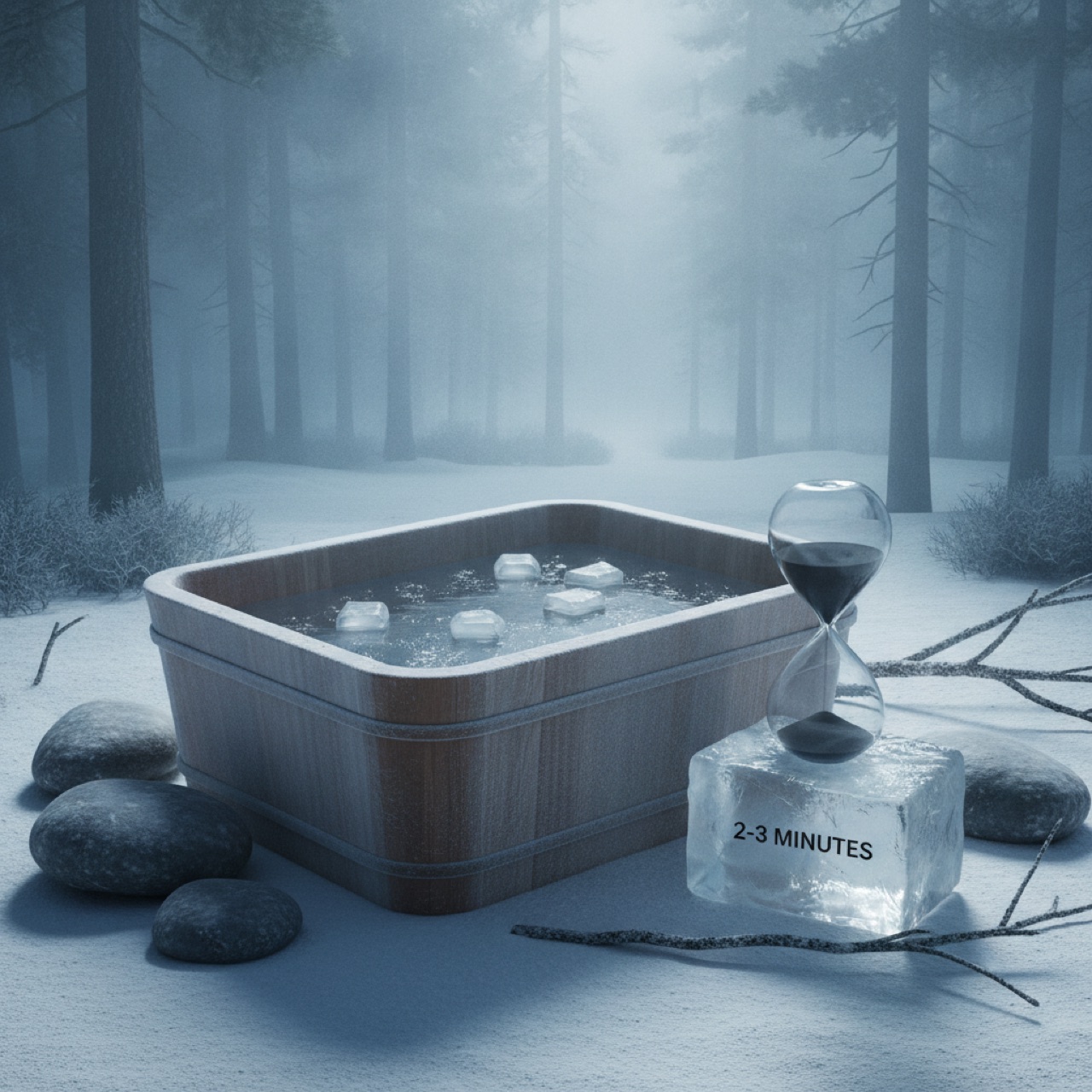
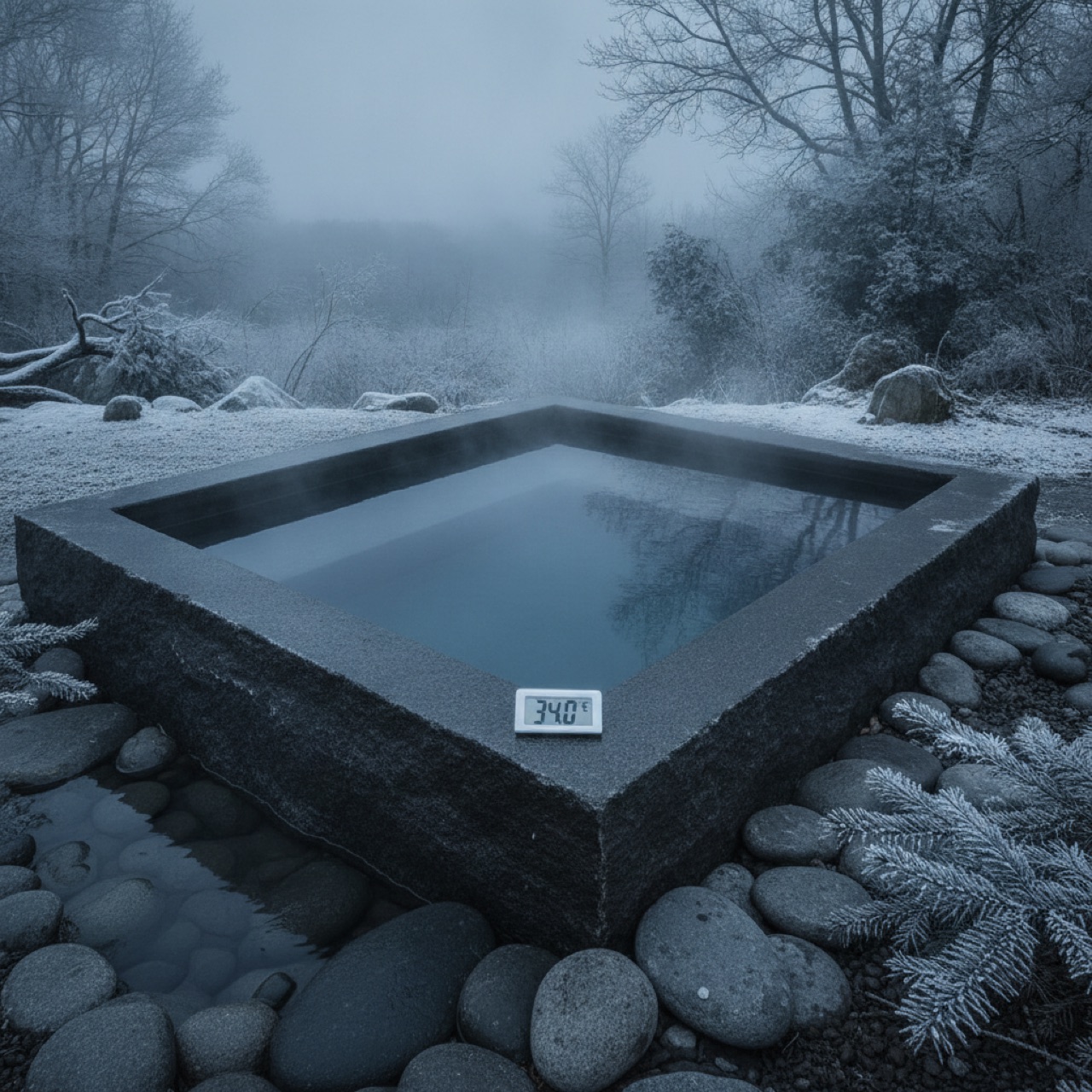
The 11 minutes can be distributed as the practitioner prefers. Three sessions of 3-4 minutes, or four sessions of 2-3 minutes, both achieve the target. The temperature should be "uncomfortably cold but safe" - which Huberman describes as the point where you want to get out but can tolerate staying in. For adapted practitioners this is typically 50-59°F (10-15°C).
Frequency by phase of practice
Beginners (weeks 1-6)
Focus on adapting to the cold shock response. Allow 24+ hours between sessions. Prioritize consistency over frequency.
Intermediate (months 2-3)
Hit the 11-minute weekly target. Begin experimenting with timing relative to workouts.
Regular practitioners
Sustain metabolic and mood benefits. Adjust based on training load and recovery signals.
Advanced, with monitoring
Possible for experienced practitioners. Monitor sleep quality and resting HR as overuse indicators.
Can you cold plunge every day?
Daily cold plunging is practiced by many experienced athletes, biohackers, and wellness practitioners. Anecdotally, it is widely reported as sustainable and beneficial. The research picture is more nuanced.
There are no published studies specifically examining daily cold plunging over extended periods (months to years) in healthy adults. The closest data comes from winter swimming research in Scandinavian populations, where regular cold water immersion several times per week over winter months is associated with positive metabolic and psychological outcomes.
Daily short sessions (1-2 minutes) may be more sustainable than daily long sessions (4-5 minutes). If you plunge daily, keep total session exposure moderate and monitor the recovery indicators below.
Signs of overuse
Cold water immersion is a physiological stressor. Like exercise, it requires recovery. If these signs appear, reduce frequency by 1-2 sessions per week:
!Disrupted sleep quality
Cold plunging triggers sympathetic nervous system activation. If sessions are too close to bedtime, they can delay sleep onset. But persistent sleep disruption even with morning plunges suggests systemic stress accumulation. Cold exposure should improve sleep quality in a well-dosed protocol.
!Elevated resting heart rate
A resting HR 5-10 bpm above your normal baseline sustained over several days is a reliable overtraining marker. Cold immersion is cardiovascularly demanding. If your RHR is trending up despite maintaining frequency, reduce sessions.
!Persistent fatigue unrelated to exercise
A well-designed cold plunge protocol should increase energy, not create fatigue. If you feel chronically tired despite adequate sleep and nutrition, cold exposure frequency may be contributing to a total stress load your body cannot recover from.
!Cold plunging feels harder, not easier
Adaptation means cold plunging should become easier over weeks of practice. If you find sessions progressively more difficult at the same temperature and duration, it may signal inadequate recovery rather than progress.
!Immune suppression (frequent illness)
Acute cold stress temporarily activates the immune system. Chronic overuse stress, however, can suppress immune function. If you are getting sick more often than usual, total stress load (including cold plunging) warrants reduction.
Spacing around workouts
Workout timing relative to cold plunging affects which training adaptations you prioritize. The key finding, from a 2021 paper in the Journal of Physiology, is that cold water immersion immediately post-resistance training may reduce the anabolic signaling response (mTOR pathway, satellite cell activity) that drives muscle protein synthesis. This effect appears most pronounced within 0-2 hours after resistance training.
Before workout
Neutral to positive
Pre-workout cold plunging increases alertness and norepinephrine. Does not impair workout performance in most research. Can be used as a morning activation protocol.
0-2 hours post-resistance training
May reduce muscle gains
The concern window for hypertrophy blunting. If muscle building is your primary goal, avoid cold plunging in this window after strength sessions.
4-6 hours post-resistance training
Generally safe for muscle goals
Most of the acute anabolic signaling has completed. Cold plunging after this delay is less likely to interfere with hypertrophy.
Post-aerobic training
Positive for recovery
Cold water immersion after aerobic training is well-supported for reducing DOMS and accelerating cardiovascular recovery. The hypertrophy concern is specific to resistance training.
Morning vs evening frequency considerations
The time of day affects how cold plunging fits your frequency plan in practical terms.
Morning cold plunges are widely preferred because the sympathetic activation aligns with the body's natural cortisol and alertness cycle. Most practitioners report feeling energized and focused for several hours post-plunge. Cold plunging in the morning also leaves a full day before sleep, so there is minimal sleep interference.
Evening cold plunges (within 2-3 hours of bedtime) can delay sleep onset in some individuals due to the sympathetic activation and temperature normalization time required. If you plunge in the evening and notice sleep disruption, shift to earlier in the day before reducing frequency.
From a frequency perspective, if you are doing 4-5 sessions per week, alternating morning and midday sessions helps distribute the physiological load more evenly than clustering sessions.
Diminishing returns at high frequency
The relationship between cold plunge frequency and benefit is not linear. Moving from 0 to 2 sessions per week produces large, measurable effects. Moving from 4 to 7 sessions per week produces much smaller incremental gains, if any, and increases recovery demand.
Brown adipose tissue adaptation, the most robustly documented long-term metabolic benefit, appears to respond primarily to cumulative weekly exposure, not to daily stimulus. The 11-minute weekly minimum studied by Soberg et al. can be achieved in as few as 2 sessions. Going to 14 sessions per week is not studied, and extrapolating from the dose-response data suggests the marginal benefit would be minimal.
For most people, 3-5 sessions per week at 2-4 minutes each represents the productive sweet spot: enough to accumulate 11+ minutes of weekly exposure and maintain adaptation without adding unnecessary recovery cost.
How often should you cold plunge?+
2-5 sessions per week is the range supported by published research. The Soberg et al. (2021) study found significant physiological benefits at 2-3 sessions per week totaling 11 minutes. Most evidence-based protocols, including Huberman's public recommendations, target 3-5 sessions per week. Beginners should start with 2-3 sessions and build frequency gradually over 4-6 weeks.
Can you cold plunge every day?+
Daily cold plunging is practiced by many experienced practitioners without reported problems. It is not proven dangerous for healthy adults. However, current research does not demonstrate additional benefits beyond 5 sessions per week compared to 3-4 sessions. Signs that daily plunging may be excessive include persistent fatigue, disrupted sleep, elevated resting heart rate, or decreased cold tolerance (getting harder, not easier, to adapt). If these signs appear, reduce to 3-4 sessions per week.
Is it OK to cold plunge twice a day?+
Twice-daily cold plunging is not well-studied, and there is no evidence that it doubles the benefit. Some research on heat and cold stress suggests that the body's adaptive response requires recovery time between stimulus and adaptation. Twice-daily sessions may not allow enough time for the neurochemical and metabolic responses to complete their cycle. One session per day is generally the ceiling for most protocols.
Should I cold plunge before or after a workout?+
For general health and mood, before or after both work. For muscle building and strength adaptation, a 4-6 hour delay between resistance training and cold plunging is recommended. A 2021 paper in the Journal of Physiology found that cold water immersion immediately post-resistance training blunted satellite cell activity and mTOR signaling - mechanisms involved in muscle protein synthesis. For aerobic training and general recovery, post-workout cold plunging is well-supported.
How long should I wait between cold plunges?+
Most practitioners allow 12-24 hours between sessions. There is no strong research establishing an optimal inter-session recovery window for cold plunging specifically. The neurochemical effects (norepinephrine, dopamine) return to baseline within 2-4 hours. The metabolic adaptations (brown fat, thermoregulation) are longer-term processes. A 12-hour minimum between sessions is a reasonable practical guideline.
Does more frequent cold plunging cause more brown fat?+
Brown adipose tissue (BAT) development appears to be a cumulative adaptation that responds to total cold exposure over weeks and months. The Soberg et al. (2021) study found significant BAT activity changes at 11 minutes per week, suggesting frequency beyond what is needed to hit this target may have diminishing returns for this specific outcome. Daily plunging at very short durations (60-90 seconds) may still accumulate sufficient weekly exposure to drive BAT adaptation.
What happens if I skip a week of cold plunging?+
Cold adaptation is not permanent. Research on thermal acclimation suggests that the gains in cold tolerance and reduced cold shock response begin to decay after approximately 2 weeks without exposure. Brown adipose tissue changes may persist somewhat longer. Most practitioners find that returning to their previous temperature and duration after a 1-2 week break is possible, though the cold shock response may return more intensely initially.