Cold Plunge Then Hot Tub: Does Order Matter, and Which Way Is Right for You?
The sequencing question comes up every time someone adds a hot tub to their cold plunge practice, or vice versa. Hot first, then cold? Cold first, then hot? Finnish tradition says one thing; some recovery research says another. The answer depends on what you are trying to accomplish - and the physiology is clear enough that there is a right answer for each goal.
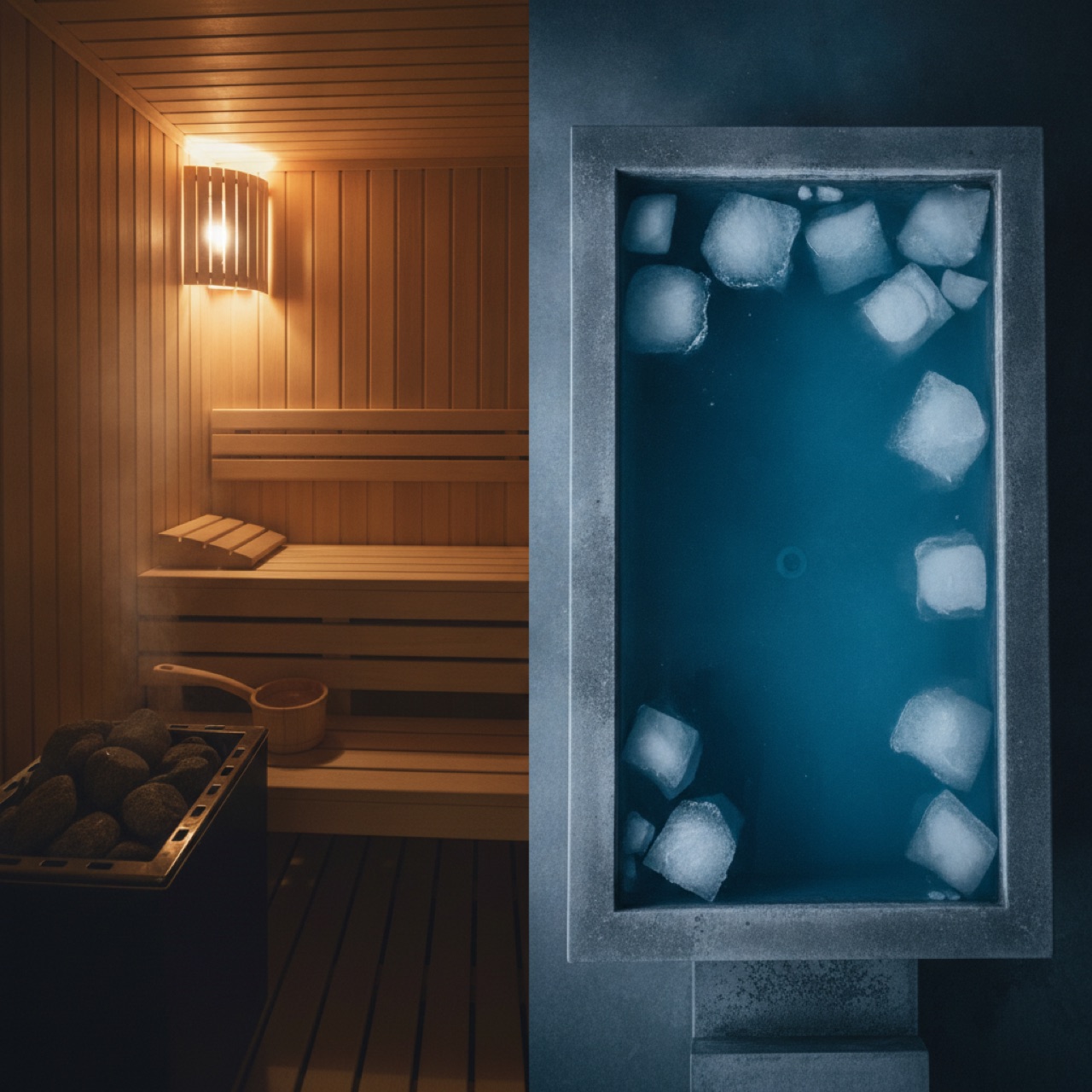
Hot tub first, cold plunge after is the traditional protocol and the approach supported by most contrast therapy research for athletic recovery. You finish in an activated, invigorated state. This is the better choice for morning sessions, pre-workout preparation, or post-training recovery.
Cold plunge first, hot tub after ends in relaxation and warmth. Vasodilation from the final heat phase promotes sleep onset and parasympathetic recovery. If your goal is winding down for sleep or deep relaxation, reverse the order: cold plunge first, hot tub last.
The physiology of hot-cold sequencing
Your body's vascular response to heat and cold are opposite. Understanding them explains why sequence matters.
Heat exposure triggers vasodilation: blood vessels dilate, peripheral blood flow increases, and your heart rate rises to pump more blood to the skin for cooling. Core body temperature rises. Muscles relax as blood flow increases. The parasympathetic nervous system eventually takes over as your body settles into the heat, producing the drowsy, relaxed feeling common in hot tubs and saunas.
Cold exposure triggers vasoconstriction: blood vessels contract sharply, peripheral blood is shunted to protect the core, and the sympathetic nervous system activates immediately. Your heart rate initially drops then stabilizes. Norepinephrine surges - research shows cold water immersion at 57F (14C) increases plasma norepinephrine by approximately 300%. This produces the alert, energized feeling after a cold plunge. Cortisol initially rises then normalizes, supporting stress resilience over time.
The sequence you choose determines which state you leave in. End with cold: you leave sympathetically activated, alert, energized. End with heat: you leave parasympathetically dominant, relaxed, and primed for rest.
Hot tub first, then cold plunge
Starting with the hot tub at 100-104F warms muscle tissue, increases flexibility, and begins the vasodilation cycle. The heat phase serves as a preparation stage - muscles are pliable, blood flow is high, and the body is in a ready state. This is why athletes often heat before competition (though not typically in a hot tub - they use warm-up protocols that serve the same vasodilation purpose).
Transitioning from the hot tub to the cold plunge creates an abrupt vascular shift: from maximum vasodilation to rapid vasoconstriction. This transition is where the contrast therapy mechanism is most active. The sudden cold triggers the sympathetic nervous system response while the blood vessels that were fully dilated contract sharply - the "vascular pumping" effect is most pronounced at this transition point.
Most contrast therapy research protocols begin with heat for this reason. The standard protocol used in sports medicine research loads the heat phase first (15-20 minutes at 38-40C) followed by cold immersion (5-15C for 2-4 minutes), repeated for 2-3 cycles.
For post-workout recovery specifically, heat-first may offer an additional benefit: the initial heat phase helps clear lactic acid from fatigued muscles before the cold vasoconstriction phase limits circulation. Research on this ordering for DOMS (delayed onset muscle soreness) consistently shows superior outcomes compared to cold-only protocols.
Cold plunge first, then hot tub
Starting with the cold plunge activates the sympathetic nervous system first. The norepinephrine spike and vasoconstriction create alertness and a sense of invigoration. Then transitioning to the hot tub begins reversing that state: vasodilation returns, muscles warm and relax, and the parasympathetic nervous system gradually dominates.
The hot tub at the end of the sequence essentially functions as a recovery and rewarming phase. The body, having been stimulated by the cold, is now actively relaxing - and this physiological wind-down mirrors the process that happens naturally in the evening before sleep. Core body temperature rises slightly from the hot tub, then begins dropping as you exit - this temperature drop after heat exposure is one of the natural signals that triggers sleepiness.
This sequence is particularly useful for people who have found cold plunges in the morning to be too activating and are exploring evening practice. Starting cold and ending warm converts an energizing protocol into a relaxing one - you get the cold exposure benefits (norepinephrine, resilience training) without the alertness penalty at night.
The Finnish approach: alternating and ending cold
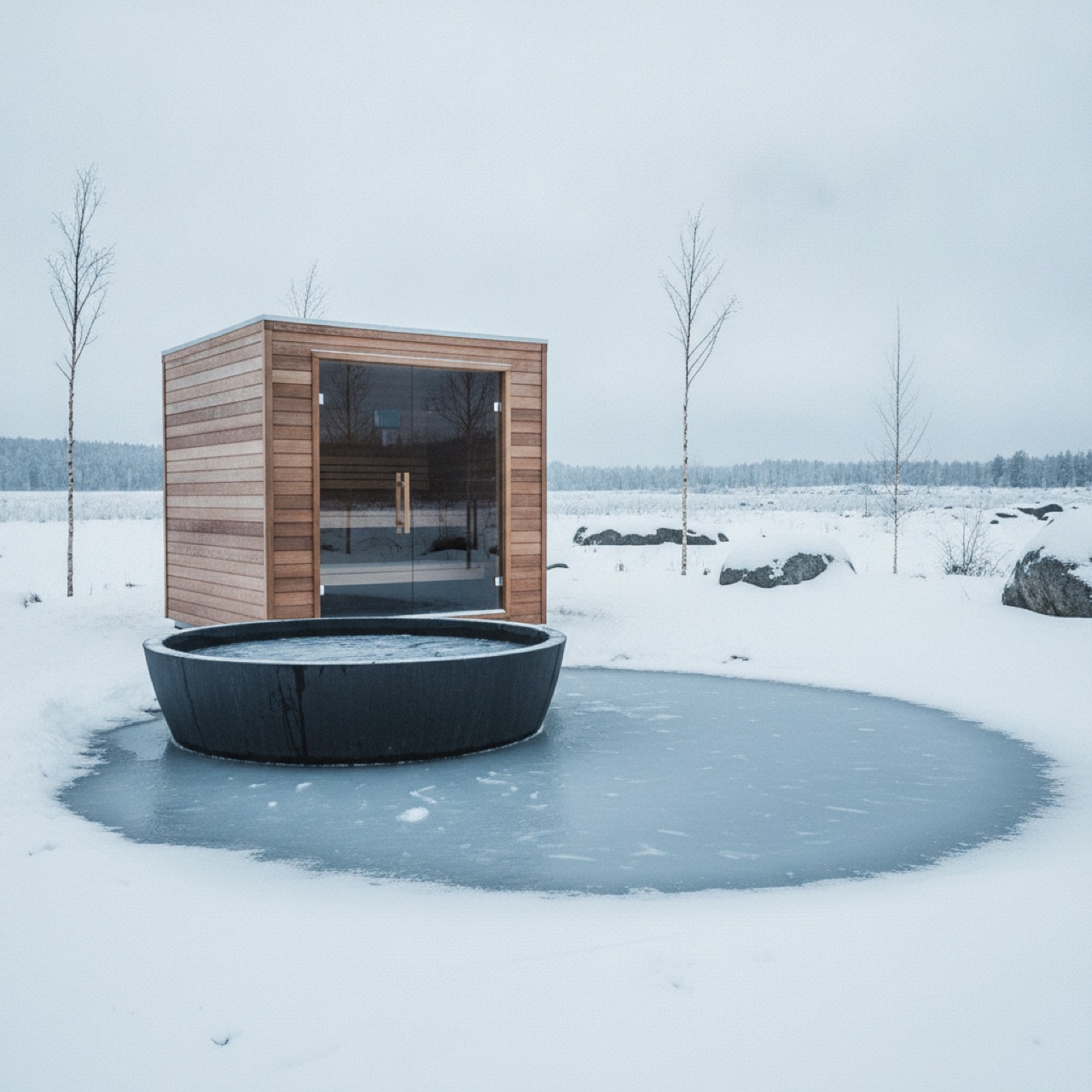
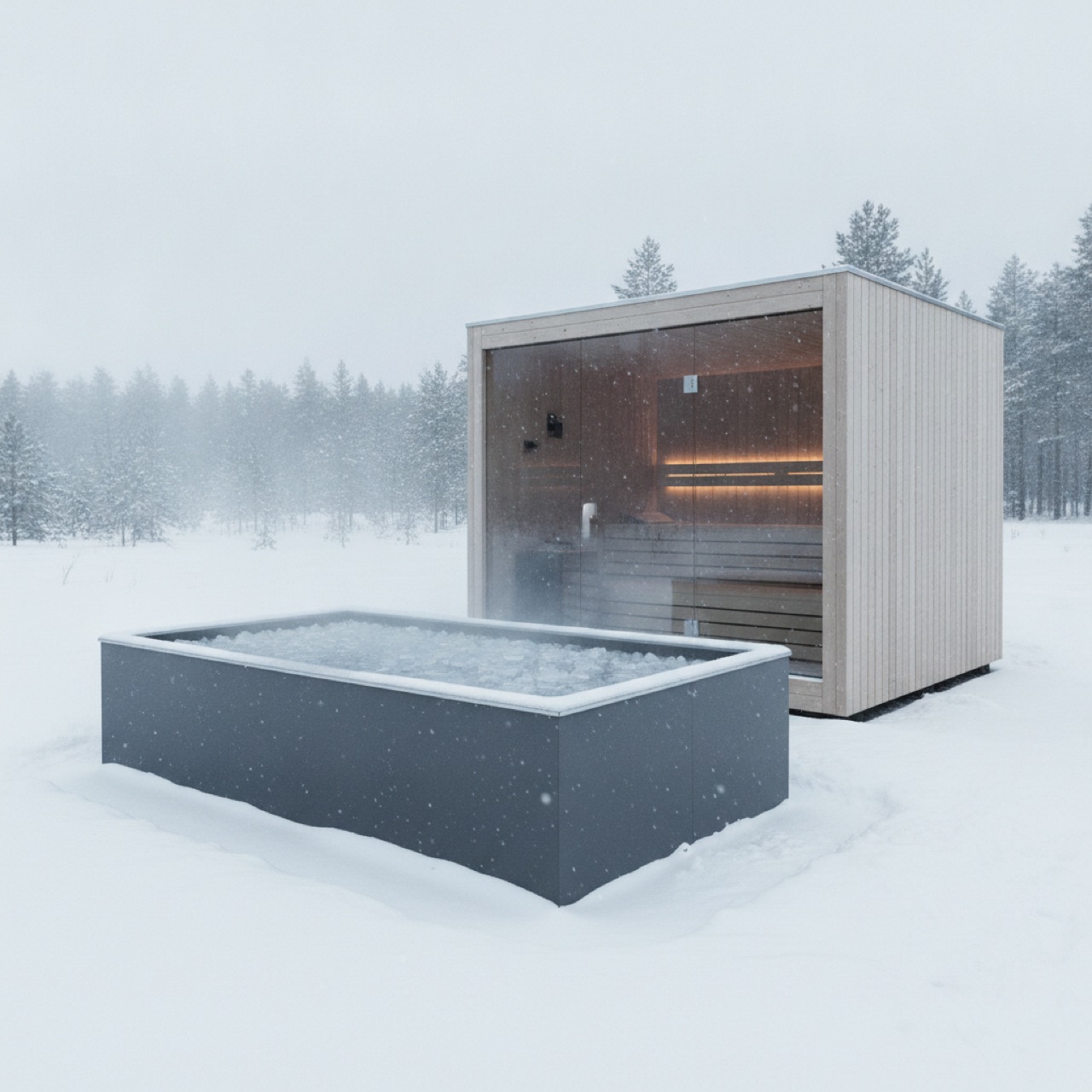
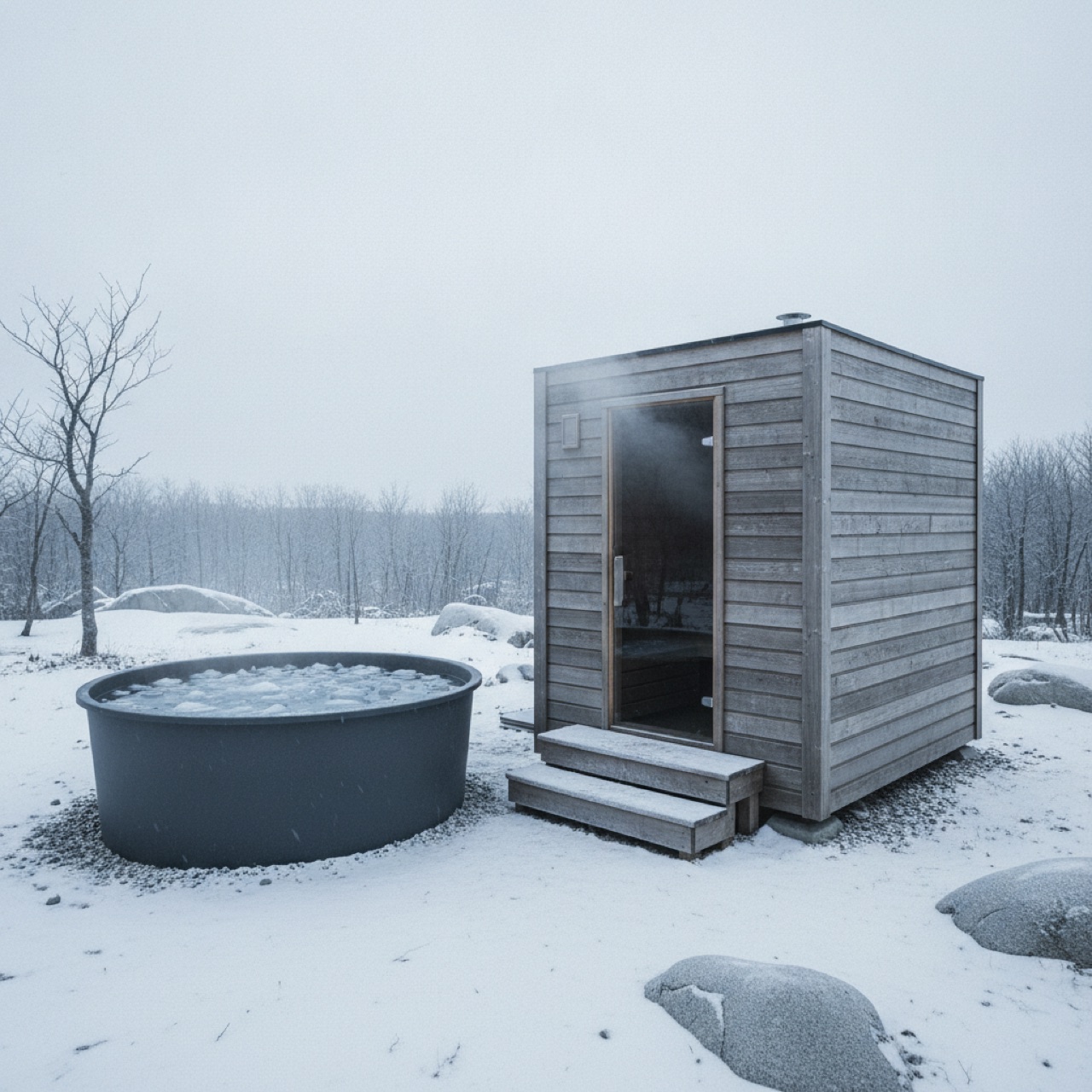
Traditional Finnish sauna culture does not use a hot tub - it uses a sauna (typically 80-100C / 176-212F) with a cold lake, cold pool, or outdoor roll in the snow. The cultural practice involves alternating rounds between the sauna and cold water, ending with cold, followed by a rest period at ambient temperature.
This Finnish protocol is physiologically similar to hot tub first, cold plunge after - you end in a cold, alert state. The final rest period at ambient temperature is considered part of the protocol: you sit quietly, let heart rate normalize, and allow the body to rewarm naturally rather than jumping into more heat. This rest phase is often omitted in modern contrast therapy setups, but it is where a significant portion of the hormonal recovery response occurs.
In terms of intensity, sauna temperatures (80-100C) create a more aggressive heat stimulus than a hot tub at 100-104F (38-40C). The cold lake immersion in Finnish practice is often colder than a typical cold plunge (34-40F / 1-4C versus the recommended 50-59F). If you are using a hot tub at 104F and a cold plunge at 55F, you are doing a moderate version of the same protocol - not as extreme as the traditional Finnish approach, but physiologically equivalent in mechanism.
Goal-specific protocols
How long in each: the numbers that matter
Hot tub temperature: 100-104F is the optimal range for contrast therapy. Above 104F increases cardiovascular strain without meaningful additional vasodilation benefit. Below 98F does not produce a strong enough thermal stimulus for the contrast effect. Most commercial hot tubs default to 102-104F.
Cold plunge temperature: 50-59F (10-15C) is the researched range for contrast therapy. This is warmer than the 39-45F range some cold plunge enthusiasts target for standalone cold sessions. In a multi-round contrast therapy protocol, you do not need extreme cold - the vasodilation-to-vasoconstriction transition is what drives the effect, not the absolute cold temperature.
Transition time: Moving between hot and cold within 30-60 seconds is ideal. Brief transitions maintain the vascular response. Spending 5+ minutes between phases allows partial normalization of vessel tone, reducing the contrast effect.
How many rounds: 2 or 3?
Two rounds is a complete contrast therapy session. Three rounds is the research sweet spot for maximum physiological effect. Most sports medicine protocols studying contrast therapy use 3-4 cycles of heat and cold alternation.
Beyond 3 rounds, additional cycles show diminishing returns on the core outcomes (DOMS reduction, circulation improvement, norepinephrine response) while increasing cumulative fatigue. For healthy adults doing this as a recovery or wellness practice rather than a research protocol, 2-3 rounds three to five times per week is a sustainable and effective cadence.
If time is limited, a single round - one heat phase followed by one cold phase - still produces meaningful physiological effects and is far better than skipping the session. Do not let perfect be the obstacle to consistent practice.
Safety considerations
Heat exposure causes blood pressure to drop and blood to pool in peripheral vessels. Stand up slowly from the hot tub. Give yourself 5-10 seconds. Brief dizziness is common and passes quickly. Rushing to the cold plunge immediately after standing increases risk of a fall.
Rapid immersion in cold water triggers an involuntary gasp and hyperventilation. This is normal and manageable. Breathe deliberately through the first 30-60 seconds. Exhale slowly and fully. The response peaks in the first minute and diminishes with experience and repeated exposure.
Contrast therapy places real demands on the cardiovascular system through rapid vascular shifts. People with hypertension, heart disease, arrhythmias, or who are pregnant should consult a physician before starting. Contrast therapy is not a safe beginner practice for people with unmanaged cardiovascular conditions.
Never combine contrast therapy with alcohol. Alcohol impairs the body's thermoregulatory response and increases the risk of dangerous overheating or hypothermia. Some medications (antihypertensives, beta blockers, anticoagulants) interact with the cardiovascular demands of contrast therapy - check with your prescriber.
Healthy adults without cardiovascular conditions can safely practice contrast therapy without medical supervision. The physiological demands are real but well within the capacity of a normal healthy body. Start conservatively - 2 rounds, moderate temperatures (102F hot, 55F cold), shorter cold exposures (90 seconds) - and increase over several weeks as tolerance builds.
Equipment for hot-cold contrast therapy at home
The ideal setup pairs a dedicated cold plunge with your existing hot tub or sauna. If you do not have either yet, purpose-built combo units are available - see our hot tub cold plunge combo guide for full reviews.