Cold Plunge for Women:
what actually differs, and what does not.
Healthy women get the same broad benefits from cold plunging as men, better mood, alertness, and a sense of recovery, and there is early survey evidence it may ease menstrual and menopausal symptoms. The honest problem is that most cold water research used trained men aged 18 to 35, so the fine print is thin. What does differ: women cool faster in the extremities, cold tolerance shifts across the menstrual cycle (harsher in the luteal phase), and women show more cardiovascular strain at the same cold load. The takeaway is not colder and longer. It is consistency, sensible temperatures, and adjusting by feel. Pregnancy warrants extra caution and a doctor's input.
Does cold plunging work differently for women?
The short, honest answer has two halves. The benefits most people plunge for, a lift in mood, sharper alertness, the subjective feeling of recovery, run on physiology that is not known to work differently by sex. So a healthy woman can expect the same broad upside a healthy man gets from a short, controlled immersion. Our general benefits guide applies to you as written.
The other half is that the details, how fast you cool, how your heart responds, how the cold feels from week to week, do differ in ways worth knowing. Women tend to lose heat faster from the skin and extremities, show a stronger cardiovascular response at the same water temperature, and experience real shifts in cold tolerance across the menstrual cycle. None of that makes cold plunging worse for women. It just means the protocol should not be borrowed wholesale from a routine built for and tested on men.
The research gap: built on men
Start with the thing almost no one prints next to their advice: the cold water evidence base is overwhelmingly male. Reviews of the field estimate that roughly 85 percent of cold water immersion research has been conducted on men, and in the most cited meta-analysis on immersion and muscle recovery, just one of the studies included a single female participant. A 2022 review in Frontiers in Physiology on the female response to cold water immersion put the problem plainly: the standard recommendations, temperatures around 10 to 12°C, durations of 10 to 15 minutes, were largely derived from men.
This matters because women and men do not thermoregulate identically. A body of work going back to comparisons published in the Journal of Applied Physiology around 2000 shows that women, on average, have a higher surface-area-to-mass ratio and vasoconstrict differently, which changes the rate of heat loss and the cardiovascular load of a given exposure. When the field's headline numbers come from male subjects, every downstream dose, the exact temperature, the exact minutes, carries an asterisk. That is not a reason to avoid cold plunging. It is a reason to treat published protocols as a starting point and to weight your own response heavily.
Cold plunge benefits for women
Where there is female-specific evidence, it is encouraging but early. The most useful data point is a 2024 study by Megan Pound, Heather Massey, Mike Tipton, Joyce Harper and colleagues, an online survey of 1,114 women who regularly swim in cold water. Among women reporting menstrual symptoms, cold water swimming was associated with improvements in anxiety (46.7 percent), mood swings (37.7 percent), and irritability (37.6 percent). More than half of the symptomatic women said they swam specifically to manage those symptoms.
Read that carefully, though. It is a self-reported survey of people who already cold swim and enjoy it, with no control group, so it shows association and enthusiasm, not proof of cause. What it does support is that many women experience a genuine psychological benefit, which lines up with the mood and stress-tolerance effects seen more broadly and with our guide to cold plunging for anxiety. For recovery and training use, the mechanisms are the same ones covered in our recovery guide, with the caveat that most of that data, too, came from men.
Your menstrual cycle and cold tolerance
This is the area where being a woman most changes the day-to-day experience of cold plunging, and it is driven by two hormones. Estrogen and progesterone rise and fall across the cycle, and progesterone in particular raises resting core body temperature by roughly 0.3 to 0.5°C during the luteal phase, the roughly two weeks before your period. A body that is already running slightly warmer and holding heat more tightly tends to feel cold water as harsher and to rewarm more slowly.
The evidence here is genuinely mixed, which is worth saying rather than smoothing over. A study on thermosensitivity during cold water immersion found no significant difference between menstrual phases, while work on ovarian hormones shows progesterone clearly influences core temperature and cold-induced responses. The reasonable synthesis is: your objective survival physiology may not swing dramatically by phase, but your subjective tolerance and comfort often do. Exercise physiologist Dr. Stacy Sims argues from this that women should sync intensity loosely to the cycle rather than plunge identically every day.
- ·Estrogen and progesterone are low and rising
- ·Core temperature is at its baseline
- ·Cold tolerance is often steady
- ·A gentle window to restart after a break
- ·Estrogen peaks around ovulation
- ·Cold frequently feels most tolerable
- ·Thermoregulation tends to be efficient
- ·The window with the most margin
- ·Progesterone raises core temperature ~0.3-0.5°C
- ·The body retains heat more tightly
- ·Cold can feel harsher and recovery slower
- ·Sensitivity to stress is often higher
Day ranges are approximate and assume a roughly 28-day cycle. Track your own pattern; the useful signal is how the cold feels and how fast you rewarm, not a calendar.
What differs by sex, and what does not
It is easy to over-correct and assume everything is different for women. Most of it is not. A useful study here is the 2022 randomized work by Rima Solianik and colleagues, published in Biology, which matched the thermal load between women and men during cold water immersion of the hand and foot. At the same cold stimulus, women showed elevated cardiovascular strain, higher heart rate and in some cases higher mean arterial pressure, and nearly twice as many cold-induced vasodilation reactions in the toes. That is a real, measurable sex difference in how the cardiovascular system meets the cold.
The table below separates the factors that genuinely differ from the ones that do not, so you know where to adjust and where to simply follow the general guidance.
| Factor | Differs for women? | What it means in practice |
|---|---|---|
| Surface-area-to-mass ratio | Yes | Women average a higher ratio and lose heat faster from the skin and extremities. Start at the warmer end and keep early sessions shorter. |
| Cold-induced vasodilation and cardiac strain | Yes | Solianik et al. (2022) found women had more frequent CIVD reactions and higher cardiovascular strain at a matched cold load. Do not chase extreme cold. |
| Menstrual cycle phase | Yes | Luteal-phase progesterone raises core temperature and changes how cold feels. Expect week-to-week variation and adjust by feel. |
| Mood, alertness, recovery signalling | No good evidence it differs | The mechanisms behind the common benefits are not known to work differently by sex. The general benefits guidance applies to you. |
| Cold shock response | No | The gasp reflex and blood pressure spike are the same acute risk for everyone. The same safety rules apply: enter slow, head up, never alone. |
| Breast tissue or bone density harm | No credible evidence | Claims that cold water damages breast tissue or that plunging meaningfully changes bone density are not supported by good research. |
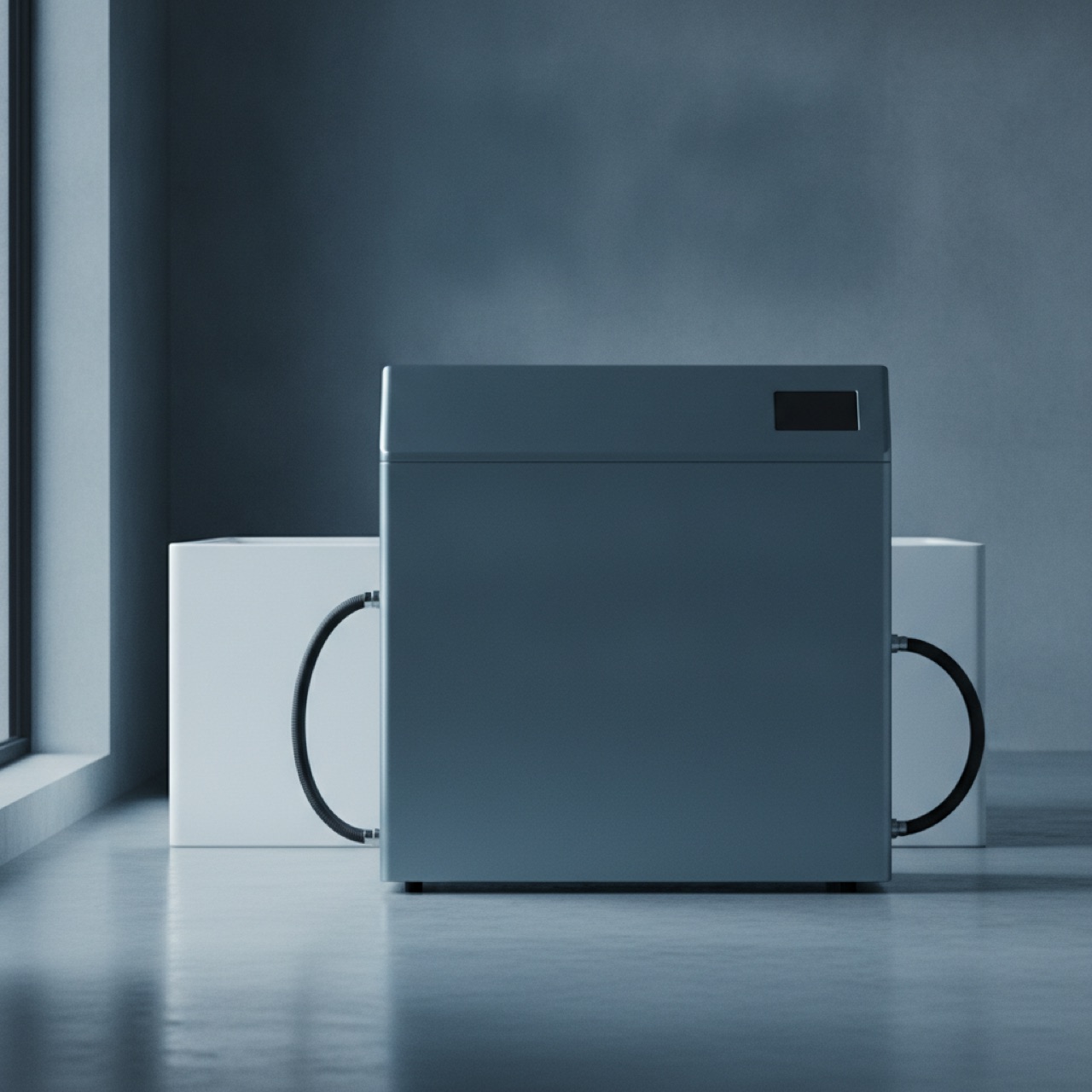
For syncing sessions to how you feel week to week, a chiller lets you dial an exact, consistent temperature instead of guessing with ice.
Cold plunging during pregnancy
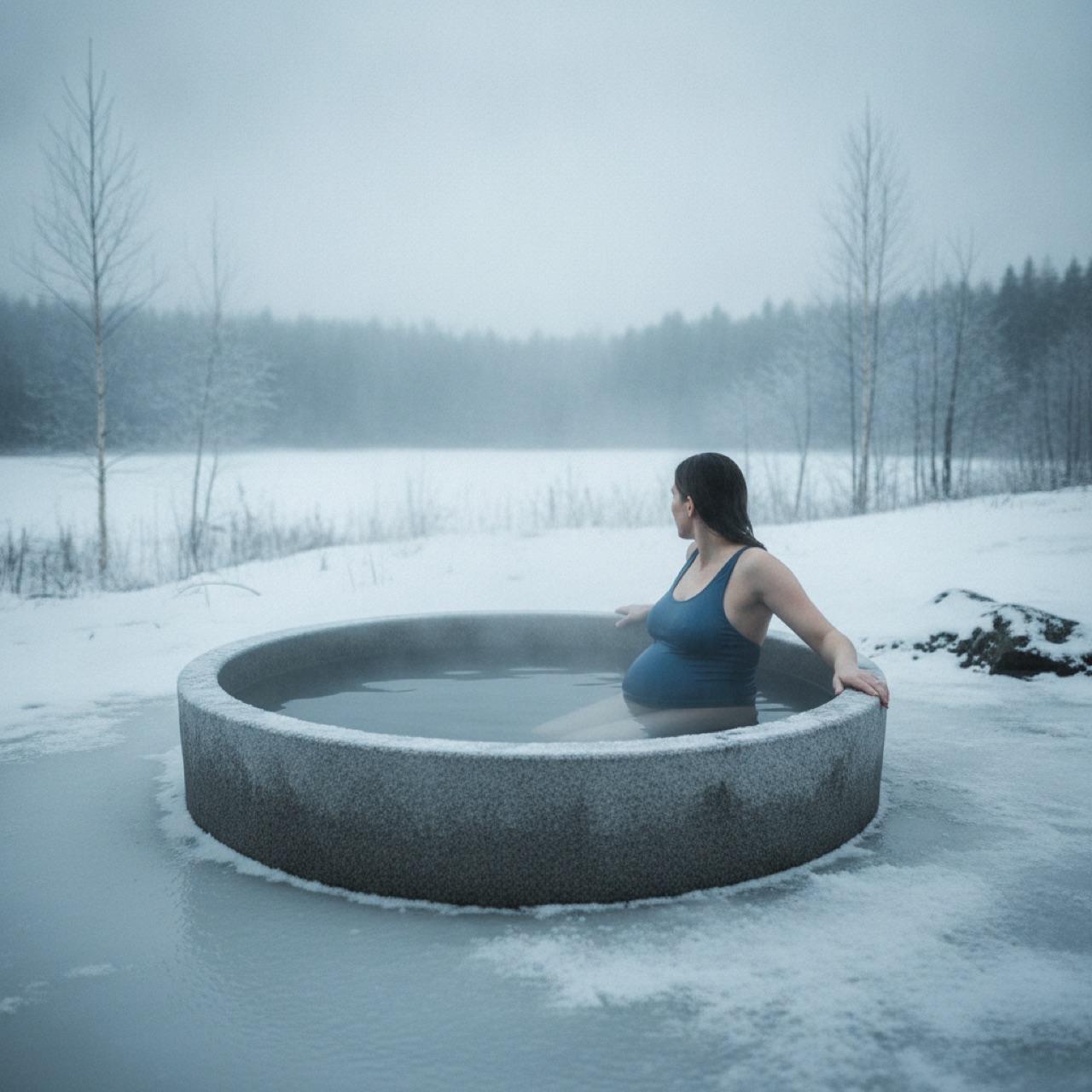
This is the one area where the honest answer is caution first. There is very little direct research on cold plunging during pregnancy, and pregnancy already changes blood volume, heart rate, and blood pressure regulation. The acute cold shock response, a sharp rise in heart rate and blood pressure, plus the risk of feeling faint when you exit and your vessels dilate, are exactly the responses you want to be careful with while pregnant. Overheating has clearer evidence of harm than brief cold does, but that is not the same as cold being proven safe.
Some clinicians are comfortable with brief, gentle cold exposure in a healthy, uncomplicated pregnancy, particularly for women who were already acclimatized before conceiving. But this should be an individual decision made with your provider, not a default you assume. We cover the specifics, including what to ask your doctor and safer alternatives, in our dedicated guide on cold plunging while pregnant.
Menopause and hot flashes
The same 2024 Pound survey is the best evidence we have here, and for perimenopausal women it is notably positive. Participants reported improvements in anxiety (46.9 percent), mood swings (34.5 percent), low mood (31.1 percent), and hot flushes (30.3 percent), and 63 percent of women with perimenopausal symptoms said they swam specifically to manage them. There is a plausible mechanism for the hot flash effect: many menopausal symptoms involve the constriction and dilation of blood vessels, and lowering skin and core temperature may blunt that vasomotor swing, at least briefly.
Keep the evidence grade in mind. This is a self-selected survey, not a controlled trial, and there are no large randomized studies confirming cold plunging as a menopause treatment. It is reasonable to try if you enjoy it and tolerate it well, and to treat any symptom relief as a welcome bonus rather than a substitute for medical care. If hot flashes or mood changes are disrupting your life, cold water is a complement to, not a replacement for, a conversation with your clinician.
Myths worth debunking
How to plunge: practical guidance
For the temperature ranges that keep the response manageable, see our cold plunge temperature guide, and for the full list of risks and who should get medical clearance first, read cold plunge side effects and dangers.